 Français
 English

| ELK.No | ES6880 |
| Product name | PAF-R rabbit pAb |
| Reactivity | Human;Mouse;Rat |
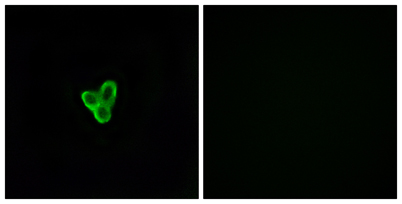
| Applications | IF;ELISA |
| Other name | PTAFR; PAFR; Platelet-activating factor receptor; PAF-R; PAFr |
| Size | 50μL |
| Unit price ($) | 148 |
| Human gene ID | 5724 |
| Human Swiss-Prot | P25105 |
| Source | Rabbit |
| Isotype | IgG |
| Target | PAF-R |
| Fields | >>Calcium signaling pathway;>>Neuroactive ligand-receptor interaction;>>Staphylococcus aureus infection |
| Gene name | PTAFR |
| Protein name | Platelet-activating factor receptor |
| Human gene link | View Human Gene |
| Human Swiss link | View Human Swiss-Prot |
| Mouse gene ID | 19204 |
| Mouse gene link | View Mouse Gene |
| Mouse Swiss-Prot | Q62035 |
| Mouse Swiss link | View Mouse Swiss-Prot |
| Rat gene ID | 58949 |
| Rat gene link | View Rat Gene |
| Rat Swiss-Prot | P46002 |
| Rat Swiss link | View Rat Swiss-Prot |
| Immunogen | The antiserum was produced against synthesized peptide derived from human PTAFR. AA range:194-243 |
| Specificity | PAF-R Polyclonal Antibody detects endogenous levels of PAF-R protein. |
| Formulation | Liquid in PBS containing 50% glycerol, 0.5% BSA and 0.02% sodium azide. |
| Clonality | Polyclonal |
| Dilution | Immunofluorescence: 1/200 - 1/1000. ELISA: 1/10000. Not yet tested in other applications. |
| Purification | The antibody was affinity-purified from rabbit antiserum by affinity-chromatography using epitope-specific immunogen. |
| Concentration | 1 mg/ml |
| Storage stability | -20°C/1 year |
| Molecular Weight (Da) | 39kD |
| Observed band (KD) | |
| Background | This gene encodes a seven-transmembrane G-protein-coupled receptor for platelet-activating factor (PAF) that localizes to lipid rafts and/or caveolae in the cell membrane. PAF (1-0-alkyl-2-acetyl-sn-glycero-3-phosphorylcholine) is a phospholipid that plays a significant role in oncogenic transformation, tumor growth, angiogenesis, metastasis, and pro-inflammatory processes. Binding of PAF to the PAF-receptor (PAFR) stimulates numerous signal transduction pathways including phospholipase C, D, A2, mitogen-activated protein kinases (MAPKs), and the phosphatidylinositol-calcium second messenger system. Following PAFR activation, cells become rapidly desensitized and this refractory state is dependent on PAFR phosphorylation, internalization, and down-regulation. Alternative splicing results in multiple transcript variants. [provided by RefSeq, Aug 2011], |
| Function | function:Receptor for platelet activating factor, a chemotactic phospholipid mediator that possesses potent inflammatory, smooth-muscle contractile and hypotensive activity. Seems to mediate its action via a G protein that activates a phosphatidylinositol-calcium second messenger system.,induction:By granulocyte macrophage colony-stimulating factor (GM-CSF), interleukin-5 and n-butyrate.,similarity:Belongs to the G-protein coupled receptor 1 family.,tissue specificity:Expressed in the placenta, lung, left and right heart ventricles, heart atrium, leukocytes and differentiated HL-60 granulocytes., |
| Subcellular location | Cell membrane ; Multi-pass membrane protein . |
| Expression | Expressed in the placenta, lung, left and right heart ventricles, heart atrium, leukocytes and differentiated HL-60 granulocytes. |

Use collapsible tabs for more detailed information that will help customers make a purchasing decision.
Ex: Shipping and return policies, size guides, and other common questions.