 Français
 English
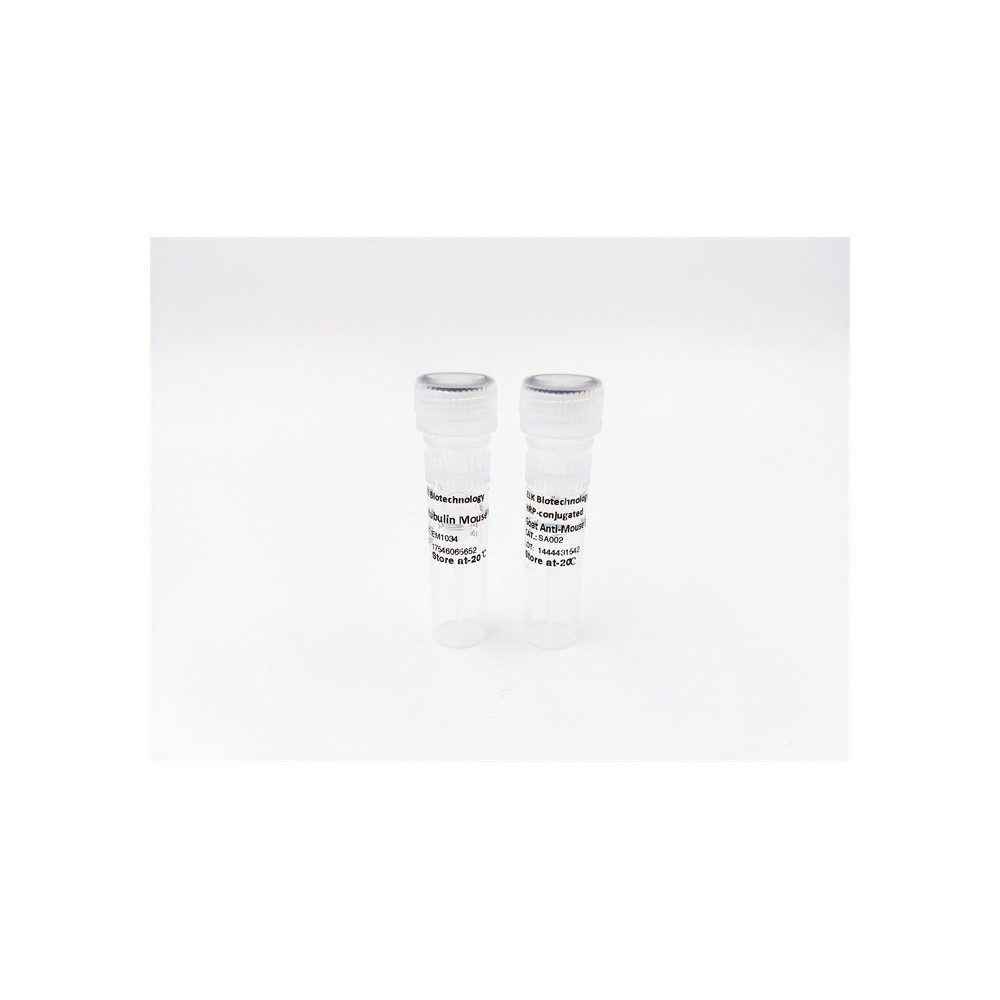

| ELK.No | ES7028 |
| Product name | RelB rabbit pAb |
| Reactivity | Human;Mouse |
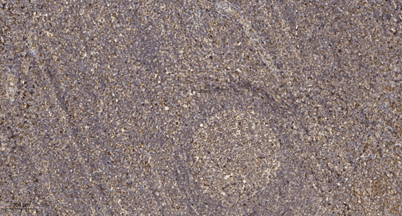
| Applications | WB;ELISA;IHC |
| Other name | RELB; Transcription factor RelB; I-Rel |
| Size | 100μL |
| Unit price ($) | 248 |
| Human gene ID | 5971 |
| Human Swiss-Prot | Q01201 |
| Source | Rabbit |
| Isotype | IgG |
| Target | RelB |
| Fields | >>MAPK signaling pathway;>>NF-kappa B signaling pathway;>>Osteoclast differentiation;>>C-type lectin receptor signaling pathway;>>Human T-cell leukemia virus 1 infection;>>Epstein-Barr virus infection |
| Gene name | RELB |
| Protein name | Transcription factor RelB |
| Human gene link | View Human Gene |
| Human Swiss link | View Human Swiss-Prot |
| Mouse gene ID | 19698 |
| Mouse gene link | View Mouse Gene |
| Mouse Swiss-Prot | Q04863 |
| Mouse Swiss link | View Mouse Swiss-Prot |
| Rat gene ID | |
| Rat gene link | |
| Rat Swiss-Prot | |
| Rat Swiss link | |
| Immunogen | The antiserum was produced against synthesized peptide derived from human RelB. AA range:530-579 |
| Specificity | RelB Polyclonal Antibody detects endogenous levels of RelB protein. |
| Formulation | Liquid in PBS containing 50% glycerol, 0.5% BSA and 0.02% sodium azide. |
| Clonality | Polyclonal |
| Dilution | WB 1:500-2000;IHC-p 1:50-300; ELISA 2000-20000 |
| Purification | The antibody was affinity-purified from rabbit antiserum by affinity-chromatography using epitope-specific immunogen. |
| Concentration | 1 mg/ml |
| Storage stability | -20°C/1 year |
| Molecular Weight (Da) | |
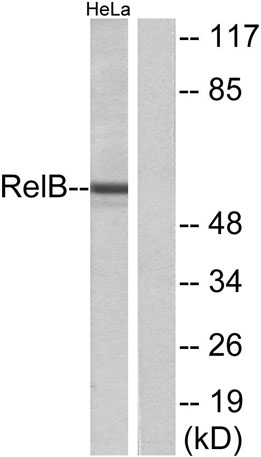
| Observed band (KD) | 62kD |
| Background | caution:Was originally (PubMed:1577270) thought to inhibit the transcriptional activity of nuclear factor NF-kappa-B.,domain:Both N- and C-terminal domains are required for transcriptional activation.,function:NF-kappa-B is a pleiotropic transcription factor which is present in almost all cell types and is involved in many biological processed such as inflammation, immunity, differentiation, cell growth, tumorigenesis and apoptosis. NF-kappa-B is a homo- or heterodimeric complex formed by the Rel-like domain-containing proteins RELA/p65, RELB, NFKB1/p105, NFKB1/p50, REL and NFKB2/p52. The dimers bind at kappa-B sites in the DNA of their target genes and the individual dimers have distinct preferences for different kappa-B sites that they can bind with distinguishable affinity and specificity. Different dimer combinations act as transcriptional activators or repressors, respectively. NF-kappa-B is controlled by various mechanisms of post-translational modification and subcellular compartmentalization as well as by interactions with other cofactors or corepressors. NF-kappa-B complexes are held in the cytoplasm in an inactive state complexed with members of the NF-kappa-B inhibitor (I-kappa-B) family. In a conventional activation pathway, I-kappa-B is phosphorylated by I-kappa-B kinases (IKKs) in response to different activators, subsequently degraded thus liberating the active NF-kappa-B complex which translocates to the nucleus. NF-kappa-B heterodimeric RelB-p50 and RelB-p52 complexes are transcriptional activators. RELB neither associates with DNA nor with RELA/p65 or REL. Stimulates promoter activity in the presence of NFKB2/p49.,induction:By mitogens.,PTM:Phosphorylation at 'Thr-103' and 'Ser-573' is followed by proteasomal degradation.,similarity:Contains 1 RHD (Rel-like) domain.,subunit:Component of the NF-kappa-B RelB-p50 complex. Component of the NF-kappa-B RelB-p52 complex. Self-associates; the interaction seems to be transient and may prevent degradation allowing for heterodimer formation with p50 or p52. Interacts with NFKB1/p50, NFKB2/p52 and NFKB2/p100. Interacts with NFKBID., |
| Function | caution:Was originally (PubMed:1577270) thought to inhibit the transcriptional activity of nuclear factor NF-kappa-B.,domain:Both N- and C-terminal domains are required for transcriptional activation.,function:NF-kappa-B is a pleiotropic transcription factor which is present in almost all cell types and is involved in many biological processed such as inflammation, immunity, differentiation, cell growth, tumorigenesis and apoptosis. NF-kappa-B is a homo- or heterodimeric complex formed by the Rel-like domain-containing proteins RELA/p65, RELB, NFKB1/p105, NFKB1/p50, REL and NFKB2/p52. The dimers bind at kappa-B sites in the DNA of their target genes and the individual dimers have distinct preferences for different kappa-B sites that they can bind with distinguishable affinity and specificity. Different dimer combinations act as transcriptional activators or repressors, respectively. NF-k |
| Subcellular location | Nucleus . Cytoplasm, cytoskeleton, microtubule organizing center, centrosome . Colocalizes with NEK6 in the centrosome. |
| Expression | Blood,T-cell, |

Use collapsible tabs for more detailed information that will help customers make a purchasing decision.
Ex: Shipping and return policies, size guides, and other common questions.