 Français
 English
ENaC β (phospho Thr615) rabbit pAb
AO-06-ES7125-50

| ELK.No | ES7125 |
| Product name | ENaC β (phospho Thr615) rabbit pAb |
| Reactivity | Human;Mouse;Rat |
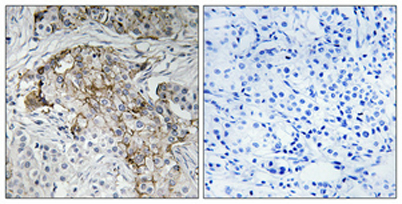
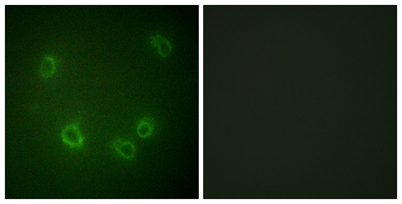
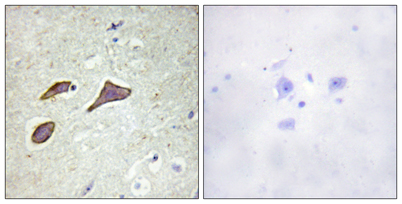
| Applications | WB;IHC;IF;ELISA |
| Other name | SCNN1B; Amiloride-sensitive sodium channel subunit beta; Beta-NaCH; Epithelial Na(+) channel subunit beta; Beta-ENaC; ENaCB; Nonvoltage-gated sodium channel 1 subunit beta; SCNEB |
| Size | 50μL |
| Unit price ($) | 148 |
| Human gene ID | 6338 |
| Human Swiss-Prot | P51168 |
| Source | Rabbit |
| Isotype | IgG |
| Target | ENaC β |
| Fields | >>Taste transduction;>>Aldosterone-regulated sodium reabsorption |
| Gene name | SCNN1B |
| Protein name | Amiloride-sensitive sodium channel subunit beta |
| Human gene link | View Human Gene |
| Human Swiss link | View Human Swiss-Prot |
| Mouse gene ID | 20277 |
| Mouse gene link | View Mouse Gene |
| Mouse Swiss-Prot | Q9WU38 |
| Mouse Swiss link | View Mouse Swiss-Prot |
| Rat gene ID | 24767 |
| Rat gene link | View Rat Gene |
| Rat Swiss-Prot | P37090 |
| Rat Swiss link | View Rat Swiss-Prot |
| Immunogen | The antiserum was produced against synthesized peptide derived from human Nonvoltage-gated Sodium Channel 1 around the phosphorylation site of Thr615. AA range:581-630 |
| Specificity | Phospho-ENaC β (T615) Polyclonal Antibody detects endogenous levels of ENaC β protein only when phosphorylated at T615. |
| Formulation | Liquid in PBS containing 50% glycerol, 0.5% BSA and 0.02% sodium azide. |
| Clonality | Polyclonal |
| Dilution | Western Blot: 1/500 - 1/2000. Immunohistochemistry: 1/100 - 1/300. Immunofluorescence: 1/200 - 1/1000. ELISA: 1/10000. Not yet tested in other applications. |
| Purification | The antibody was affinity-purified from rabbit antiserum by affinity-chromatography using epitope-specific immunogen. |
| Concentration | 1 mg/ml |
| Storage stability | -20°C/1 year |
| Molecular Weight (Da) | |
| Observed band (KD) | 68kD |
| Background | Nonvoltage-gated, amiloride-sensitive, sodium channels control fluid and electrolyte transport across epithelia in many organs. These channels are heteromeric complexes consisting of 3 subunits: alpha, beta, and gamma. This gene encodes the beta subunit, and mutations in this gene have been associated with pseudohypoaldosteronism type 1 (PHA1), and Liddle syndrome. [provided by RefSeq, Apr 2009], |
| Function | disease:Defects in SCNN1B are a cause of autosomal recessive pseudohypoaldosteronism type 1 (PHA1) [MIM:264350]. PHA1 is a rare salt wasting disease resulting from target organ unresponsiveness to mineralocorticoids. There are 2 forms of PHA1: the autosomal recessive form that is severe, and the dominant form which is more milder and due to defects in mineralocorticoid receptor. Autosomal recessive PHA1 is characterized by an often fulminant presentation in the neonatal period with dehydration, hyponatraemia, hyperkalaemia, metabolic acidosis, failure to thrive and weight loss.,disease:Defects in SCNN1B are a cause of Liddle syndrome [MIM:177200]. It is an autosomal dominant disorder characterized by pseudoaldosteronism and hypertension associated with hypokalemic alkalosis. The disease is caused by constitutive activation of the renal epithelial sodium channel.,function:Sodium permeable |
| Subcellular location | Apical cell membrane ; Multi-pass membrane protein . Cytoplasmic vesicle membrane . Apical membrane of epithelial cells. . |
| Expression | Detected in placenta, lung and kidney (PubMed:7762608). Expressed in kidney (at protein level) (PubMed:22207244). |

Use collapsible tabs for more detailed information that will help customers make a purchasing decision.
Ex: Shipping and return policies, size guides, and other common questions.