 Français
 English
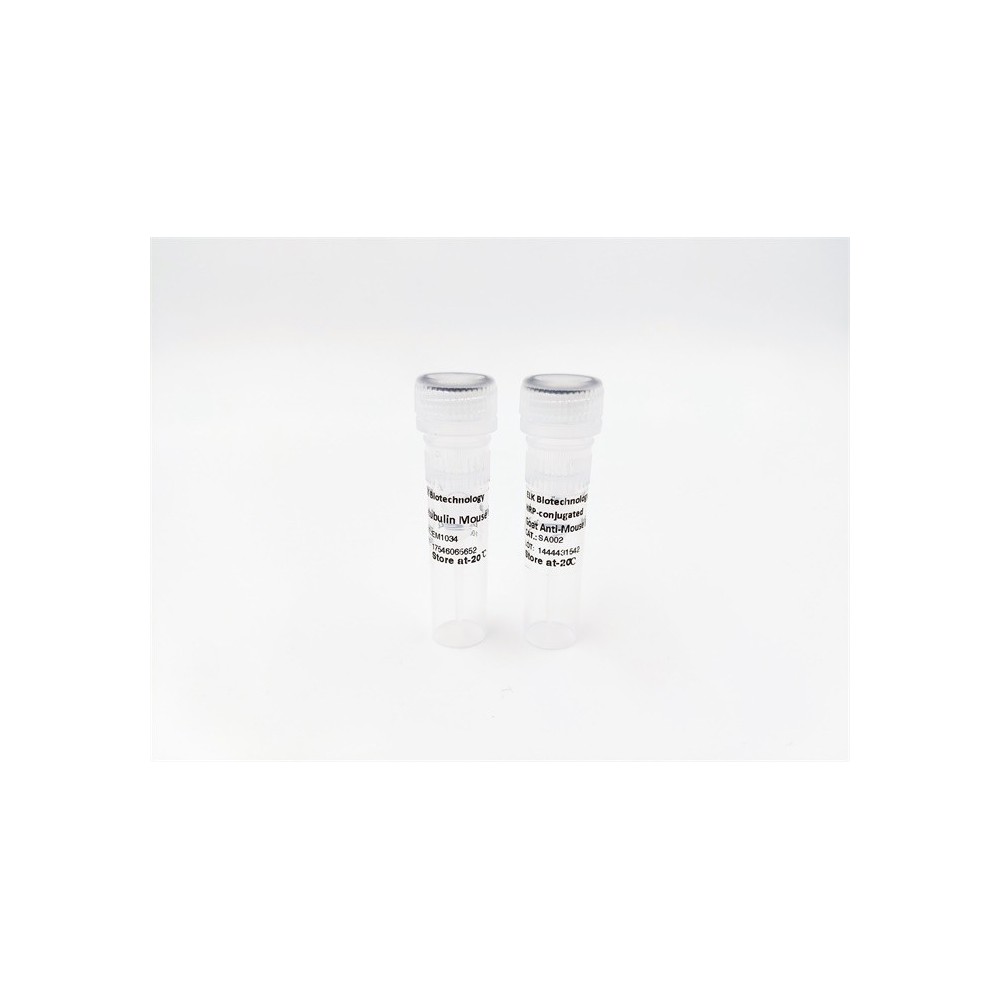

| ELK.No | ES7509 |
| Product name | VPAC1 rabbit pAb |
| Reactivity | Human;Mouse;Rat |
| Applications | WB;IHC;IF;ELISA |
| Other name | VIPR1; Vasoactive intestinal polypeptide receptor 1; VIP-R-1; Pituitary adenylate cyclase-activating polypeptide type II receptor; PACAP type II receptor; PACAP-R-2; PACAP-R2; VPAC1 |
| Size | 100μL |
| Unit price ($) | 248 |
| Human gene ID | 7433 |
| Human Swiss-Prot | P32241 |
| Source | Rabbit |
| Isotype | IgG |
| Target | VPAC1 |
| Fields | >>Neuroactive ligand-receptor interaction |
| Gene name | VIPR1 |
| Protein name | Vasoactive intestinal polypeptide receptor 1 |
| Human gene link | View Human Gene |
| Human Swiss link | View Human Swiss-Prot |
| Mouse gene ID | 22354 |
| Mouse gene link | View Mouse Gene |
| Mouse Swiss-Prot | P97751 |
| Mouse Swiss link | View Mouse Swiss-Prot |
| Rat gene ID | 24875 |
| Rat gene link | View Rat Gene |
| Rat Swiss-Prot | P30083 |
| Rat Swiss link | View Rat Swiss-Prot |
| Immunogen | The antiserum was produced against synthesized peptide derived from human VIPR1. AA range:332-381 |
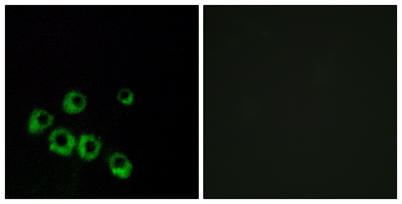
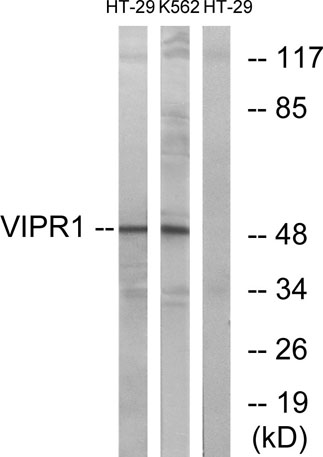
| Specificity | VPAC1 Polyclonal Antibody detects endogenous levels of VPAC1 protein. |
| Formulation | Liquid in PBS containing 50% glycerol, 0.5% BSA and 0.02% sodium azide. |
| Clonality | Polyclonal |
| Dilution | Western Blot: 1/500 - 1/2000. Immunohistochemistry: 1/100 - 1/300. Immunofluorescence: 1/200 - 1/1000. ELISA: 1/10000. Not yet tested in other applications. |
| Purification | The antibody was affinity-purified from rabbit antiserum by affinity-chromatography using epitope-specific immunogen. |
| Concentration | 1 mg/ml |
| Storage stability | -20°C/1 year |
| Molecular Weight (Da) | |
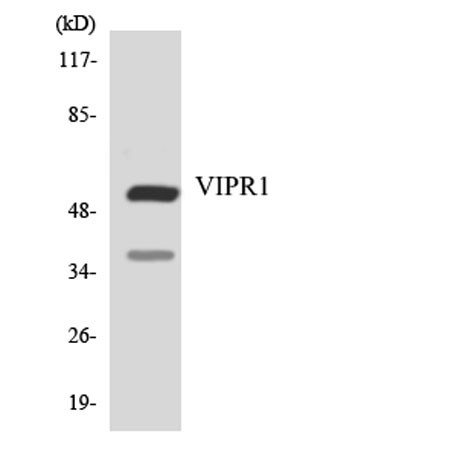
| Observed band (KD) | 52kD |
| Background | vasoactive intestinal peptide receptor 1(VIPR1) Homo sapiens This gene encodes a receptor for vasoactive intestinal peptide, a small neuropeptide. Vasoactive intestinal peptide is involved in smooth muscle relaxation, exocrine and endocrine secretion, and water and ion flux in lung and intestinal epithelia. Its actions are effected through integral membrane receptors associated with a guanine nucleotide binding protein which activates adenylate cyclase. Several transcript variants encoding different isoforms have been found for this gene. [provided by RefSeq, Oct 2011], |
| Function | function:This is a receptor for VIP. The activity of this receptor is mediated by G proteins which activate adenylyl cyclase. The affinity is VIP = PACAP-27 > PACAP-38.,similarity:Belongs to the G-protein coupled receptor 2 family.,tissue specificity:In lung, HT29 colonic epithelial cells, Raji B-lymphoblasts. Lesser extent in brain, heart, kidney, liver and placenta. Not expressed in CD4+ or CD8+ T-cells. Expressed in the T-cell lines HARRIS, HuT 78, Jurkat and Tsup-1, but not in the T-cell lines PEER, MOLT-4, HSB and YT., |
| Subcellular location | Cell membrane; Multi-pass membrane protein. |
| Expression | In lung, HT-29 colonic epithelial cells, Raji B-lymphoblasts. Lesser extent in brain, heart, kidney, liver and placenta. Not expressed in CD4+ or CD8+ T-cells. Expressed in the T-cell lines HARRIS, HuT 78, Jurkat and SUP-T1, but not in the T-cell lines Peer, MOLT-4, HSB and YT. |

Use collapsible tabs for more detailed information that will help customers make a purchasing decision.
Ex: Shipping and return policies, size guides, and other common questions.