 Français
 English

| ELK.No | ES8009 |
| Product name | CRSP150 rabbit pAb |
| Reactivity | Human;Mouse |
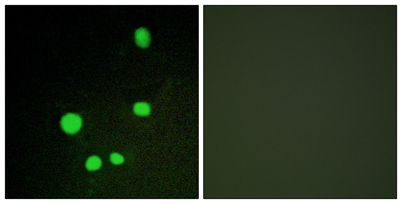
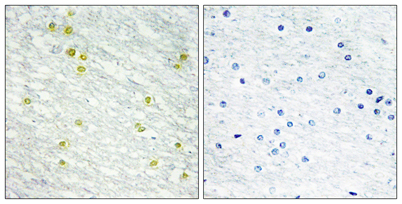
| Applications | IHC;IF;ELISA |
| Other name | MED14; ARC150; CRSP2; CXorf4; DRIP150; EXLM1; RGR1; TRAP170; Mediator of RNA polymerase II transcription subunit 14; Activator-recruited cofactor 150 kDa component; ARC150; Cofactor required for Sp1 transcriptional activation subunit 2; CRS |
| Size | 50μL |
| Unit price ($) | 148 |
| Human gene ID | 9282 |
| Human Swiss-Prot | O60244 |
| Source | Rabbit |
| Isotype | IgG |
| Target | CRSP150 |
| Fields | >>Thyroid hormone signaling pathway |
| Gene name | MED14 |
| Protein name | Mediator of RNA polymerase II transcription subunit 14 |
| Human gene link | View Human Gene |
| Human Swiss link | View Human Swiss-Prot |
| Mouse gene ID | 26896 |
| Mouse gene link | View Mouse Gene |
| Mouse Swiss-Prot | A2ABV5 |
| Mouse Swiss link | View Mouse Swiss-Prot |
| Rat gene ID | |
| Rat gene link | |
| Rat Swiss-Prot | |
| Rat Swiss link | |
| Immunogen | The antiserum was produced against synthesized peptide derived from human MED14. AA range:701-750 |
| Specificity | CRSP150 Polyclonal Antibody detects endogenous levels of CRSP150 protein. |
| Formulation | Liquid in PBS containing 50% glycerol, 0.5% BSA and 0.02% sodium azide. |
| Clonality | Polyclonal |
| Dilution | Immunohistochemistry: 1/100 - 1/300. Immunofluorescence: 1/200 - 1/1000. ELISA: 1/40000. Not yet tested in other applications. |
| Purification | The antibody was affinity-purified from rabbit antiserum by affinity-chromatography using epitope-specific immunogen. |
| Concentration | 1 mg/ml |
| Storage stability | -20°C/1 year |
| Molecular Weight (Da) | 161kD |
| Observed band (KD) | |
| Background | The activation of gene transcription is a multistep process that is triggered by factors that recognize transcriptional enhancer sites in DNA. These factors work with co-activators to direct transcriptional initiation by the RNA polymerase II apparatus. The protein encoded by this gene is a subunit of the CRSP (cofactor required for SP1 activation) complex, which, along with TFIID, is required for efficient activation by SP1. This protein is also a component of other multisubunit complexes e.g. thyroid hormone receptor-(TR-) associated proteins which interact with TR and facilitate TR function on DNA templates in conjunction with initiation factors and cofactors. This protein contains a bipartite nuclear localization signal. This gene is known to escape chromosome X-inactivation. [provided by RefSeq, Jul 2008], |
| Function | function:Component of the Mediator complex, a coactivator involved in the regulated transcription of nearly all RNA polymerase II-dependent genes. Mediator functions as a bridge to convey information from gene-specific regulatory proteins to the basal RNA polymerase II transcription machinery. Mediator is recruited to promoters by direct interactions with regulatory proteins and serves as a scaffold for the assembly of a functional preinitiation complex with RNA polymerase II and the general transcription factors.,similarity:Belongs to the Mediator complex subunit 14 family.,subunit:Interacts with GATA1 (By similarity). Component of the Mediator complex, which is composed of MED1, MED4, MED6, MED7, MED8, MED9, MED10, MED11, MED12, MED13, MED13L, MED14, MED15, MED16, MED17, MED18, MED19, MED20, MED21, MED22, MED23, MED24, MED25, MED26, MED27, MED29, MED30, MED31, CCNC, CDK8 and CDC2L6/CDK |
| Subcellular location | Nucleus . |
| Expression | Ubiquitous. |

Use collapsible tabs for more detailed information that will help customers make a purchasing decision.
Ex: Shipping and return policies, size guides, and other common questions.