 Français
 English
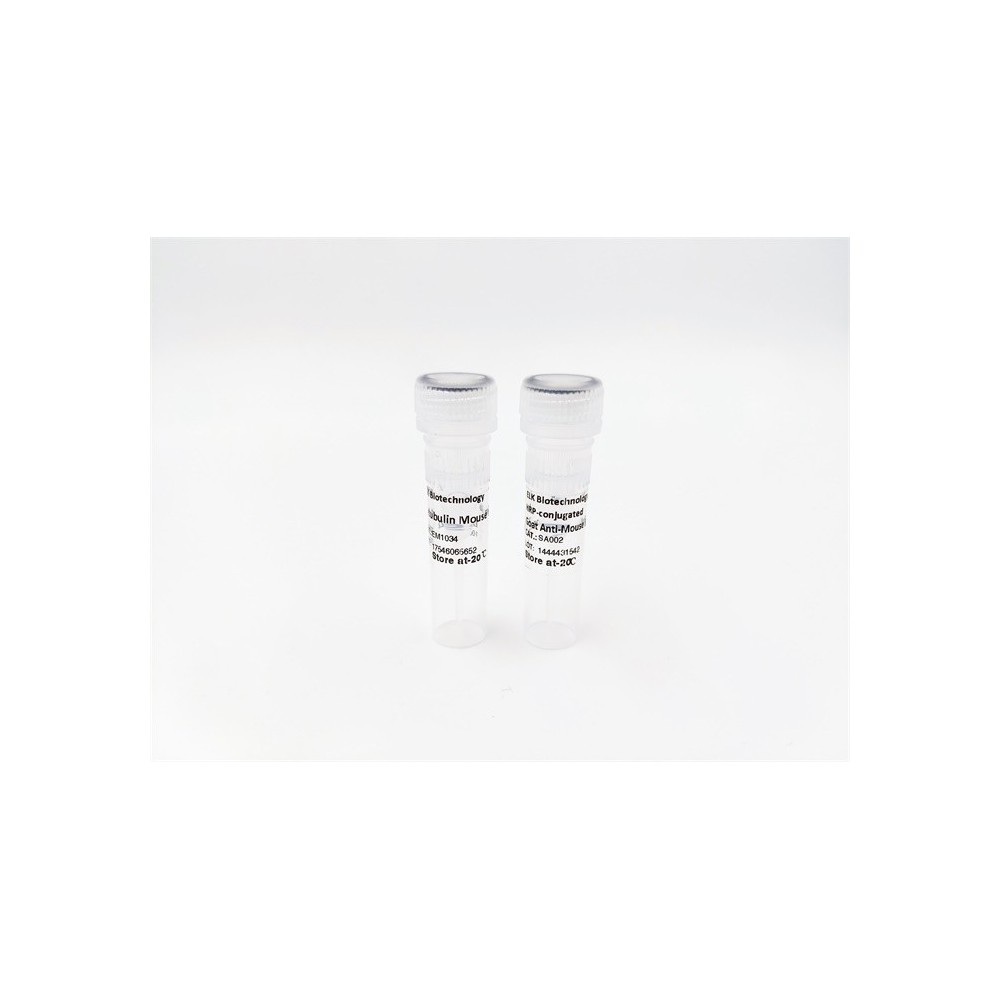

| ELK.No | ES8019 |
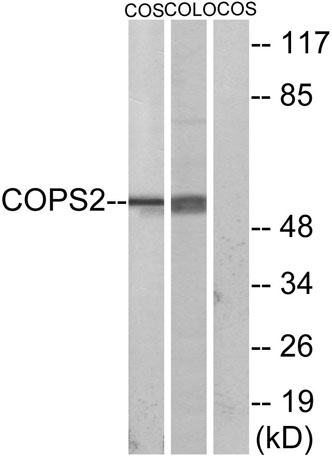
| Product name | TRIP15 rabbit pAb |
| Reactivity | Human;Mouse;Rat;Monkey |
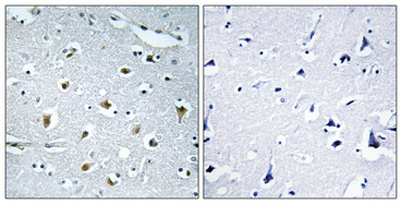
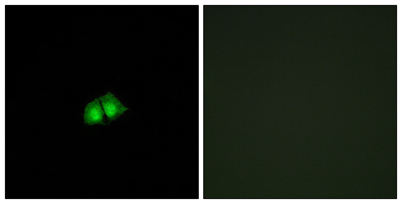
| Applications | WB;IHC;IF;ELISA |
| Other name | COPS2; CSN2; TRIP15; COP9 signalosome complex subunit 2; SGN2; Signalosome subunit 2; Alien homolog; JAB1-containing signalosome subunit 2; Thyroid receptor-interacting protein 15; TR-interacting protein 15; TRIP-15 |
| Size | 100μL |
| Unit price ($) | 248 |
| Human gene ID | 9318 |
| Human Swiss-Prot | P61201 |
| Source | Rabbit |
| Isotype | IgG |
| Target | TRIP15 |
| Fields | |
| Gene name | COPS2 |
| Protein name | COP9 signalosome complex subunit 2 |
| Human gene link | View Human Gene |
| Human Swiss link | View Human Swiss-Prot |
| Mouse gene ID | 12848 |
| Mouse gene link | View Mouse Gene |
| Mouse Swiss-Prot | P61202 |
| Mouse Swiss link | View Mouse Swiss-Prot |
| Rat gene ID | 261736 |
| Rat gene link | View Rat Gene |
| Rat Swiss-Prot | P61203 |
| Rat Swiss link | View Rat Swiss-Prot |
| Immunogen | The antiserum was produced against synthesized peptide derived from human COPS2. AA range:181-230 |
| Specificity | TRIP15 Polyclonal Antibody detects endogenous levels of TRIP15 protein. |
| Formulation | Liquid in PBS containing 50% glycerol, 0.5% BSA and 0.02% sodium azide. |
| Clonality | Polyclonal |
| Dilution | Western Blot: 1/500 - 1/2000. Immunohistochemistry: 1/100 - 1/300. Immunofluorescence: 1/200 - 1/1000. ELISA: 1/20000. Not yet tested in other applications. |
| Purification | The antibody was affinity-purified from rabbit antiserum by affinity-chromatography using epitope-specific immunogen. |
| Concentration | 1 mg/ml |
| Storage stability | -20°C/1 year |
| Molecular Weight (Da) | |
| Observed band (KD) | 55kD |
| Background | function:Essential component of the COP9 signalosome complex (CSN), a complex involved in various cellular and developmental processes. The CSN complex is an essential regulator of the ubiquitin (Ubl) conjugation pathway by mediating the deneddylation of the cullin subunits of SCF-type E3 ligase complexes, leading to decrease the Ubl ligase activity of SCF-type complexes such as SCF, CSA or DDB2. The complex is also involved in phosphorylation of p53/TP53, c-jun/JUN, IkappaBalpha/NFKBIA, ITPK1 and IRF8/ICSBP, possibly via its association with CK2 and PKD kinases. CSN-dependent phosphorylation of TP53 and JUN promotes and protects degradation by the Ubl system, respectively. Involved in early stage of neuronal differentiation via its interaction with NIF3L1.,PTM:Phosphorylated by CK2 and PKD kinases.,similarity:Belongs to the CSN2 family.,similarity:Contains 1 PCI domain.,subunit:Interacts with NIF3L1 (By similarity). Component of the CSN complex, composed of COPS1/GPS1, COPS2, COPS3, COPS4, COPS5, COP6, COPS7 (COPS7A or COPS7B) and COPS8. In the complex, it probably interacts directly with COPS1, COPS4, COPS5 COPS6 and COPS7 (COPS7A or COPS7B). Interacts with CUL1 and CUL2. Specifically interacts with the ligand binding domain of the thyroid receptor (TR). Does not require the presence of thyroid hormone for its interaction. Interacts with IRF8/ICSBP1 and with nuclear receptors NR2F1 and NR0B1., |
| Function | function:Essential component of the COP9 signalosome complex (CSN), a complex involved in various cellular and developmental processes. The CSN complex is an essential regulator of the ubiquitin (Ubl) conjugation pathway by mediating the deneddylation of the cullin subunits of SCF-type E3 ligase complexes, leading to decrease the Ubl ligase activity of SCF-type complexes such as SCF, CSA or DDB2. The complex is also involved in phosphorylation of p53/TP53, c-jun/JUN, IkappaBalpha/NFKBIA, ITPK1 and IRF8/ICSBP, possibly via its association with CK2 and PKD kinases. CSN-dependent phosphorylation of TP53 and JUN promotes and protects degradation by the Ubl system, respectively. Involved in early stage of neuronal differentiation via its interaction with NIF3L1.,PTM:Phosphorylated by CK2 and PKD kinases.,similarity:Belongs to the CSN2 family.,similarity:Contains 1 PCI domain.,subunit:Interact |
| Subcellular location | Cytoplasm . Nucleus . |
| Expression | Brain,Coronary artery,Pituitary,Skeletal muscle, |

Use collapsible tabs for more detailed information that will help customers make a purchasing decision.
Ex: Shipping and return policies, size guides, and other common questions.