 Français
 English
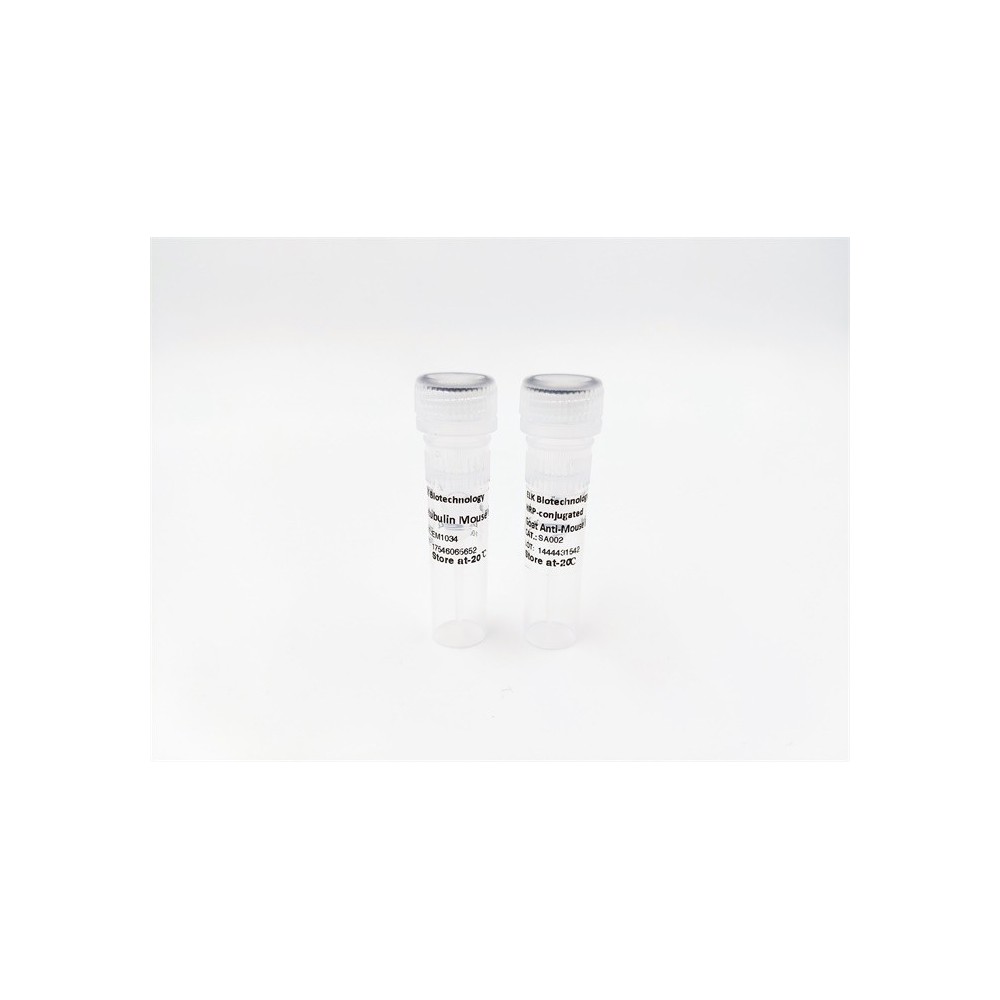

| ELK.No | ES8379 |
| Product name | Thrombospondin 2 rabbit pAb |
| Reactivity | Human;Mouse;Rat |
| Applications | WB;IHC;IF;ELISA |
| Other name | THBS2; TSP2; Thrombospondin-2 |
| Size | 50μL |
| Unit price ($) | 148 |
| Human gene ID | 7058 |
| Human Swiss-Prot | P35442 |
| Source | Rabbit |
| Isotype | IgG |
| Target | Thrombospondin 2 |
| Fields | >>Phagosome;>>PI3K-Akt signaling pathway;>>Focal adhesion;>>ECM-receptor interaction;>>Malaria;>>Human papillomavirus infection |
| Gene name | THBS2 |
| Protein name | Thrombospondin-2 |
| Human gene link | View Human Gene |
| Human Swiss link | View Human Swiss-Prot |
| Mouse gene ID | 21826 |
| Mouse gene link | View Mouse Gene |
| Mouse Swiss-Prot | Q03350 |
| Mouse Swiss link | View Mouse Swiss-Prot |
| Rat gene ID | |
| Rat gene link | |
| Rat Swiss-Prot | |
| Rat Swiss link | |
| Immunogen | The antiserum was produced against synthesized peptide derived from the C-terminal region of human THBS2. AA range:1000-1050 |
| Specificity | Thrombospondin 2 Polyclonal Antibody detects endogenous levels of Thrombospondin 2 protein. |
| Formulation | Liquid in PBS containing 50% glycerol, 0.5% BSA and 0.02% sodium azide. |
| Clonality | Polyclonal |
| Dilution | Western Blot: 1/500 - 1/2000. IHC-p: 1:100-1:300. ELISA: 1/10000. Not yet tested in other applications. |
| Purification | The antibody was affinity-purified from rabbit antiserum by affinity-chromatography using epitope-specific immunogen. |
| Concentration | 1 mg/ml |
| Storage stability | -20°C/1 year |
| Molecular Weight (Da) | |
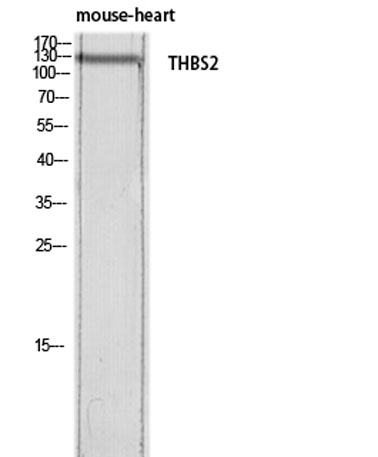
| Observed band (KD) | 130kD |
| Background | thrombospondin 2(THBS2) Homo sapiens The protein encoded by this gene belongs to the thrombospondin family. It is a disulfide-linked homotrimeric glycoprotein that mediates cell-to-cell and cell-to-matrix interactions. This protein has been shown to function as a potent inhibitor of tumor growth and angiogenesis. Studies of the mouse counterpart suggest that this protein may modulate the cell surface properties of mesenchymal cells and be involved in cell adhesion and migration. [provided by RefSeq, Jul 2008], |
| Function | disease:Genetic variations in THBS2 may be a cause of susceptibility to lumbar disk herniation (LDH) [MIM:603932]. LDH is the predominant cause of low-back pain and unilateral leg pain.,function:Adhesive glycoprotein that mediates cell-to-cell and cell-to-matrix interactions. Can bind to fibrinogen, fibronectin, laminin and type V collagen.,similarity:Belongs to the thrombospondin family.,similarity:Contains 1 TSP C-terminal (TSPC) domain.,similarity:Contains 1 TSP N-terminal (TSPN) domain.,similarity:Contains 1 VWFC domain.,similarity:Contains 3 EGF-like domains.,similarity:Contains 3 TSP type-1 domains.,similarity:Contains 8 TSP type-3 repeats.,subunit:Homotrimer; disulfide-linked.,tissue specificity:High expression in invertebral disk tissue., |
| Subcellular location | extracellular region,basement membrane,extracellular matrix,platelet alpha granule, |
| Expression | High expression in invertebral disk tissue. |



Use collapsible tabs for more detailed information that will help customers make a purchasing decision.
Ex: Shipping and return policies, size guides, and other common questions.