 Français
 English
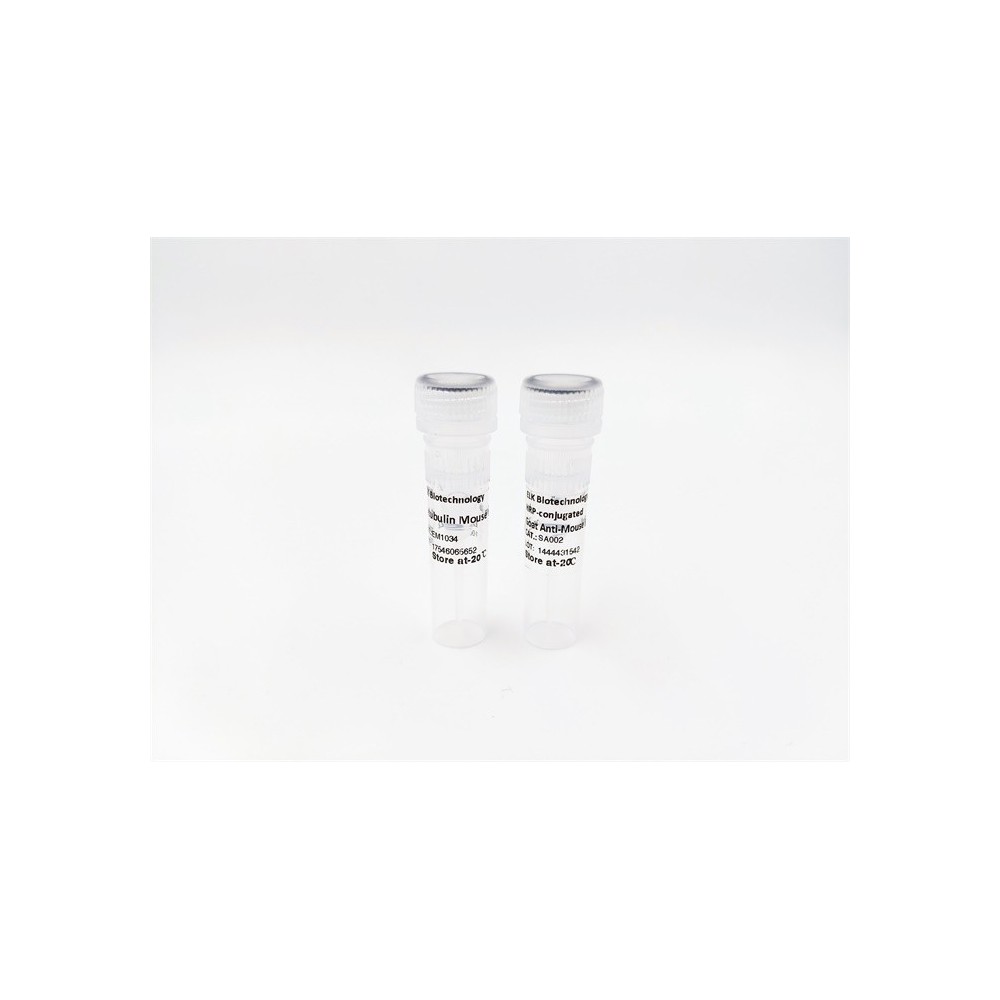

| ELK.No | ES8393 |
| Product name | CKR-6 rabbit pAb |
| Reactivity | Human;Rat;Mouse; |
| Applications | WB;ELISA |
| Other name | CCR6; CKRL3; CMKBR6; GPR29; STRL22; C-C chemokine receptor type 6; C-C CKR-6; CC-CKR-6; CCR-6; Chemokine receptor-like 3; CKR-L3; DRY6; G-protein coupled receptor 29; GPR-CY4; GPRCY4; LARC receptor; CD196 |
| Size | 100μL |
| Unit price ($) | 248 |
| Human gene ID | 1235 |
| Human Swiss-Prot | P51684 |
| Source | Rabbit |
| Isotype | IgG |
| Target | CKR-6 |
| Fields | >>Cytokine-cytokine receptor interaction;>>Viral protein interaction with cytokine and cytokine receptor;>>Chemokine signaling pathway |
| Gene name | CCR6 |
| Protein name | C-C chemokine receptor type 6 |
| Human gene link | View Human Gene |
| Human Swiss link | View Human Swiss-Prot |
| Mouse gene ID | 12458 |
| Mouse gene link | View Mouse Gene |
| Mouse Swiss-Prot | O54689 |
| Mouse Swiss link | View Mouse Swiss-Prot |
| Rat gene ID | |
| Rat gene link | |
| Rat Swiss-Prot | |
| Rat Swiss link | |
| Immunogen | The antiserum was produced against synthesized peptide derived from the N-terminal region of human CCR6. AA range:1-50 |
| Specificity | CKR-6 Polyclonal Antibody detects endogenous levels of CKR-6 protein. |
| Formulation | Liquid in PBS containing 50% glycerol, 0.5% BSA and 0.02% sodium azide. |
| Clonality | Polyclonal |
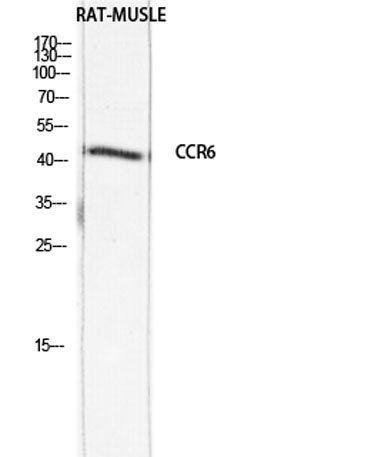
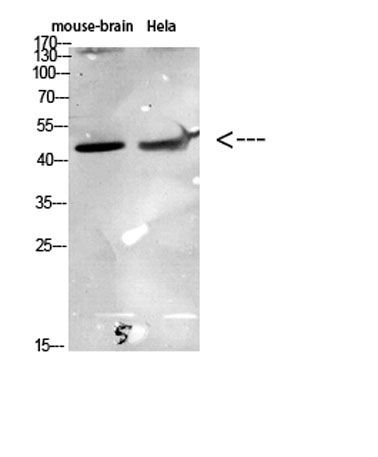
| Dilution | Western Blot: 1/500 - 1/2000. ELISA: 1/10000. Not yet tested in other applications. |
| Purification | The antibody was affinity-purified from rabbit antiserum by affinity-chromatography using epitope-specific immunogen. |
| Concentration | 1 mg/ml |
| Storage stability | -20°C/1 year |
| Molecular Weight (Da) | |
| Observed band (KD) | 42kD |
| Background | This gene encodes a member of the beta chemokine receptor family, which is predicted to be a seven transmembrane protein similar to G protein-coupled receptors. The gene is preferentially expressed by immature dendritic cells and memory T cells. The ligand of this receptor is macrophage inflammatory protein 3 alpha (MIP-3 alpha). This receptor has been shown to be important for B-lineage maturation and antigen-driven B-cell differentiation, and it may regulate the migration and recruitment of dentritic and T cells during inflammatory and immunological responses. Alternatively spliced transcript variants that encode the same protein have been described for this gene. [provided by RefSeq, Jul 2008], |
| Function | caution:It is uncertain whether Met-1 or Met-6 is the initiator.,domain:Contains a RS region (arginine-serine dipeptide repeat) within the C-terminal domain which is the hallmark of the SR family of splicing factors. This region probably plays a role in protein-protein interactions.,function:Receptor for a C-C type chemokine. Binds to MIP-3-alpha/LARC and subsequently transduces a signal by increasing the intracellular calcium ions level.,function:Transcriptional regulator which participates in regulating the pre-mRNA splicing process. Also modulates the expression of critical apoptotic factor, leading to cell apoptosis.,induction:By interleukin-2.,online information:CC chemokine receptors entry,similarity:Belongs to the cyclin family. Cyclin L subfamily.,similarity:Belongs to the G-protein coupled receptor 1 family.,subunit:Interacts with CDC2L1 or CDC2L2, SFRS2, SFRS7 and POLR2A, the h |
| Subcellular location | Cell membrane ; Multi-pass membrane protein . Cell surface . |
| Expression | Sperm. Mainly localized in the tail and in the postacrosomal region but is also found in the midpiece and basal region in a small percentage of sperm cells. Reduced levels found in the sperms of asthenozoospermia and leukocytospermia patients (at protein level). Spleen, lymph nodes, appendix, and fetal liver. Expressed in lymphocytes, T-cells and B-cells but not in natural killer cells, monocytes or granulocytes. |

Use collapsible tabs for more detailed information that will help customers make a purchasing decision.
Ex: Shipping and return policies, size guides, and other common questions.