 Français
 English
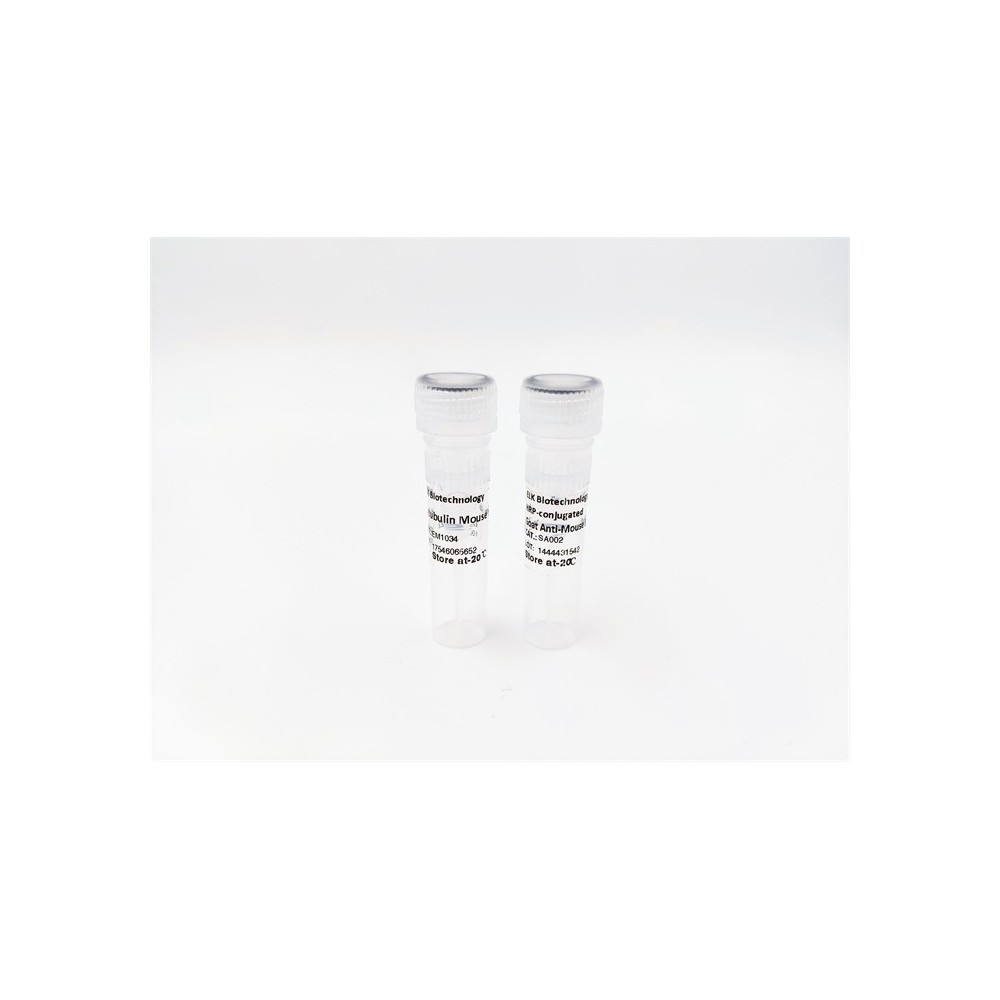

| ELK.No | ES8547 |
| Product name | PENK rabbit pAb |
| Reactivity | Human;Rat;Mouse; |
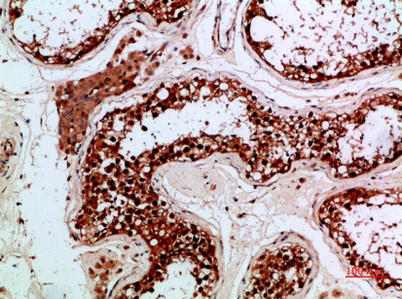
| Applications | WB;IHC |
| Other name | PENK |
| Size | 100μL |
| Unit price ($) | 248 |
| Human gene ID | 5179 |
| Human Swiss-Prot | P01210 |
| Source | Rabbit |
| Isotype | IgG |
| Target | PENK |
| Fields | >>Neuroactive ligand-receptor interaction |
| Gene name | PENK |
| Protein name | proenkephalin |
| Human gene link | View Human Gene |
| Human Swiss link | View Human Swiss-Prot |
| Mouse gene ID | 18619 |
| Mouse gene link | |
| Mouse Swiss-Prot | P22005 |
| Mouse Swiss link | View Mouse Swiss-Prot |
| Rat gene ID | |
| Rat gene link | |
| Rat Swiss-Prot | |
| Rat Swiss link | |
| Immunogen | Synthetic peptide from human protein at AA range: 51-100 |
| Specificity | The antibody detects endogenous PENK protein |
| Formulation | Liquid in PBS containing 50% glycerol, 0.5% BSA and 0.02% sodium azide. |
| Clonality | Polyclonal |
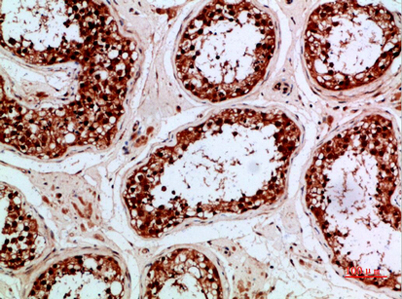
| Dilution | WB 1:500-2000;IHC-p 1:50-300 |
| Purification | The antibody was affinity-purified from rabbit antiserum by affinity-chromatography using epitope-specific immunogen. |
| Concentration | 1 mg/ml |
| Storage stability | -20°C/1 year |
| Molecular Weight (Da) | |
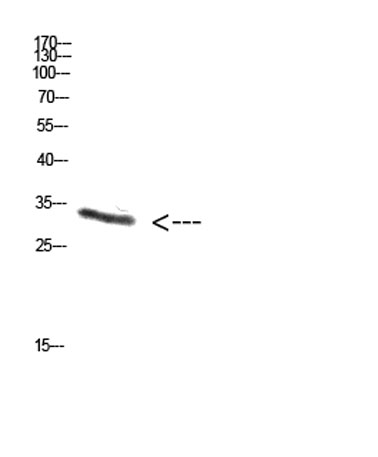
| Observed band (KD) | 33kD |
| Background | This gene encodes a preproprotein that is proteolytically processed to generate multiple protein products. These products include the pentapeptide opioids Met-enkephalin and Leu-enkephalin, which are stored in synaptic vesicles, then released into the synapse where they bind to mu- and delta-opioid receptors to modulate the perception of pain. Other non-opioid cleavage products may function in distinct biological activities. [provided by RefSeq, Jul 2015], |
| Function | function:Met- and Leu-enkephalins compete with and mimic the effects of opiate drugs. They play a role in a number of physiologic functions, including pain perception and responses to stress. PENK(114-133) and PENK(237-258) increase glutamate release in the striatum. PENK(114-133) decreases GABA concentration in the striatum.,PTM:The N-terminal domain contains 6 conserved cysteines thought to be involved in disulfide bonding and/or processing.,similarity:Belongs to the opioid neuropeptide precursor family., |
| Subcellular location | Cytoplasmic vesicle, secretory vesicle, chromaffin granule lumen . Secreted . |
| Expression | Brain,Cerebellum,Testis, |

Use collapsible tabs for more detailed information that will help customers make a purchasing decision.
Ex: Shipping and return policies, size guides, and other common questions.