 Français
 English
PARP-1 (Acetyl-K521) rabbit pAb
AO-06-ES8828-100

| ELK.No | ES8828 |
| Product name | PARP-1 (Acetyl-K521) rabbit pAb |
| Reactivity | Human;Mouse;Rat |
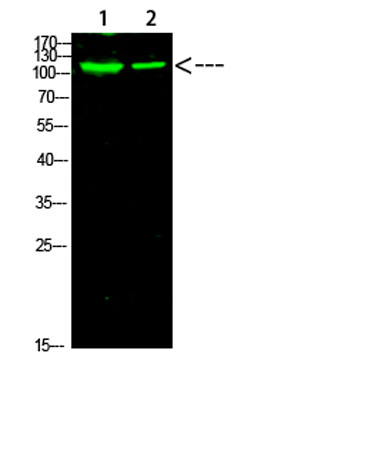
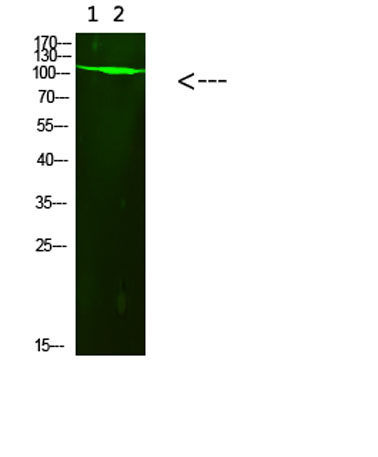
| Applications | WB;ELISA |
| Other name | Poly [ADP-ribose] polymerase 1 (PARP-1) (EC 2.4.2.30) (ADP-ribosyltransferase diphtheria toxin-like 1) (ARTD1) (NAD(+) ADP-ribosyltransferase 1) (ADPRT 1) (Poly[ADP-ribose] synthase 1) |
| Size | 100μL |
| Unit price ($) | 248 |
| Human gene ID | 142 |
| Human Swiss-Prot | P09874 |
| Source | Rabbit |
| Isotype | IgG |
| Target | PARP |
| Fields | >>Base excision repair;>>NF-kappa B signaling pathway;>>Apoptosis;>>Necroptosis;>>Diabetic cardiomyopathy |
| Gene name | PARP1 ADPRT PPOL |
| Protein name | PARP-1 |
| Human gene link | View Human Gene |
| Human Swiss link | View Human Swiss-Prot |
| Mouse gene ID | |
| Mouse gene link | |
| Mouse Swiss-Prot | P11103 |
| Mouse Swiss link | View Mouse Swiss-Prot |
| Rat gene ID | |
| Rat gene link | |
| Rat Swiss-Prot | |
| Rat Swiss link | |
| Immunogen | Synthesized Acetyl peptide derived from human PARP-1. at AA range: K521 |
| Specificity | This antibody detects endogenous levels of PARP-1 at Human:K521;Mouse:K520;Rat:K521, It doesn't reacte with total protein. |
| Formulation | Liquid in PBS containing 50% glycerol, 0.5% BSA and 0.02% sodium azide. |
| Clonality | Polyclonal |
| Dilution | wb dilution 1:1000 |
| Purification | The antibody was affinity-purified from rabbit antiserum by affinity-chromatography using epitope-specific immunogen. |
| Concentration | 1 mg/ml |
| Storage stability | -20°C/1 year |
| Molecular Weight (Da) | |
| Observed band (KD) | |
| Background | This gene encodes a chromatin-associated enzyme, poly(ADP-ribosyl)transferase, which modifies various nuclear proteins by poly(ADP-ribosyl)ation. The modification is dependent on DNA and is involved in the regulation of various important cellular processes such as differentiation, proliferation, and tumor transformation and also in the regulation of the molecular events involved in the recovery of cell from DNA damage. In addition, this enzyme may be the site of mutation in Fanconi anemia, and may participate in the pathophysiology of type I diabetes. [provided by RefSeq, Jul 2008], |
| Function | catalytic activity:NAD(+) + (ADP-D-ribosyl)(n)-acceptor = nicotinamide + (ADP-D-ribosyl)(n+1)-acceptor.,function:Involved in the base excision repair (BER) pathway, by catalyzing the poly(ADP-ribosyl)ation of a limited number of acceptor proteins involved in chromatin architecture and in DNA metabolism. This modification follows DNA damages and appears as an obligatory step in a detection/signaling pathway leading to the reparation of DNA strand breaks.,miscellaneous:The ADP-D-ribosyl group of NAD(+) is transferred to an acceptor carboxyl group on a histone or the enzyme itself, and further ADP-ribosyl groups are transferred to the 2'-position of the terminal adenosine moiety, building up a polymer with an average chain length of 20-30 units.,PTM:Phosphorylated by PRKDC. Phosphorylated upon DNA damage, probably by ATM or ATR.,PTM:Poly-ADP-ribosylated by PARP2.,similarity:Contains 1 BRCT |
| Subcellular location | Nucleus . Nucleus, nucleolus . Chromosome . Localizes to sites of DNA damage. . |
| Expression | Brain,Colon carcinoma,Fibroblast,Lung,Ovarian carcinoma,Skin, |

Use collapsible tabs for more detailed information that will help customers make a purchasing decision.
Ex: Shipping and return policies, size guides, and other common questions.