 Français
 English
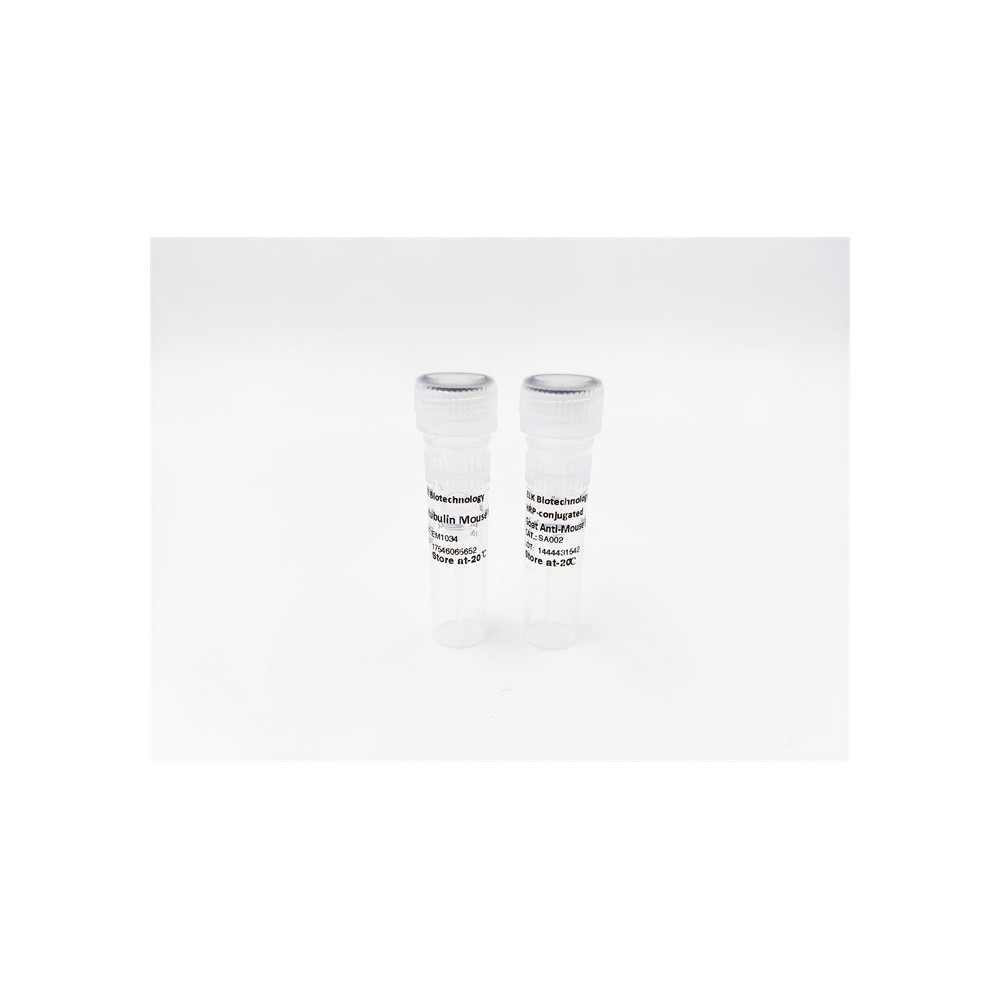

| ELK.No | ES8838 |
| Product name | KCTD7 rabbit pAb |
| Reactivity | Human;Mouse;Rat |
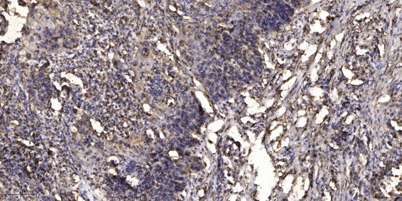
| Applications | WB;ELISA;IHC |
| Other name | BTB/POZ domain-containing protein KCTD7 |
| Size | 100μL |
| Unit price ($) | 248 |
| Human gene ID | 154881 |
| Human Swiss-Prot | Q96MP8 |
| Source | Rabbit |
| Isotype | IgG |
| Target | KCTD7 |
| Fields | |
| Gene name | KCTD7 |
| Protein name | KCTD7 |
| Human gene link | View Human Gene |
| Human Swiss link | View Human Swiss-Prot |
| Mouse gene ID | 212919 |
| Mouse gene link | |
| Mouse Swiss-Prot | Q8BJK1 |
| Mouse Swiss link | View Mouse Swiss-Prot |
| Rat gene ID | |
| Rat gene link | |
| Rat Swiss-Prot | |
| Rat Swiss link | |
| Immunogen | Synthesized peptide derived from human KCTD7. at AA range: 181-230 |
| Specificity | This antibody detects endogenous levels of KCTD7 |
| Formulation | Liquid in PBS containing 50% glycerol, 0.5% BSA and 0.02% sodium azide. |
| Clonality | Polyclonal |
| Dilution | WB 1:500-2000;IHC-p 1:50-300; ELISA 2000-20000 |
| Purification | The antibody was affinity-purified from rabbit antiserum by affinity-chromatography using epitope-specific immunogen. |
| Concentration | 1 mg/ml |
| Storage stability | -20°C/1 year |
| Molecular Weight (Da) | |
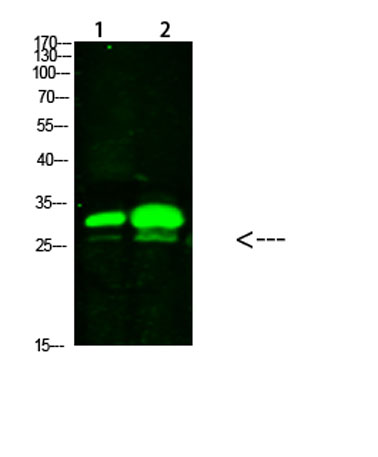
| Observed band (KD) | 33kD |
| Background | This gene encodes a member of the potassium channel tetramerization domain-containing protein family. Family members are identified on a structural basis and contain an amino-terminal domain similar to the T1 domain present in the voltage-gated potassium channel. Mutations in this gene have been associated with progressive myoclonic epilepsy-3. Alternative splicing results in multiple transcript variants.[provided by RefSeq, Jan 2011], |
| Function | disease:Defects in KCTD7 are the cause of progressive myoclonic epilepsy type 3 (EPM3) [MIM:611726]. EPM3 is an autosomal recessive, severe, progressive myoclonic epilepsy with early-onset. Multifocal myoclonic seizures begin between 16 and 24 months of age after normal initial development. Neurodegeneration and regression occur with seizure onset. Other features include mental retardation, dysarthria, truncal ataxia, and loss of fine finger movements. EEG shows slow dysrhythmia, multifocal and occasionally generalized epileptiform discharges.,similarity:Contains 1 BTB (POZ) domain., |
| Subcellular location | Cell membrane. Cytoplasm, cytosol. |
| Expression | Brain, |

Use collapsible tabs for more detailed information that will help customers make a purchasing decision.
Ex: Shipping and return policies, size guides, and other common questions.