 Français
 English
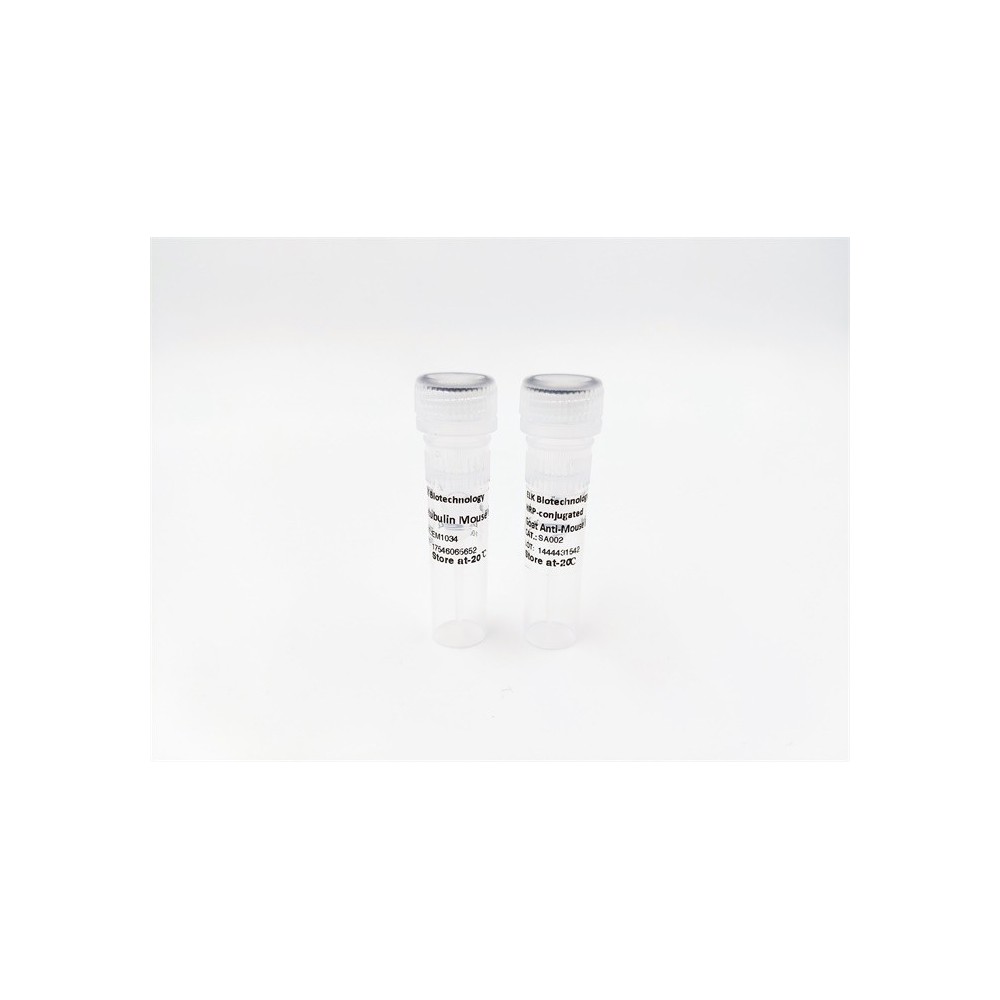

| ELK.No | ES8855 |
| Product name | PBEF rabbit pAb |
| Reactivity | Human;Mouse;Rat |
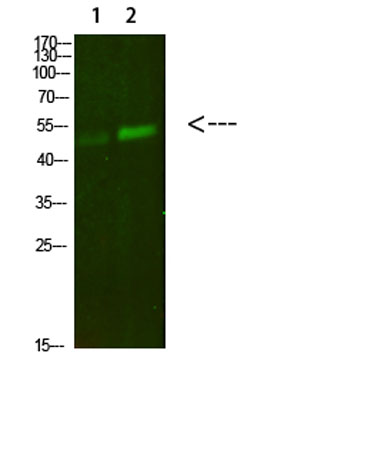
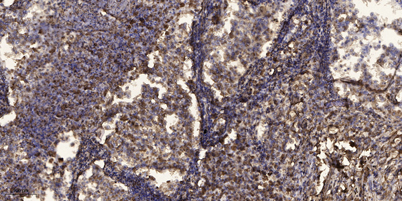
| Applications | WB;ELISA;IHC |
| Other name | Nicotinamide phosphoribosyltransferase (NAmPRTase) (Nampt) (EC 2.4.2.12) (Pre-B-cell colony-enhancing factor 1) (Pre-B cell-enhancing factor) (Visfatin) |
| Size | 50μL |
| Unit price ($) | 148 |
| Human gene ID | 10135 |
| Human Swiss-Prot | P43490 |
| Source | Rabbit |
| Isotype | IgG |
| Target | PBEF |
| Fields | >>Nicotinate and nicotinamide metabolism;>>Metabolic pathways;>>NOD-like receptor signaling pathway |
| Gene name | NAMPT |
| Protein name | PBEF |
| Human gene link | View Human Gene |
| Human Swiss link | View Human Swiss-Prot |
| Mouse gene ID | 59027 |
| Mouse gene link | |
| Mouse Swiss-Prot | Q99KQ4 |
| Mouse Swiss link | View Mouse Swiss-Prot |
| Rat gene ID | |
| Rat gene link | |
| Rat Swiss-Prot | |
| Rat Swiss link | |
| Immunogen | Synthesized peptide derived from human PBEF. at AA range: 411-460 |
| Specificity | PBEF Polyclonal Antibody detects endogenous levels of PBEF |
| Formulation | Liquid in PBS containing 50% glycerol, 0.5% BSA and 0.02% sodium azide. |
| Clonality | Polyclonal |
| Dilution | WB 1:500-2000;IHC-p 1:50-300; ELISA 2000-20000 |
| Purification | The antibody was affinity-purified from rabbit antiserum by affinity-chromatography using epitope-specific immunogen. |
| Concentration | 1 mg/ml |
| Storage stability | -20°C/1 year |
| Molecular Weight (Da) | |
| Observed band (KD) | 54kD |
| Background | This gene encodes a protein that catalyzes the condensation of nicotinamide with 5-phosphoribosyl-1-pyrophosphate to yield nicotinamide mononucleotide, one step in the biosynthesis of nicotinamide adenine dinucleotide. The protein belongs to the nicotinic acid phosphoribosyltransferase (NAPRTase) family and is thought to be involved in many important biological processes, including metabolism, stress response and aging. This gene has a pseudogene on chromosome 10. [provided by RefSeq, Feb 2011], |
| Function | catalytic activity:Nicotinamide D-ribonucleotide + diphosphate = nicotinamide + 5-phospho-alpha-D-ribose 1-diphosphate.,caution:Was originally (PubMed:8289818) thought to be a cytokine which acts on early B-lineage precursor cells, by enhancing the effect of IL-7 and SCF on pre-B-cell colony formation.,function:Catalyzes the condensation of nicotinamide with 5-phosphoribosyl-1-pyrophosphate to yield nicotinamide mononucleotide, an intermediate in the biosynthesis of NAD. It is the rate limiting component in the mammalian NAD biosynthesis pathway.,pathway:Cofactor biosynthesis; NAD(+) biosynthesis; nicotinamide ribonucleotide from 5-phospho-alpha-D-ribose 1-diphosphate and nicotinamide: step 1/1.,similarity:Belongs to the NAPRTase family.,tissue specificity:Expressed in large amounts in bone marrow, liver tissue, and muscle. Also present in heart, placenta, lung, and kidney tissues., |
| Subcellular location | Nucleus . Cytoplasm . Secreted . Under non-inflammatory conditions, visfatin predominantly exhibits a granular pattern within the nucleus. Secreted by endothelial cells upon IL-1beta stimulation. Abundantly secreted in milk, reaching 100-fold higher concentrations compared to maternal serum. . |
| Expression | Expressed in large amounts in bone marrow, liver tissue, and muscle. Also present in heart, placenta, lung, and kidney tissues. |

Use collapsible tabs for more detailed information that will help customers make a purchasing decision.
Ex: Shipping and return policies, size guides, and other common questions.