 Français
 English
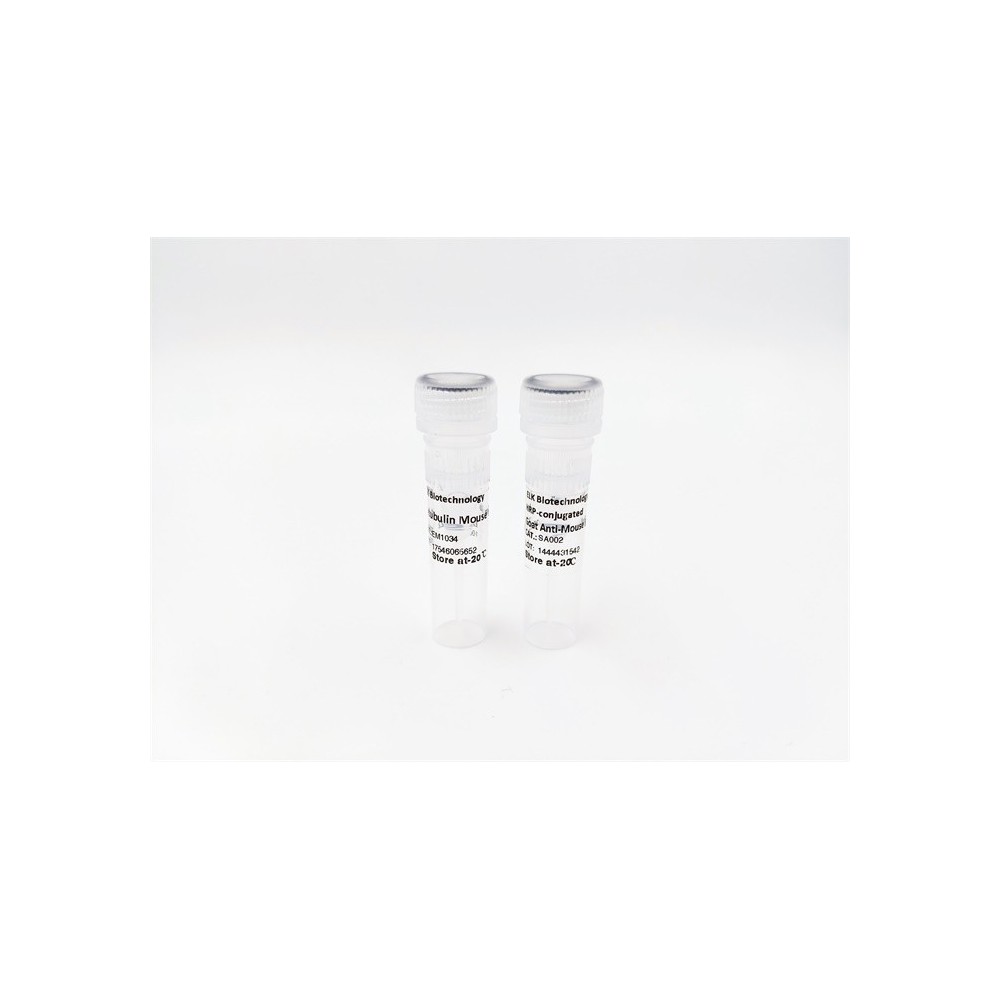

| ELK.No | ES8926 |
| Product name | CLUS rabbit pAb |
| Reactivity | Human;Mouse;Rat |
| Applications | WB;ELISA |
| Other name | Clusterin (Aging-associated gene 4 protein) (Apolipoprotein J) (Apo-J) (Complement cytolysis inhibitor) (CLI) (Complement-associated protein SP-40,40) (Ku70-binding protein 1) (NA1/NA2) (Testosterone-repressed prostate message 2) (TRPM-2) [Cleaved into: Clusterin beta chain (ApoJalpha) (Complement cytolysis inhibitor a chain); Clusterin alpha chain (ApoJbeta) (Complement cytolysis inhibitor b chain)] |
| Size | 100μL |
| Unit price ($) | 248 |
| Human gene ID | 1191 |
| Human Swiss-Prot | P10909 |
| Source | Rabbit |
| Isotype | IgG |
| Target | CLUS |
| Fields | >>Complement and coagulation cascades |
| Gene name | CLU APOJ CLI KUB1 AAG4 |
| Protein name | Clusterin (Aging-associated gene 4 protein) (Apolipoprotein J) (Apo-J) (Complement cytolysis inhibitor) (CLI) (Complement-associated protein SP-40,40) (Ku70-binding protein 1) (NA1/NA2) (Testosterone- |
| Human gene link | View Human Gene |
| Human Swiss link | View Human Swiss-Prot |
| Mouse gene ID | 12759 |
| Mouse gene link | |
| Mouse Swiss-Prot | Q06890 |
| Mouse Swiss link | View Mouse Swiss-Prot |
| Rat gene ID | 24854 |
| Rat gene link | |
| Rat Swiss-Prot | P05371 |
| Rat Swiss link | View Rat Swiss-Prot |
| Immunogen | Synthesized peptide derived from human CLUS Polyclonal |
| Specificity | This antibody detects endogenous levels of CLUS. |
| Formulation | Liquid in PBS containing 50% glycerol, 0.5% BSA and 0.02% sodium azide. |
| Clonality | Polyclonal |
| Dilution | WB 1:500-2000, ELISA 1:10000-20000 |
| Purification | The antibody was affinity-purified from rabbit antiserum by affinity-chromatography using epitope-specific immunogen. |
| Concentration | 1 mg/ml |
| Storage stability | -20°C/1 year |
| Molecular Weight (Da) | |
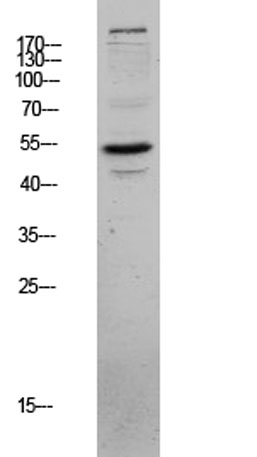
| Observed band (KD) | 52kD |
| Background | The protein encoded by this gene is a secreted chaperone that can under some stress conditions also be found in the cell cytosol. It has been suggested to be involved in several basic biological events such as cell death, tumor progression, and neurodegenerative disorders. Alternate splicing results in both coding and non-coding variants.[provided by RefSeq, May 2011], |
| Function | function:Not yet clear. It is known to be expressed in a variety of tissues and it seems to be able to bind to cells, membranes and hydrophobic proteins. It has been associated with programmed cell death (apoptosis).,similarity:Belongs to the clusterin family.,subunit:Antiparallel disulfide-linked heterodimer. Interacts with APOA1, CLUAP1 AND PON1., |
| Subcellular location | [Isoform 1]: Secreted . Can retrotranslocate from the secretory compartments to the cytosol upon cellular stress. .; [Isoform 4]: Cytoplasm . Keeps cytoplasmic localization in stressed and unstressed cell. .; [Isoform 6]: Cytoplasm . Keeps cytoplasmic localization in stressed and unstressed cell. .; Nucleus . Cytoplasm . Mitochondrion membrane; Peripheral membrane protein; Cytoplasmic side . Cytoplasm, cytosol . Microsome . Endoplasmic reticulum . Mitochondrion . Mitochondrion membrane . Cytoplasm, perinuclear region . Cytoplasmic vesicle, secretory vesicle, chromaffin granule . Secreted isoforms can retrotranslocate from the secretory compartments to the cytosol upon cellular stress (PubMed:17451556). Detected in perinuclear foci that may be aggresomes containing misfolded, ubiquitinated |
| Expression | Detected in blood plasma, cerebrospinal fluid, milk, seminal plasma and colon mucosa. Detected in the germinal center of colon lymphoid nodules and in colon parasympathetic ganglia of the Auerbach plexus (at protein level). Ubiquitous. Detected in brain, testis, ovary, liver and pancreas, and at lower levels in kidney, heart, spleen and lung. |

Use collapsible tabs for more detailed information that will help customers make a purchasing decision.
Ex: Shipping and return policies, size guides, and other common questions.