 Français
 English
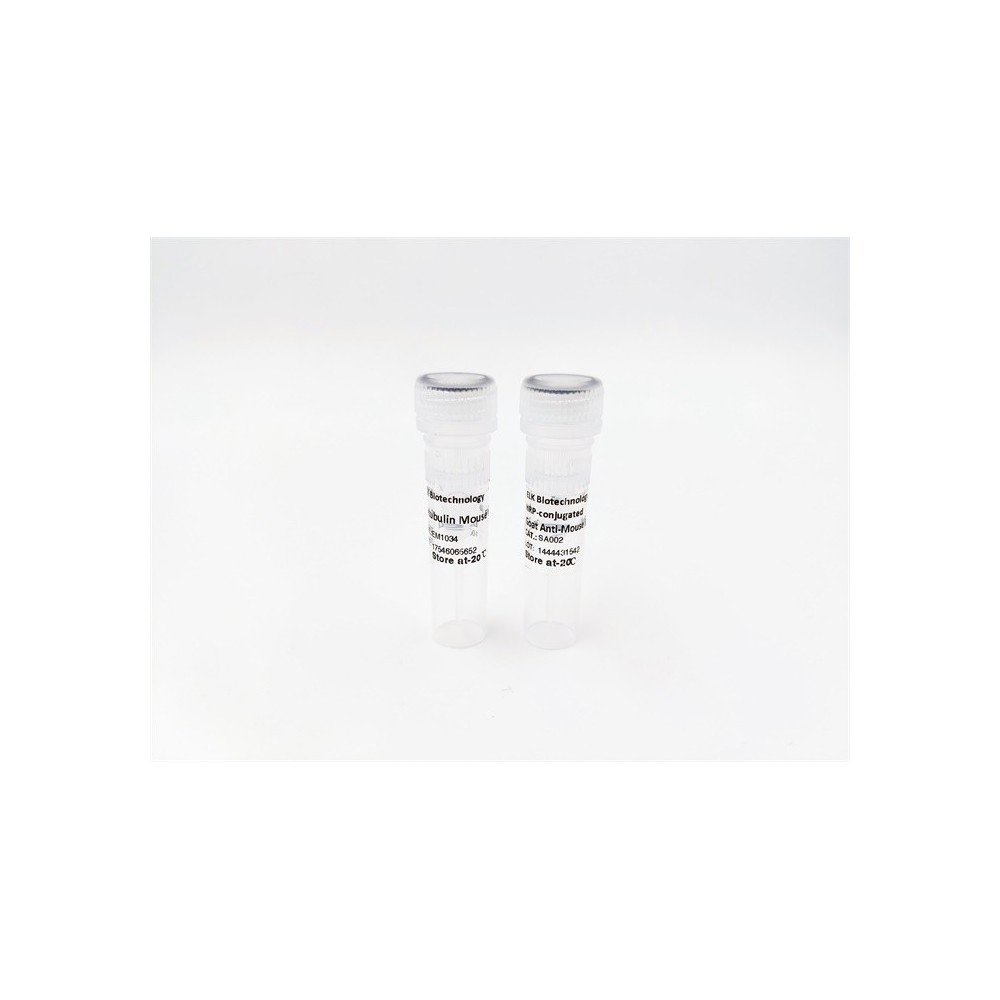

| ELK.No | ES8990 |
| Product name | RPTOR rabbit pAb |
| Reactivity | Human;Rat;Mouse; |
| Applications | WB;ELISA |
| Other name | |
| Size | 50μL |
| Unit price ($) | 148 |
| Human gene ID | 57521 |
| Human Swiss-Prot | Q8N122 |
| Source | Rabbit |
| Isotype | IgG |
| Target | Raptor |
| Fields | >>Autophagy - other;>>Autophagy - animal;>>mTOR signaling pathway;>>PI3K-Akt signaling pathway;>>AMPK signaling pathway;>>Longevity regulating pathway;>>Longevity regulating pathway - multiple species;>>Thermogenesis;>>Insulin signaling pathway;>>Shigellosis;>>MicroRNAs in cancer |
| Gene name | RPTOR KIAA1303 RAPTOR |
| Protein name | Regulatory-associated protein of mTOR (Raptor) (p150 target of rapamycin (TOR)-scaffold protein) |
| Human gene link | |
| Human Swiss link | View Human Swiss-Prot |
| Mouse gene ID | |
| Mouse gene link | |
| Mouse Swiss-Prot | Q8K4Q0 |
| Mouse Swiss link | View Mouse Swiss-Prot |
| Rat gene ID | |
| Rat gene link | |
| Rat Swiss-Prot | |
| Rat Swiss link | |
| Immunogen | Synthesized peptide derived from human protein . at AA range: 730-810 |
| Specificity | RPTOR Polyclonal Antibody detects endogenous levels of protein. |
| Formulation | Liquid in PBS containing 50% glycerol, and 0.02% sodium azide. |
| Clonality | Polyclonal |
| Dilution | WB 1:500-2000 ELISA 1:5000-20000 |
| Purification | The antibody was affinity-purified from rabbit antiserum by affinity-chromatography using epitope-specific immunogen. |
| Concentration | 1 mg/ml |
| Storage stability | -20°C/1 year |
| Molecular Weight (Da) | |
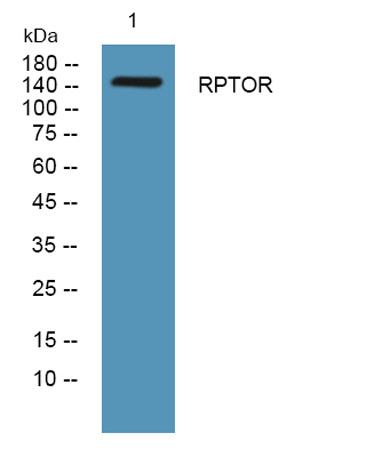
| Observed band (KD) | 146kD |
| Background | This gene encodes a component of a signaling pathway that regulates cell growth in response to nutrient and insulin levels. The encoded protein forms a stoichiometric complex with the mTOR kinase, and also associates with eukaryotic initiation factor 4E-binding protein-1 and ribosomal protein S6 kinase. The protein positively regulates the downstream effector ribosomal protein S6 kinase, and negatively regulates the mTOR kinase. Multiple transcript variants encoding different isoforms have been found for this gene. [provided by RefSeq, Sep 2009], |
| Function | function:Participates in the FRAP1 pathway and associates in a near stoichiometric ratio with FRAP1 to form a nutrient-sensitive complex (NSC). Plays a pivotal role as a scaffold protein in the FRAP1-signaling pathway and this interaction is essential for the catalyzed phosphorylation of EIF4EBP1. Has a positive role in nutrient-stimulated signaling to the downstream effector RPS6KB1. Under nutrient-deprived conditions, serves as a negative regulator of FRAP1 kinase activity. Regulation of the interaction with FRAP1 is a critical mechanism by which cells coordinate the rate of cell growth and maintenance of cell size with different environmental conditions.,miscellaneous:Rapamycin destabilizes the interaction with FRAP1 regardless of nutrient availability, and its potency for dissociation is increased under nutrient-rich conditions. This action uncouples FRAP1 from its substrates, and in |
| Subcellular location | Cytoplasm. Lysosome. Cytoplasmic granule . Targeting to lysosomes depends on amino acid availability. In arsenite-stressed cells, accumulates in stress granules when associated with SPAG5 and association with lysosomes is drastically decreased. |
| Expression | Highly expressed in skeletal muscle, and in a lesser extent in brain, lung, small intestine, kidney and placenta. Isoform 3 is widely expressed, with highest levels in nasal mucosa and pituitary and lowest in spleen. |

Use collapsible tabs for more detailed information that will help customers make a purchasing decision.
Ex: Shipping and return policies, size guides, and other common questions.