 Français
 English
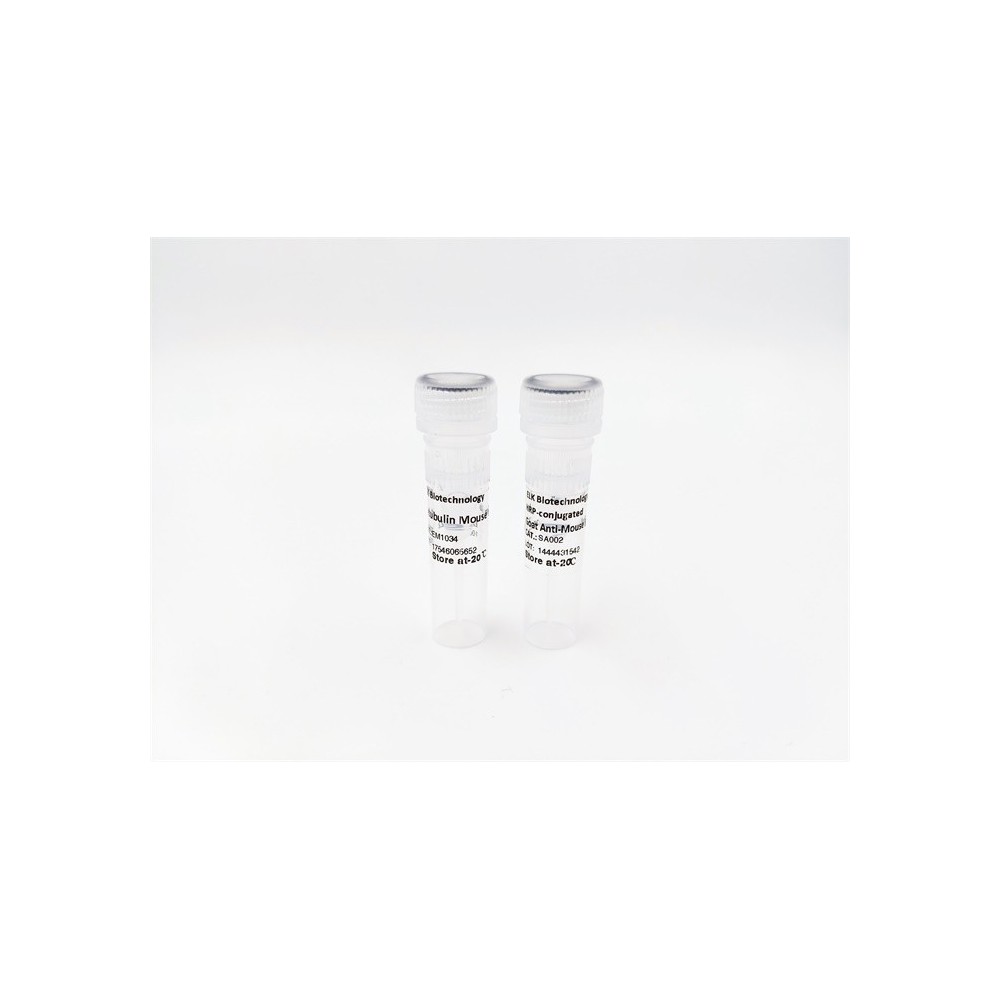

| ELK.No | ES9654 |
| Product name | DHB8 rabbit pAb |
| Reactivity | Human;Rat;Mouse; |
| Applications | WB;ELISA |
| Other name | |
| Size | 100μL |
| Unit price ($) | 248 |
| Human gene ID | 7923 |
| Human Swiss-Prot | Q92506 |
| Source | Rabbit |
| Isotype | IgG |
| Target | DHB8 |
| Fields | >>Fatty acid biosynthesis;>>Steroid hormone biosynthesis;>>Metabolic pathways;>>Fatty acid metabolism |
| Gene name | HSD17B8 FABGL HKE6 RING2 |
| Protein name | Estradiol 17-beta-dehydrogenase 8 (EC 1.1.1.62) (17-beta-hydroxysteroid dehydrogenase 8) (17-beta-HSD 8) (3-oxoacyl-[acyl-carrier-protein] reductase) (EC 1.1.1.-) (Protein Ke6) (Ke-6) (Really interest |
| Human gene link | |
| Human Swiss link | View Human Swiss-Prot |
| Mouse gene ID | |
| Mouse gene link | |
| Mouse Swiss-Prot | P50171 |
| Mouse Swiss link | View Mouse Swiss-Prot |
| Rat gene ID | |
| Rat gene link | |
| Rat Swiss-Prot | Q6MGB5 |
| Rat Swiss link | View Rat Swiss-Prot |
| Immunogen | Synthesized peptide derived from part region of human protein |
| Specificity | DHB8 Polyclonal Antibody detects endogenous levels of protein. |
| Formulation | Liquid in PBS containing 50% glycerol, and 0.02% sodium azide. |
| Clonality | Polyclonal |
| Dilution | WB 1:500-2000 ELISA 1:5000-20000 |
| Purification | The antibody was affinity-purified from rabbit antiserum by affinity-chromatography using epitope-specific immunogen. |
| Concentration | 1 mg/ml |
| Storage stability | -20°C/1 year |
| Molecular Weight (Da) | |
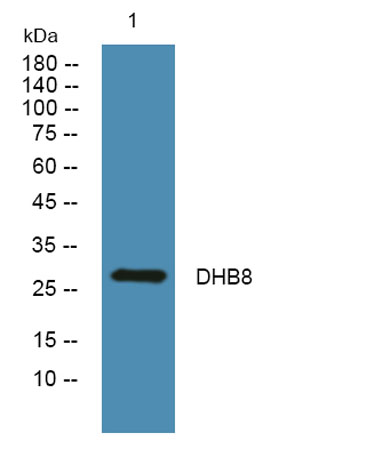
| Observed band (KD) | 28kD |
| Background | hydroxysteroid 17-beta dehydrogenase 8(HSD17B8) Homo sapiens In mice, the Ke6 protein is a 17-beta-hydroxysteroid dehydrogenase that can regulate the concentration of biologically active estrogens and androgens. It is preferentially an oxidative enzyme and inactivates estradiol, testosterone, and dihydrotestosterone. However, the enzyme has some reductive activity and can synthesize estradiol from estrone. The protein encoded by this gene is similar to Ke6 and is a member of the short-chain dehydrogenase superfamily. An alternatively spliced transcript of this gene has been detected, but the full-length nature of this variant has not been determined. [provided by RefSeq, Jul 2008], |
| Function | catalytic activity:Estradiol-17-beta + NAD(P)(+) = estrone + NAD(P)H.,catalytic activity:Testosterone + NAD(+) = androst-4-ene-3,17-dione + NADH.,function:Uses estradiol as its preferred substrate.,pathway:Steroid biosynthesis; estrogen biosynthesis.,similarity:Belongs to the short-chain dehydrogenases/reductases (SDR) family.,tissue specificity:High expression in the liver and pancreas, lower in the skeletal muscle and kidney., |
| Subcellular location | Mitochondrion matrix . |
| Expression | Widely expressed, particularly abundant in prostate, placenta and kidney (PubMed:17978863). Expressed at protein level in various tissues like brain, cerebellum, heart, lung, kidney, ovary, testis, adrenals and prostate (PubMed:30508570). |

Use collapsible tabs for more detailed information that will help customers make a purchasing decision.
Ex: Shipping and return policies, size guides, and other common questions.
