 Français
 English
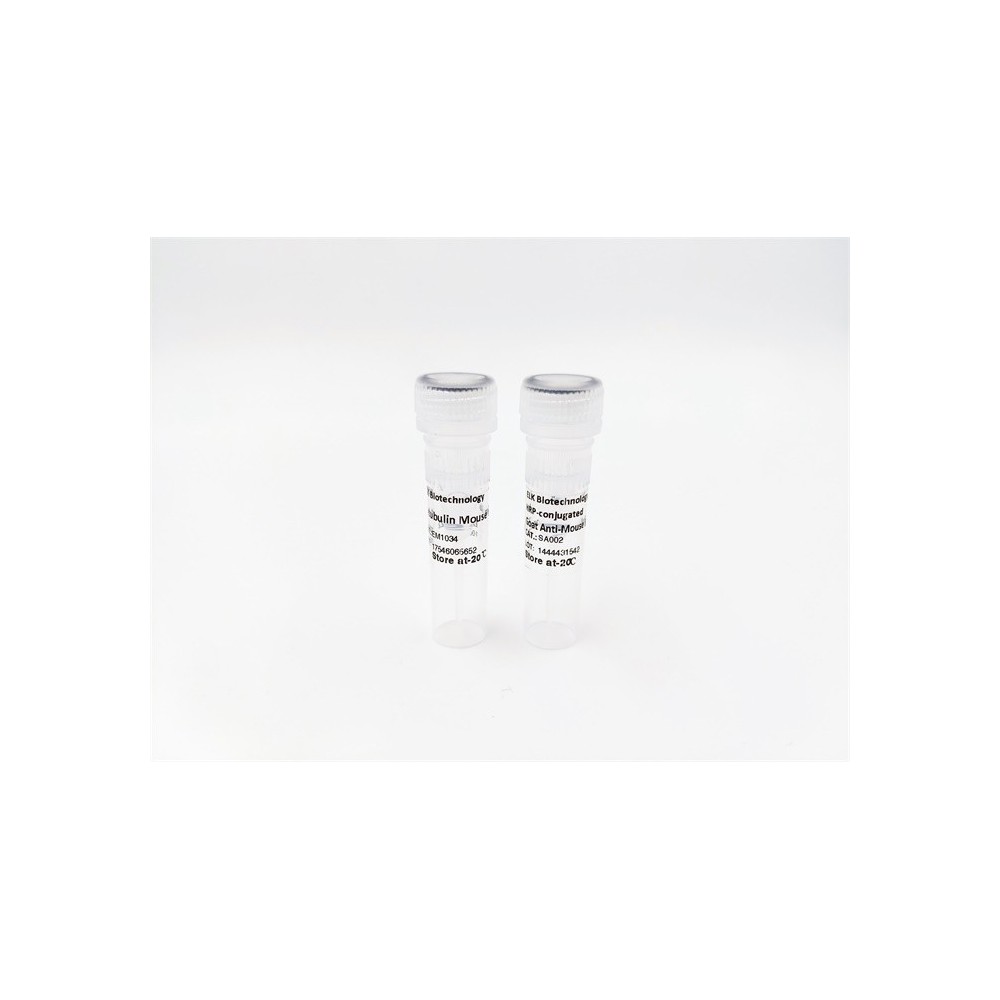

| ELK.No | ES9833 |
| Product name | MRP6 rabbit pAb |
| Reactivity | Human;Rat;Mouse |
| Applications | WB;ELISA |
| Other name | |
| Size | 100μL |
| Unit price ($) | 248 |
| Human gene ID | 368 |
| Human Swiss-Prot | O95255 |
| Source | Rabbit |
| Isotype | IgG |
| Target | MRP6 |
| Fields | >>ABC transporters |
| Gene name | ABCC6 ARA MRP6 |
| Protein name | Multidrug resistance-associated protein 6 (ATP-binding cassette sub-family C member 6) (Anthracycline resistance-associated protein) (Multi-specific organic anion transporter E) (MOAT-E) |
| Human gene link | |
| Human Swiss link | View Human Swiss-Prot |
| Mouse gene ID | |
| Mouse gene link | |
| Mouse Swiss-Prot | Q9R1S7 |
| Mouse Swiss link | View Mouse Swiss-Prot |
| Rat gene ID | |
| Rat gene link | |
| Rat Swiss-Prot | O88269 |
| Rat Swiss link | View Rat Swiss-Prot |
| Immunogen | Synthesized peptide derived from human protein . at AA range: 290-370 |
| Specificity | MRP6 Polyclonal Antibody detects endogenous levels of protein. |
| Formulation | Liquid in PBS containing 50% glycerol, and 0.02% sodium azide. |
| Clonality | Polyclonal |
| Dilution | WB 1:500-2000 ELISA 1:5000-20000 |
| Purification | The antibody was affinity-purified from rabbit antiserum by affinity-chromatography using epitope-specific immunogen. |
| Concentration | 1 mg/ml |
| Storage stability | -20°C/1 year |
| Molecular Weight (Da) | |
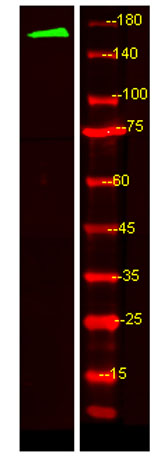
| Observed band (KD) | 165kD |
| Background | The protein encoded by this gene is a member of the superfamily of ATP-binding cassette (ABC) transporters. ABC proteins transport various molecules across extra- and intra-cellular membranes. ABC genes are divided into seven distinct subfamilies (ABC1, MDR/TAP, MRP, ALD, OABP, GCN20, White). The encoded protein, a member of the MRP subfamily, is involved in multi-drug resistance. Mutations in this gene cause pseudoxanthoma elasticum. Alternatively spliced transcript variants that encode different proteins have been described for this gene. [provided by RefSeq, Jul 2008], |
| Function | disease:Defects in ABCC6 are the cause of pseudoxanthoma elasticum (PXE) [MIM:264800]. PXE is a disorder characterized by calcification of elastic fibers in skin, arteries and retina that results in dermal lesions with associated laxity and loss of elasticity, arterial insufficiency and retinal hemorrhages leading to macular degeneration. PXE is caused in the overwhelming majority of cases by homozygous or compound heterozygous mutations in the ABCC6 gene (autosomal recessive PXE). Individuals carrying heterozygous mutations express limited manifestations of the pseudoxanthoma elasticum phenotype (autosomal dominant PXE).,function:May participate directly in the active transport of drugs into subcellular organelles or influence drug distribution indirectly. Transports glutathione conjugates as leukotriene-c4 (LTC4) and N-ethylmaleimide S-glutathione (NEM-GS).,online information:Retina In |
| Subcellular location | [Isoform 1]: Basolateral cell membrane ; Multi-pass membrane protein .; [Isoform 2]: Endoplasmic reticulum membrane ; Single-pass membrane protein . |
| Expression | Expressed in kidney and liver. Very low expression in other tissues. |

Use collapsible tabs for more detailed information that will help customers make a purchasing decision.
Ex: Shipping and return policies, size guides, and other common questions.
