Anti-PYK2 Rabbit pAb

AO-03-GB11829-100
Protein tyrosine kinase 2 beta,PTK,CAKB,FADK2,Ptk2b,GB11829,CADTK,PKB,11829,PTK2B,FAK2,PYK 2,PYK-2,PYK2,RAFTK,GB11829100,Protein-tyrosine kinase 2-beta
check In Stock
Hurry! only 10 items left in stock.
€429.00
Tax excluded
Quantity

Product Information


Protein full name

Protein-tyrosine kinase 2-beta

Synonyms

CADTK, CAK beta, CAKB, Cell adhesion kinase beta, FADK 2, FADK2, FAK2, Focal adhesion kinase 2, FRNK, PKB, Proline rich tyrosine kinase 2, Protein tyrosine kinase 2 beta, PTK, PTK2B, PYK2, RAFTK, Ptk2b,  PYK2

Uniprot ID

Q9QVP9

Immunogen

Recombinant protein corresponding to Mouse PYK2

Isotype

IgG

Purity

Affinity purification

Subcellular location

Nucleus, Cytoplasm


Applications


Applications Species Dilution Positive Tissue
IHC/IF Human, Mouse, Rat 1: 400-1: 3000 breast cancer, colon, gastric cancer


Background

Protein tyrosine kinase 2 beta is an enzyme encoded by the PTK2B gene. The protein is a cytoplasmic protein tyrosine kinase that is involved in calcium-induced regulation of ion channels and activation of the map kinase signaling pathway. The encoded protein may represent an important signaling intermediate between neuropeptide-activated receptors or neurotransmitters that increase calcium flux and the downstream signals that regulate neuronal activity.


Images

01GwC4CZQaxPnzk.jpg

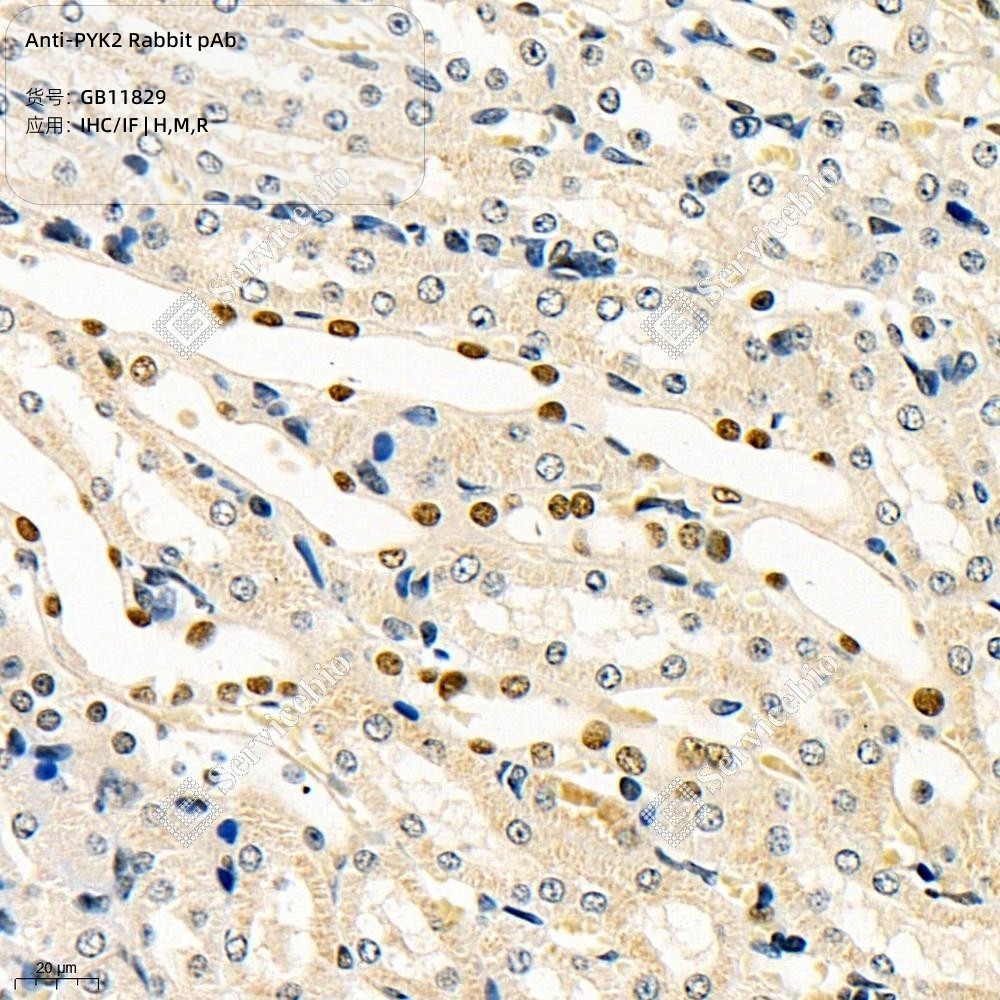
IHC analysis of PYK2(GB11829).
Sample: Mouse kidney, 4% PFA (G1101) 12-24h.
Antigen retrieval: Citrate buffer (pH 6.0) (G1201), 98℃, 20 min.
Primary antibody: 1: 1500, 4℃ overnight.
Secondary antibody: HRP conjugated Goat Anti-Rabbit lgG (H+L) (GB23303), 1: 200, RT, 1h.

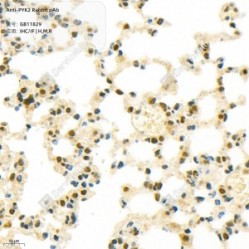
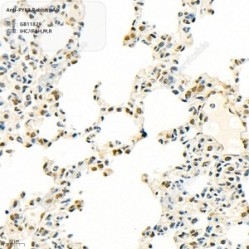
02eVZvPIHjRQQBk.jpg

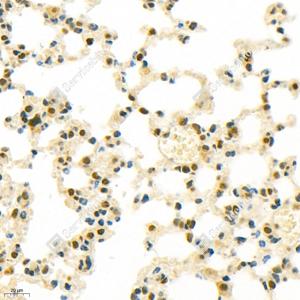
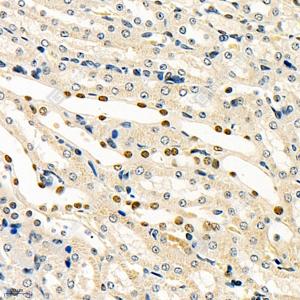
IHC analysis of PYK2(GB11829).
Sample: Mouse lung, 4% PFA (G1101) 12-24h.
Antigen retrieval: Citrate buffer (pH 6.0) (G1201), 98℃, 20 min.
Primary antibody: 1: 1500, 4℃ overnight.
Secondary antibody: HRP conjugated Goat Anti-Rabbit lgG (H+L) (GB23303), 1: 200, RT, 1h.

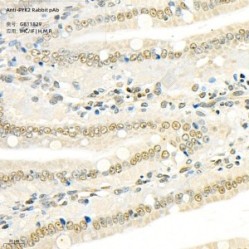
03p2Zed8RkEJtGe.jpg

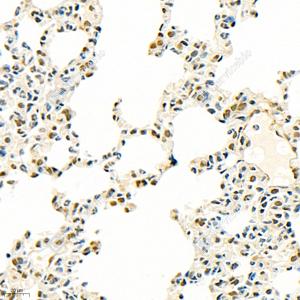
IHC analysis of PYK2(GB11829).
Sample: Rat lung, 4% PFA (G1101) 12-24h.
Antigen retrieval: Citrate buffer (pH 6.0) (G1201), 98℃, 20 min.
Primary antibody: 1: 1500, 4℃ overnight.
Secondary antibody: HRP conjugated Goat Anti-Rabbit lgG (H+L) (GB23303), 1: 200, RT, 1h.

04T4lAFdOaNkCx3.jpg

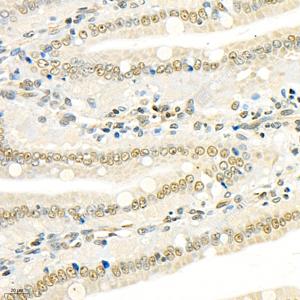
IHC analysis of PYK2(GB11829).
Sample: Rat small intestine, 4% PFA (G1101) 12-24h.
Antigen retrieval: Citrate buffer (pH 6.0) (G1201), 98℃, 20 min.
Primary antibody: 1: 1500, 4℃ overnight.
Secondary antibody: HRP conjugated Goat Anti-Rabbit lgG (H+L) (GB23303), 1: 200, RT, 1h.

05reeoZJm7RMvpP.jpg

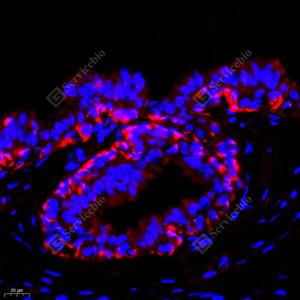
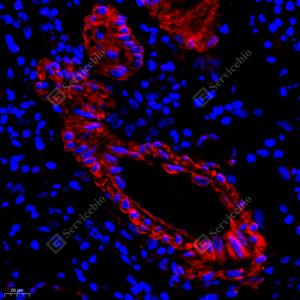
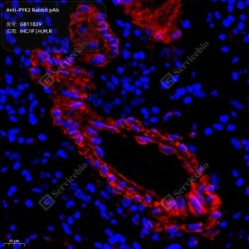
IF analysis of PYK2(GB11829)red.
Sample: Human breast cancer, 4% PFA (G1101) 12-24h.
Antigen retrieval: Tris-EDTA buffer (pH 9.0) (G1203), 98℃, 20min.
Blocking buffer: 3% BSA (GC305010) in PBS, RT, 30min.
Primary antibody: 1: 800, 4℃ overnight.
Secondary antibody: Cy3 conjugated Goat Anti-Rabbit IgG (H+L) (GB21303), 1: 300, RT, 1h.

06a4eeZBNcBb1fz.jpg

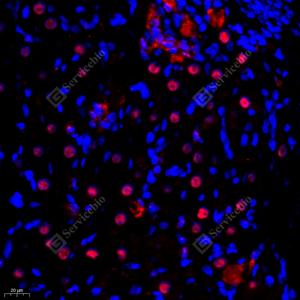
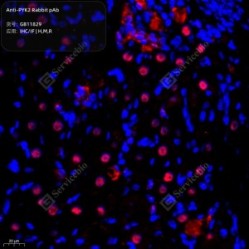
IF analysis of PYK2(GB11829)red.
Sample: Human gastric cancer, 4% PFA (G1101) 12-24h.
Antigen retrieval: Tris-EDTA buffer (pH 9.0) (G1203), 98℃, 20min.
Blocking buffer: 3% BSA (GC305010) in PBS, RT, 30min.
Primary antibody: 1: 800, 4℃ overnight.
Secondary antibody: Cy3 conjugated Goat Anti-Rabbit IgG (H+L) (GB21303), 1: 300, RT, 1h.

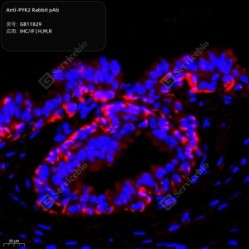
073tkSpCGOLwrie.jpg

IF analysis of PYK2(GB11829)red.
Sample: Mouse ovary, 4% PFA (G1101) 12-24h.
Antigen retrieval: Tris-EDTA buffer (pH 9.0) (G1203), 98℃, 20min.
Blocking buffer: 3% BSA (GC305010) in PBS, RT, 30min.
Primary antibody: 1: 800, 4℃ overnight.
Secondary antibody: Cy3 conjugated Goat Anti-Rabbit IgG (H+L) (GB21303), 1: 300, RT, 1h.


Storage


Storage Store at -20℃ for one year. Avoid repeated freeze/thaw cycles.
Storage Buffer PBS with 0.15% ProClin300, 100 μg/mL BSA and 50% glycerol.


NOTE:

1.This product is intended for research only.

2.This product is recommended to dilute with the Primary Antibody Dilution Buffer (G2025).


: AO-03-GB11829-100
: 10 Items
Hurry! only 10 items left in stock.

Use collapsible tabs for more detailed information that will help customers make a purchasing decision.

Ex: Shipping and return policies, size guides, and other common questions.

  • Paste the label on a flat surface on the package
  • Make sure that both 1D and 2D barcodes are clearly visible
  • Ensure that the label is smooth and isn’t creased or wrinkled
  • Check for any tears, dents, holes or scratches
  • Pack your product tightly, with the right size packaging
  • Ensure both barcodes are on a flat surface of the package