Anti-Bcl10 Rabbit pAb

AO-03-GB11771-50
CIPER,Bcl 10,Bcl-10,mE10,11771,Bcl10,CLAP,B,IMD37,c-E10,CARMEN,GB11771,BCL10,B-cell CLL/lymphoma 10,B-cell lymphoma/leukemia 10
check En Stock
Hurry! only 10 items left in stock.
299,00 €
HT
Quantité

Product Information


Protein full name

B-cell lymphoma/leukemia 10

Synonyms

Bcl10, BCL10, CARMEN, CIPER, CLAP, c-E10, mE10, IMD37, B-cell CLL/lymphoma 10, B cell CLL/lymphoma 10, immune signaling adaptor, BCL10 immune signaling adaptor

Uniprot ID

Q9Z0H7

Immunogen

Recombinant protein corresponding to Mouse Bcl10

Isotype

IgG

Purity

Affinity purification

Subcellular location

Cytoplasm


Applications


Applications Species Dilution Positive Tissue
IHC/IF Mouse, Rat 1: 250-1: 2500 brain, colon, lung


Background

B-cell lymphoma/leukemia 10 contains a caspase recruitment domain (CARD), and has been shown to induce apoptosis and pro-caspase-9 maturation and to activate NF-kappaB via NIK and IKK. The protein may be an adapter protein between upstream TNFR1-TRADD-RIP complex and the downstream NIK-IKK-IKAP complex. It is reported to interact with other CARD domain containing proteins including CARD9, 10, 11 and 14, which are thought to function as upstream regulators in NF-kappaB signaling. This protein is found to form a complex with the paracaspase MALT1.


Images

01X7xVcgyz7whrn.jpg

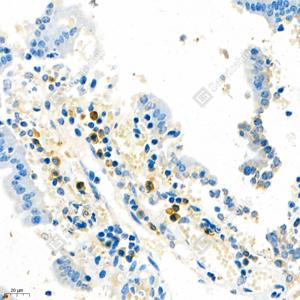
IHC analysis of Bcl10(GB11771).
Sample: Mouse colon, 4% PFA (G1101) 12-24h.
Antigen retrieval: Citrate buffer (pH 6.0) (G1201), 98℃, 20 min.
Primary antibody: 1: 2500, 4℃ overnight.
Secondary antibody: HRP conjugated Goat Anti-Rabbit lgG (H+L) (GB23303), 1: 200, RT, 1h.

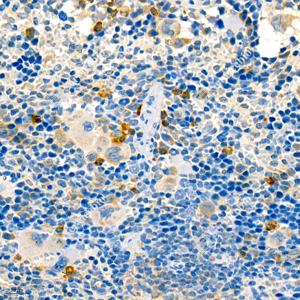
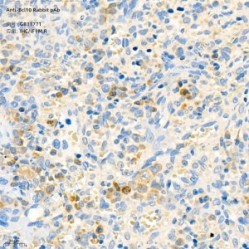
02TvfkNvbmk95xq.jpg

IHC analysis of Bcl10(GB11771).
Sample: Mouse spleen, 4% PFA (G1101) 12-24h.
Antigen retrieval: Citrate buffer (pH 6.0) (G1201), 98℃, 20 min.
Primary antibody: 1: 2500, 4℃ overnight.
Secondary antibody: HRP conjugated Goat Anti-Rabbit lgG (H+L) (GB23303), 1: 200, RT, 1h.

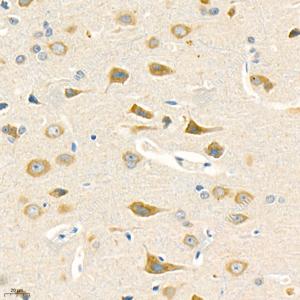
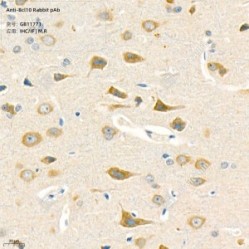
03l9xZctgKHxVOU.jpg

IHC analysis of Bcl10(GB11771).
Sample: Rat brain, 4% PFA (G1101) 12-24h.
Antigen retrieval: Citrate buffer (pH 6.0) (G1201), 98℃, 20 min.
Primary antibody: 1: 2500, 4℃ overnight.
Secondary antibody: HRP conjugated Goat Anti-Rabbit lgG (H+L) (GB23303), 1: 200, RT, 1h.

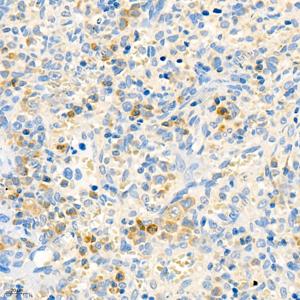
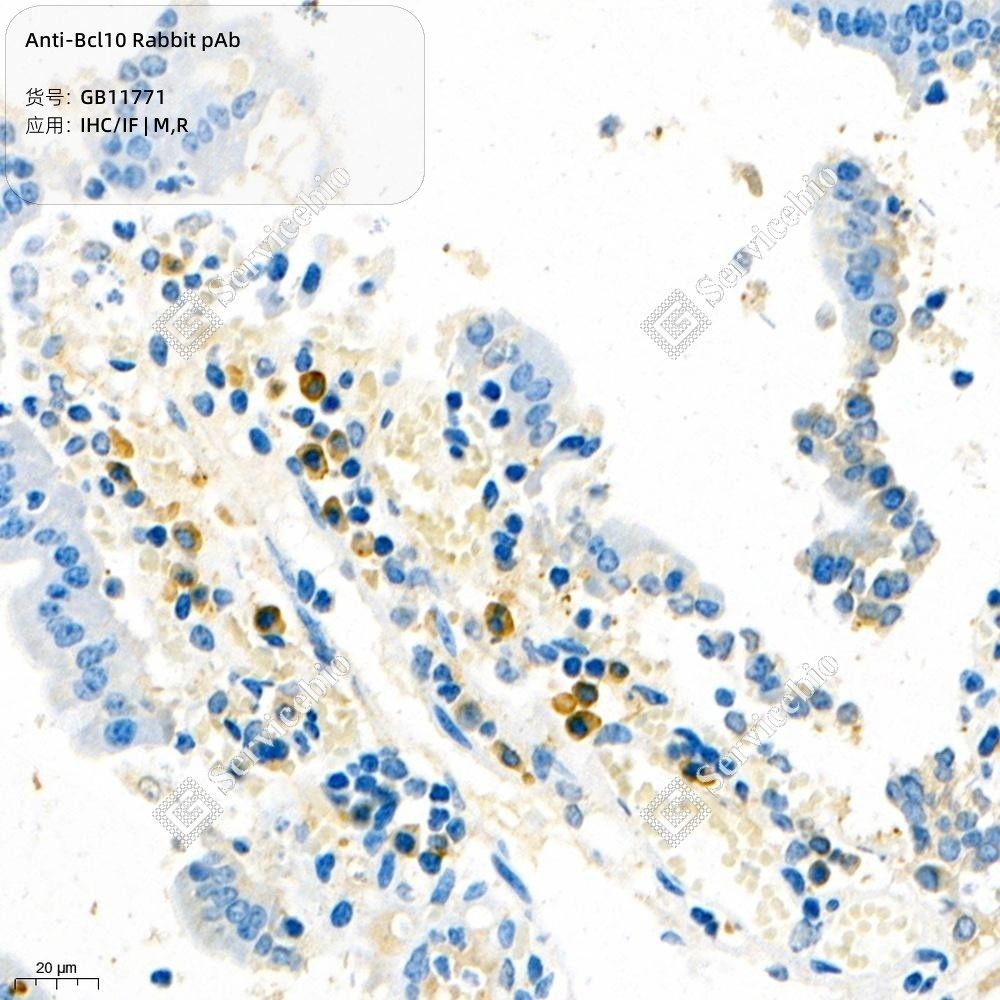
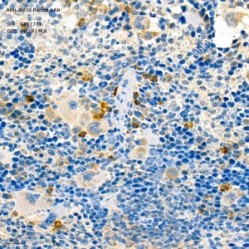
041mw25v99uqdED.jpg

IHC analysis of Bcl10(GB11771).
Sample: Rat spleen, 4% PFA (G1101) 12-24h.
Antigen retrieval: Citrate buffer (pH 6.0) (G1201), 98℃, 20 min.
Primary antibody: 1: 2500, 4℃ overnight.
Secondary antibody: HRP conjugated Goat Anti-Rabbit lgG (H+L) (GB23303), 1: 200, RT, 1h.

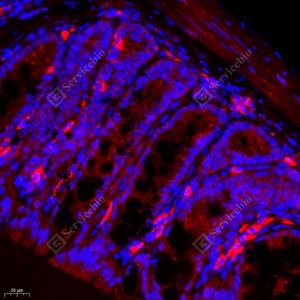
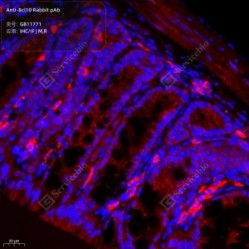
05YR6MoevvHUvdL.jpg

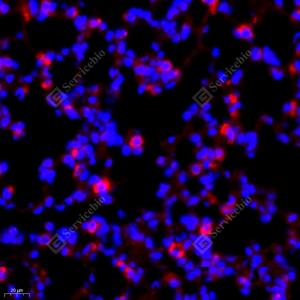
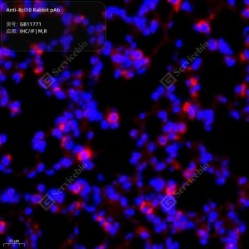
IF analysis of Bcl10(GB11771)red.
Sample: Mouse colon, 4% PFA (G1101) 12-24h.
Antigen retrieval: Tris-EDTA buffer (pH 9.0) (G1203), 98℃, 20min.
Blocking buffer: 3% BSA (GC305010) in PBS, RT, 30min.
Primary antibody: 1: 500, 4℃ overnight.
Secondary antibody: Cy3 conjugated Goat Anti-Rabbit IgG (H+L) (GB21303), 1: 300, RT, 1h.

06TZKQfDCyZrzzt.jpg

IF analysis of Bcl10(GB11771)red.
Sample: Mouse lung, 4% PFA (G1101) 12-24h.
Antigen retrieval: Tris-EDTA buffer (pH 9.0) (G1203), 98℃, 20min.
Blocking buffer: 3% BSA (GC305010) in PBS, RT, 30min.
Primary antibody: 1: 500, 4℃ overnight.
Secondary antibody: Cy3 conjugated Goat Anti-Rabbit IgG (H+L) (GB21303), 1: 300, RT, 1h.

07qwJTjd56BVWIj.jpg

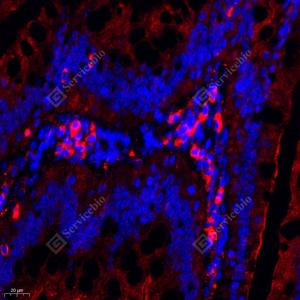
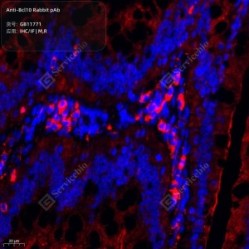
IF analysis of Bcl10(GB11771)red.
Sample: Rat small intestine, 4% PFA (G1101) 12-24h.
Antigen retrieval: Tris-EDTA buffer (pH 9.0) (G1203), 98℃, 20min.
Blocking buffer: 3% BSA (GC305010) in PBS, RT, 30min.
Primary antibody: 1: 500, 4℃ overnight.
Secondary antibody: Cy3 conjugated Goat Anti-Rabbit IgG (H+L) (GB21303), 1: 300, RT, 1h.


Storage


Storage Store at -20℃ for one year. Avoid repeated freeze/thaw cycles.
Storage Buffer PBS with 0.15% ProClin300, 100 μg/mL BSA and 50% glycerol.


NOTE:

1.This product is intended for research only.

2.This product is recommended to dilute with the Primary Antibody Dilution Buffer (G2025).


: AO-03-GB11771-50
: 10 Produits
Hurry! only 10 items left in stock.

Use collapsible tabs for more detailed information that will help customers make a purchasing decision.

Ex: Shipping and return policies, size guides, and other common questions.

  • Paste the label on a flat surface on the package
  • Make sure that both 1D and 2D barcodes are clearly visible
  • Ensure that the label is smooth and isn’t creased or wrinkled
  • Check for any tears, dents, holes or scratches
  • Pack your product tightly, with the right size packaging
  • Ensure both barcodes are on a flat surface of the package