 Français
 English

| ELK.No | EA348 |
| Product name | ATG4b Rabbit pAb |
| Reactivity | Human, Mouse, Rat |
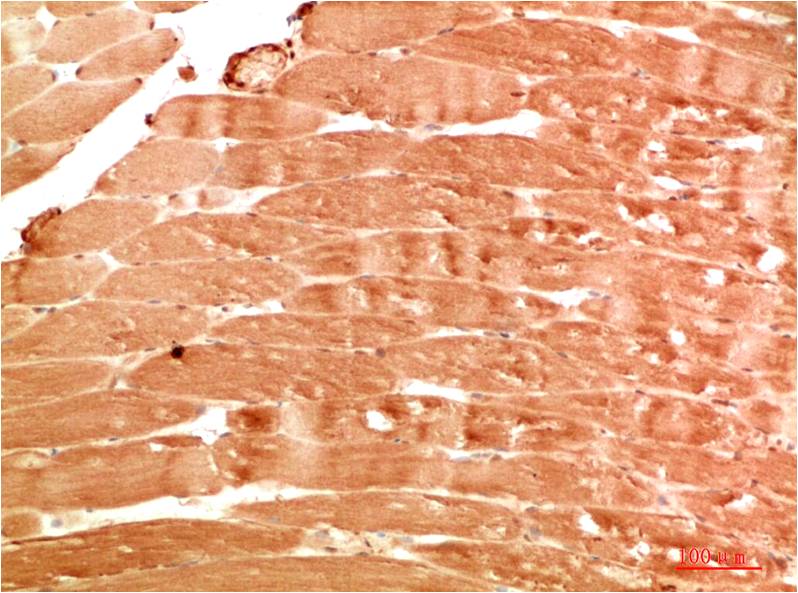
| Applications | IHC |
| Other name | APG4B, Autl1,Cysteine protease ATG4B antibody |
| Size | 50μL |
| Unit price ($) | 148 |
| Human gene ID | 23192 |
| Human Swiss-Prot | Q9Y4P1 |
| Source | Rabbit |
| Isotype | IgG |
| Target | |
| Fields | |
| Gene name | |
| Protein name | |
| Human gene link | |
| Human Swiss link | |
| Mouse gene ID | |
| Mouse gene link | |
| Mouse Swiss-Prot | |
| Mouse Swiss link | |
| Rat gene ID | |
| Rat gene link | |
| Rat Swiss-Prot | |
| Rat Swiss link | |
| Immunogen | Recombinant Protein |
| Specificity | |
| Formulation | |
| Clonality | Polyclonal |
| Dilution | IHC 1:100-200 |
| Purification | |
| Concentration | 1mg/mL |
| Storage stability | PBS with 0.02% sodium azide and 50% glycerol pH 7.4. Store at -20°C. Avoid repeated freeze-thaw cycles. |
| Molecular Weight (Da) | |
| Observed band (KD) | 44kDa |
| Background | Autophagy is a catabolic process for the autophagosomic-lysosomal degradation of bulk cytoplasmic contents. Control of autophagy was largely discovered in yeast and involves proteins encoded by a set of autophagy-related genes (Atg). Formation of autophagic vesicles requires a pair of essential ubiquitin-like conjugation systems, Atg12-Atg5 and Atg8-phosphatidylethanolamine (Atg8-PE), which are widely conserved in eukaryotes. Numerous mammalian counterparts to yeast Atg proteins have been described, including three Atg8 proteins (GATE-16, GABARAP, and LC3) and four Atg4 homologs (Atg4A/autophagin-2, Atg4B/autophagin-1, Atg4C/autophagin-3, and Atg4D/autophagin-4). |
| Function | |
| Subcellular location | Cytoplasm |
| Expression |


Use collapsible tabs for more detailed information that will help customers make a purchasing decision.
Ex: Shipping and return policies, size guides, and other common questions.