 Français
 English
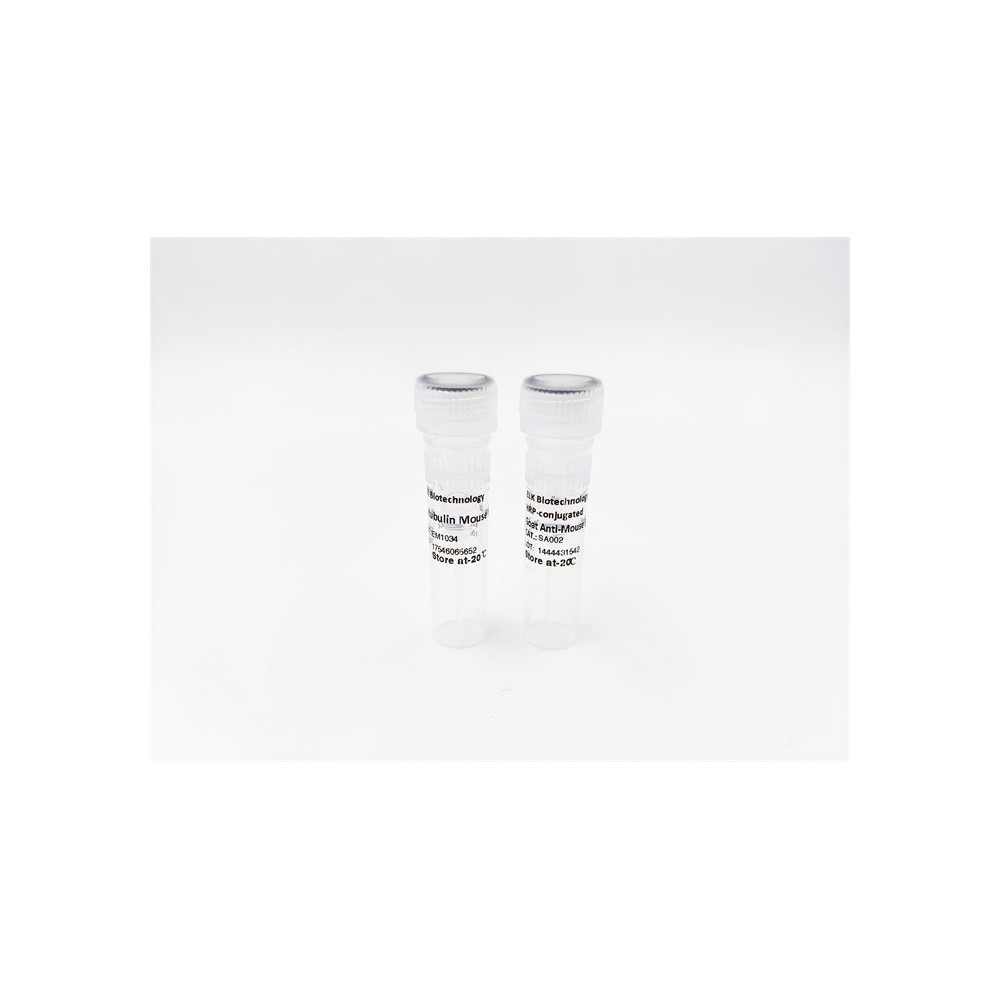

| ELK.No | ES10004 |
| Product name | PLS3 rabbit pAb |
| Reactivity | Human;Rat;Mouse |
| Applications | WB;ELISA |
| Other name | |
| Size | 50μL |
| Unit price ($) | 148 |
| Human gene ID | 57048 |
| Human Swiss-Prot | Q9NRY6 |
| Source | Rabbit |
| Isotype | IgG |
| Target | PLS3 |
| Fields | |
| Gene name | PLSCR3 |
| Protein name | Phospholipid scramblase 3 (PL scramblase 3) (Ca(2+)-dependent phospholipid scramblase 3) |
| Human gene link | |
| Human Swiss link | View Human Swiss-Prot |
| Mouse gene ID | |
| Mouse gene link | |
| Mouse Swiss-Prot | Q9JIZ9 |
| Mouse Swiss link | View Mouse Swiss-Prot |
| Rat gene ID | |
| Rat gene link | |
| Rat Swiss-Prot | Q6QBQ4 |
| Rat Swiss link | View Rat Swiss-Prot |
| Immunogen | Synthesized peptide derived from human protein . at AA range: 180-260 |
| Specificity | PLS3 Polyclonal Antibody detects endogenous levels of protein. |
| Formulation | Liquid in PBS containing 50% glycerol, and 0.02% sodium azide. |
| Clonality | Polyclonal |
| Dilution | WB 1:500-2000 ELISA 1:5000-20000 |
| Purification | The antibody was affinity-purified from rabbit antiserum by affinity-chromatography using epitope-specific immunogen. |
| Concentration | 1 mg/ml |
| Storage stability | -20°C/1 year |
| Molecular Weight (Da) | |
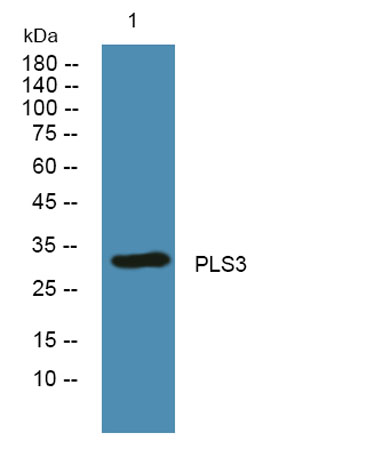
| Observed band (KD) | 32kD |
| Background | cofactor:Calcium.,function:May mediate accelerated ATP-independent bidirectional transbilayer migration of phospholipids upon binding calcium ions that results in a loss of phospholipid asymmetry in the plasma membrane. May play a central role in the initiation of fibrin clot formation, in the activation of mast cells and in the recognition of apoptotic and injured cells by the reticuloendothelial system.,similarity:Belongs to the phospholipid scramblase family.,tissue specificity:Expressed in heart, placenta, lung, liver, skeletal muscle, kidney, pancreas, spleen, thymus, prostate, uterus, small intestine and peripheral blood lymphocytes. Not detected in testis, brain and liver., |
| Function | cofactor:Calcium.,function:May mediate accelerated ATP-independent bidirectional transbilayer migration of phospholipids upon binding calcium ions that results in a loss of phospholipid asymmetry in the plasma membrane. May play a central role in the initiation of fibrin clot formation, in the activation of mast cells and in the recognition of apoptotic and injured cells by the reticuloendothelial system.,similarity:Belongs to the phospholipid scramblase family.,tissue specificity:Expressed in heart, placenta, lung, liver, skeletal muscle, kidney, pancreas, spleen, thymus, prostate, uterus, small intestine and peripheral blood lymphocytes. Not detected in testis, brain and liver., |
| Subcellular location | Mitochondrion membrane ; Single-pass type II membrane protein . Mitochondrion inner membrane ; Single-pass type II membrane protein . Nucleus . Palmitoylation regulates its localization to the cell membrane or the nucleus; trafficking to the cell membrane is dependent upon palmitoylation whereas in the absence of palmitoylation, localizes to the nucleus. . |
| Expression | Expressed in heart, placenta, lung, liver, skeletal muscle, kidney, pancreas, spleen, thymus, prostate, uterus, small intestine and peripheral blood lymphocytes. Not detected in testis, brain and liver. |

Use collapsible tabs for more detailed information that will help customers make a purchasing decision.
Ex: Shipping and return policies, size guides, and other common questions.