 Français
 English
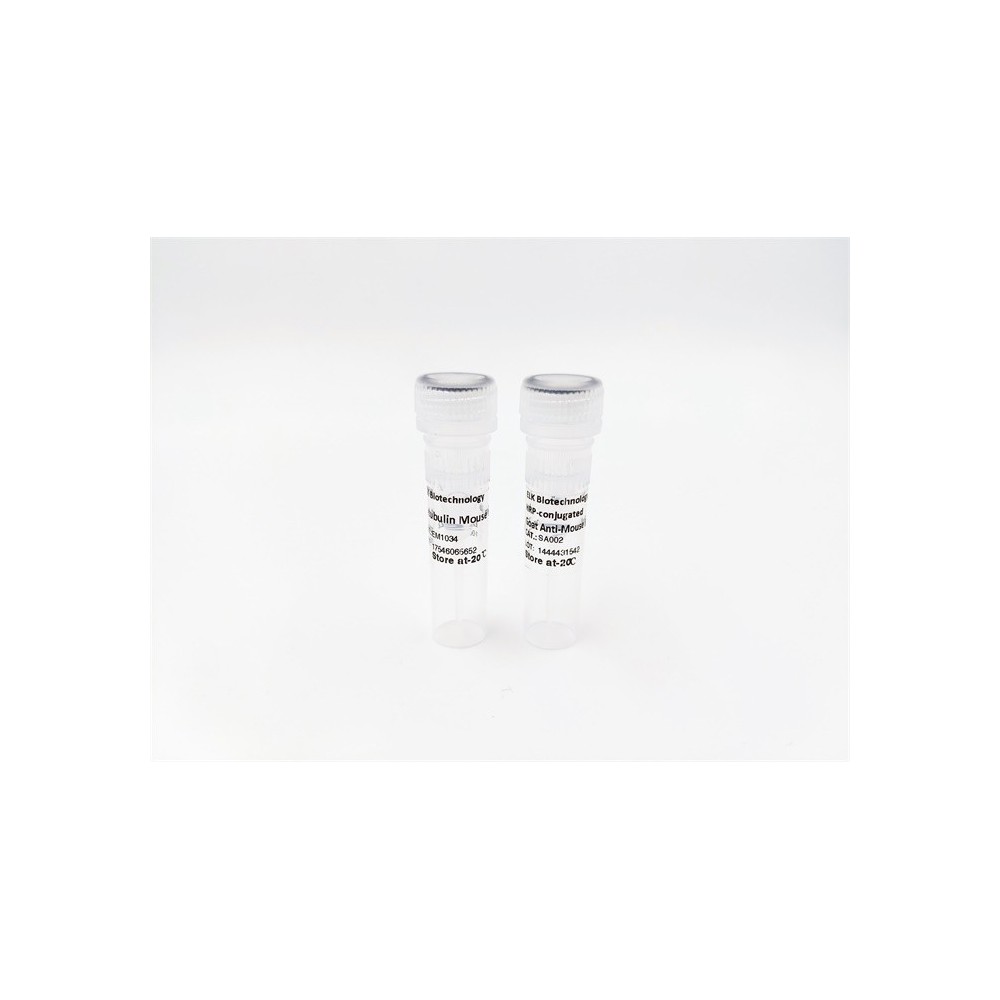

| ELK.No | ES10631 |
| Product name | CITE4 rabbit pAb |
| Reactivity | Human;Mouse;Rat |
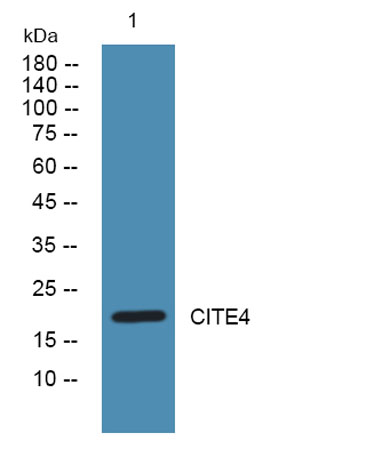
| Applications | WB;ELISA |
| Other name | |
| Size | 100μL |
| Unit price ($) | 248 |
| Human gene ID | 163732 |
| Human Swiss-Prot | Q96RK1 |
| Source | Rabbit |
| Isotype | IgG |
| Target | CITE4 |
| Fields | |
| Gene name | CITED4 MRG2 |
| Protein name | Cbp/p300-interacting transactivator 4 (MSG1-related protein 2) (MRG-2) |
| Human gene link | |
| Human Swiss link | View Human Swiss-Prot |
| Mouse gene ID | |
| Mouse gene link | |
| Mouse Swiss-Prot | Q9WUL8 |
| Mouse Swiss link | View Mouse Swiss-Prot |
| Rat gene ID | |
| Rat gene link | |
| Rat Swiss-Prot | Q99MA0 |
| Rat Swiss link | View Rat Swiss-Prot |
| Immunogen | Synthesized peptide derived from human protein . at AA range: 30-110 |
| Specificity | CITE4 Polyclonal Antibody detects endogenous levels of protein. |
| Formulation | Liquid in PBS containing 50% glycerol, and 0.02% sodium azide. |
| Clonality | Polyclonal |
| Dilution | WB 1:500-2000 ELISA 1:5000-20000 |
| Purification | The antibody was affinity-purified from rabbit antiserum by affinity-chromatography using epitope-specific immunogen. |
| Concentration | 1 mg/ml |
| Storage stability | -20°C/1 year |
| Molecular Weight (Da) | |
| Observed band (KD) | 20kD |
| Background | Cbp/p300 interacting transactivator with Glu/Asp rich carboxy-terminal domain 4(CITED4) Homo sapiens The protein encoded by this intronless gene belongs to the CITED family of transcriptional coactivators that bind to several proteins, including CREB-binding protein (CBP) and p300, via a conserved 32 aa C-terminal motif, and regulate gene transcription. This protein also interacts with transcription factor AP2 (TFAP2), and thus may function as a co-activator for TFAP2. Hypermethylation and transcriptional downregulation of this gene has been observed in oligodendroglial tumors with deletions of chromosomal arms 1p and 19q, and associated with longer recurrence-free and overall survival of patients with oligodendroglial tumors. [provided by RefSeq, Aug 2011], |
| Function | function:Acts as transcriptional coactivator for TFAP2/AP-2. May function as an inhibitor of transactivation by HIF1A by disrupting HIF1A interaction with CREBBP. May be involved in regulation of gene expression during development and differentiation of blood cells, endothelial cells and mammary epithelial cells.,similarity:Belongs to the CITED family.,subunit:Interacts via its C-terminal region with the CH1 domain of CREBBP and EP300. Interacts with all TFAP2/AP-2 isoforms.,tissue specificity:Expressed in most tissues examined with highest levels of expression in heart, liver, skeletal muscle and pancreas. Also expressed in bladder cell line ECV304 and in various breast cancer cell lines. Also detected in both in situ and invasive breast tumors where its expression is down-regulated and mostly restricted to the cytoplasm of malignant epithelium. Down-regulation of expression is associat |
| Subcellular location | Nucleus . Cytoplasm . |
| Expression | Expressed in most tissues examined with highest levels of expression in heart, liver, skeletal muscle and pancreas. Also expressed in bladder cell line ECV-304 and in various breast cancer cell lines. Also detected in both in situ and invasive breast tumors where its expression is down-regulated and mostly restricted to the cytoplasm of malignant epithelium. Down-regulation of expression is associated with elevated levels of HIF1A and increased tumor growth and angiogenesis. |

Use collapsible tabs for more detailed information that will help customers make a purchasing decision.
Ex: Shipping and return policies, size guides, and other common questions.