 Français
 English
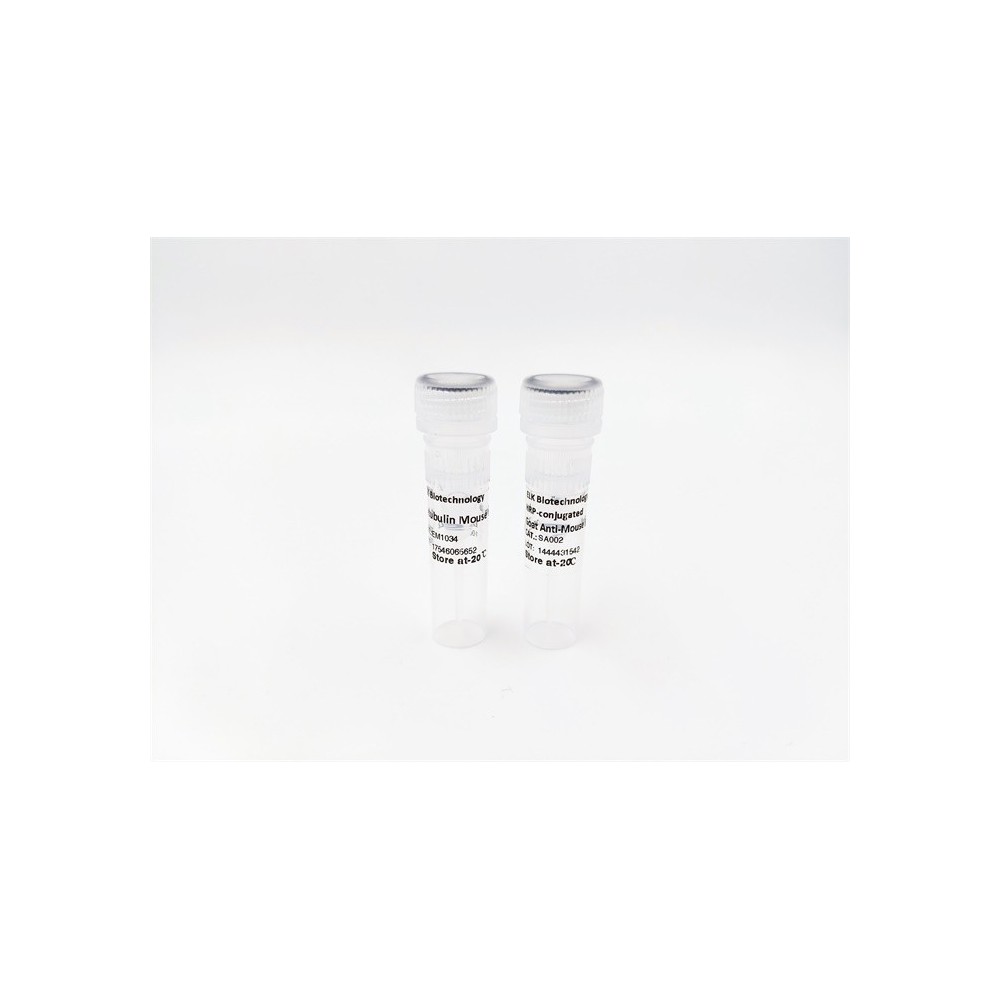

| ELK.No | ES10634 |
| Product name | T22D3 rabbit pAb |
| Reactivity | Human;Rat;Mouse; |
| Applications | WB;ELISA |
| Other name | |
| Size | 50μL |
| Unit price ($) | 148 |
| Human gene ID | 1831 |
| Human Swiss-Prot | Q99576 |
| Source | Rabbit |
| Isotype | IgG |
| Target | T22D3 |
| Fields | |
| Gene name | TSC22D3 DSIPI GILZ |
| Protein name | TSC22 domain family protein 3 (DSIP-immunoreactive peptide) (Protein DIP) (hDIP) (Delta sleep-inducing peptide immunoreactor) (Glucocorticoid-induced leucine zipper protein) (GILZ) (TSC-22-like protei |
| Human gene link | |
| Human Swiss link | View Human Swiss-Prot |
| Mouse gene ID | |
| Mouse gene link | |
| Mouse Swiss-Prot | Q9Z2S7 |
| Mouse Swiss link | View Mouse Swiss-Prot |
| Rat gene ID | |
| Rat gene link | |
| Rat Swiss-Prot | Q9EQZ1 |
| Rat Swiss link | View Rat Swiss-Prot |
| Immunogen | Synthesized peptide derived from part region of human protein |
| Specificity | T22D3 Polyclonal Antibody detects endogenous levels of protein. |
| Formulation | Liquid in PBS containing 50% glycerol, and 0.02% sodium azide. |
| Clonality | Polyclonal |
| Dilution | WB 1:500-2000 ELISA 1:5000-20000 |
| Purification | The antibody was affinity-purified from rabbit antiserum by affinity-chromatography using epitope-specific immunogen. |
| Concentration | 1 mg/ml |
| Storage stability | -20°C/1 year |
| Molecular Weight (Da) | |
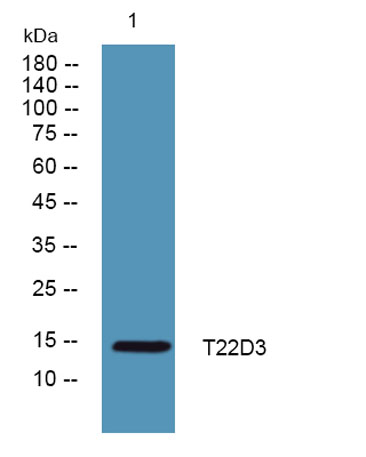
| Observed band (KD) | 14kD |
| Background | This gene encodes the anti-inflammatory protein glucocorticoid (GC)-induced leucine zipper. Expression of this gene stimulated by glucocorticoids and interleukin 10 and it appears to play a key role in the anti-inflammatory and immunosuppressive effects of this steroid. This protein has also been shown to inhibit pro-inflammatory molecules including nuclear factor κB. Alternate splicing results in multiple transcript variants. [provided by RefSeq, Jan 2016], |
| Function | domain:The leucine-zipper is involved in homodimerization.,function:Plays a role as a mediator of e2f1-induced apoptosis in the absence of tp53/p53.,function:Protects T-cells from IL2 deprivation-induced apoptosis through the inhibition of FOXO3A transcriptional activity that leads to the down-regulation of the pro-apoptotic factor BCL2L11. In macrophages, plays a role in the anti-inflammatory and immunosuppressive effects of glucocorticoids and IL10. In T-cells, inhibits anti-CD3-induced NFKB1 nuclear translocation. In vitro, suppresses AP1 and NFKB1 DNA-binding activities.,induction:By glucocorticoids in lymphoid cells and upon IL4, IL10, IL13 or glucocorticoid treatment in monocyte/macrophage cells. Transiently induced by IL2 deprivation in T-cells.,induction:Up-regulated in the mitochondria by E2F1 after addition of 4-hydroxytamoxifen (at protein level).,similarity:Belongs to the TSC |
| Subcellular location | [Isoform 1]: Cytoplasm . Nucleus . Localization depends on differentiation status of myoblasts. In undifferentiated myoblasts, isoform 1 localizes to the cytoplasm, but in differentiating myoblasts, isoform 1 is localized to the nucleus (By similarity). . |
| Expression | Expressed in brain, lung, spleen and skeletal muscle. Lower levels detected in heart and kidney. Not detected in the pancreas. In non-lymphoid tissues, in the absence of inflammation, the major source of constitutive expression is the macrophage lineage. Also expressed in cells from different hemopoietic cell lineages, including bone marrow cells, CD34+ stem cells, mature B- and T-cells, monocytes and granulocytes. Down-regulated in activated macrophages from inflammatory lesions of delayed-type hypersensitivity (DTH) reactions, such as in tuberculosis and in Crohn disease, whereas in Burkitt lymphoma, persists in macrophages involved in the phagocytosis of apoptotic malignant cells. |

Use collapsible tabs for more detailed information that will help customers make a purchasing decision.
Ex: Shipping and return policies, size guides, and other common questions.