 Français
 English
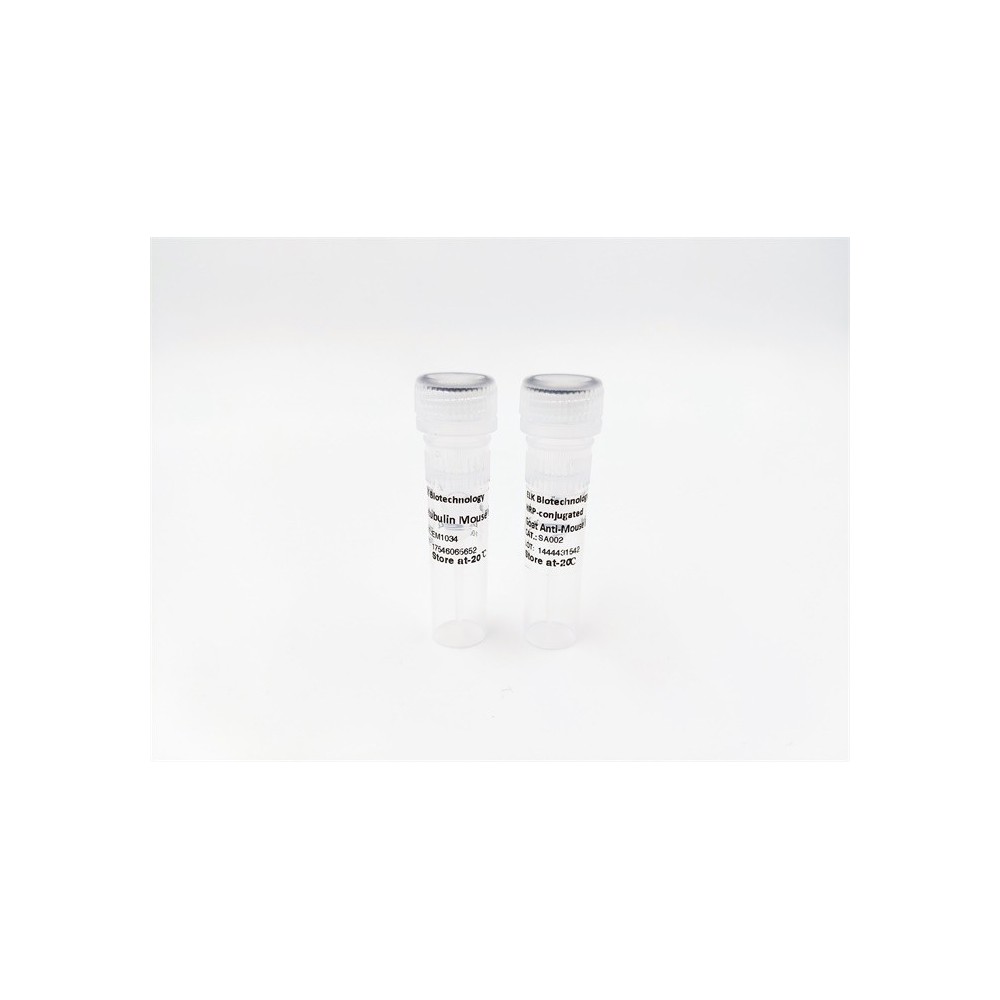

| ELK.No | ES10762 |
| Product name | MUL1 rabbit pAb |
| Reactivity | Human;Mouse |
| Applications | WB;ELISA |
| Other name | |
| Size | 50μL |
| Unit price ($) | 148 |
| Human gene ID | 79594 |
| Human Swiss-Prot | Q969V5 |
| Source | Rabbit |
| Isotype | IgG |
| Target | MUL1 |
| Fields | |
| Gene name | MUL1 C1orf166 GIDE MAPL MULAN RNF218 |
| Protein name | Mitochondrial ubiquitin ligase activator of NFKB 1 (EC 6.3.2.-) (E3 SUMO-protein ligase MUL1) (E3 ubiquitin-protein ligase MUL1) (Growth inhibition and death E3 ligase) (Mitochondrial-anchored protein |
| Human gene link | |
| Human Swiss link | View Human Swiss-Prot |
| Mouse gene ID | |
| Mouse gene link | |
| Mouse Swiss-Prot | Q8VCM5 |
| Mouse Swiss link | View Mouse Swiss-Prot |
| Rat gene ID | |
| Rat gene link | |
| Rat Swiss-Prot | |
| Rat Swiss link | |
| Immunogen | Synthesized peptide derived from part region of human protein |
| Specificity | MUL1 Polyclonal Antibody detects endogenous levels of protein. |
| Formulation | Liquid in PBS containing 50% glycerol, and 0.02% sodium azide. |
| Clonality | Polyclonal |
| Dilution | WB 1:500-2000 ELISA 1:5000-20000 |
| Purification | The antibody was affinity-purified from rabbit antiserum by affinity-chromatography using epitope-specific immunogen. |
| Concentration | 1 mg/ml |
| Storage stability | -20°C/1 year |
| Molecular Weight (Da) | |
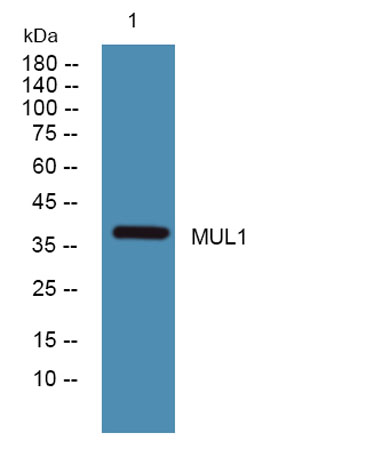
| Observed band (KD) | 38kD |
| Background | domain:The zinc finger domain is required for E3 ligase activity.,function:E3 ubiquitin-protein ligase that plays a role in the control of mitochondrial morphology. Promotes mitochondrial fragmentation and influences mitochondrial localization. Inhibits cell growth. When overexpressed, activates JNK through MAP3K7/TAK1 and induces caspase-dependent apoptosis. E3 ubiquitin ligases accept ubiquitin from an E2 ubiquitin-conjugating enzyme in the form of a thioester and then directly transfer the ubiquitin to targeted substrates.,pathway:Protein modification; protein ubiquitination.,similarity:Contains 1 RING-type zinc finger.,subcellular location:Transported in mitochondrion-derived vesicles from the mitochondrion to the peroxisome.,subunit:Homooligomer. Interacts with MAP3K7/TAK1.,tissue specificity:Widely expressed with highest levels in the heart, skeletal muscle, placenta, kidney and liver. Barely detectable in colon and thymus., |
| Function | domain:The zinc finger domain is required for E3 ligase activity.,function:E3 ubiquitin-protein ligase that plays a role in the control of mitochondrial morphology. Promotes mitochondrial fragmentation and influences mitochondrial localization. Inhibits cell growth. When overexpressed, activates JNK through MAP3K7/TAK1 and induces caspase-dependent apoptosis. E3 ubiquitin ligases accept ubiquitin from an E2 ubiquitin-conjugating enzyme in the form of a thioester and then directly transfer the ubiquitin to targeted substrates.,pathway:Protein modification; protein ubiquitination.,similarity:Contains 1 RING-type zinc finger.,subcellular location:Transported in mitochondrion-derived vesicles from the mitochondrion to the peroxisome.,subunit:Homooligomer. Interacts with MAP3K7/TAK1.,tissue specificity:Widely expressed with highest levels in the heart, skeletal muscle, placenta, kidney and li |
| Subcellular location | Mitochondrion outer membrane ; Multi-pass membrane protein . Peroxisome . Transported in mitochondrion-derived vesicles from the mitochondrion to the peroxisome. . |
| Expression | Widely expressed with highest levels in the heart, skeletal muscle, placenta, kidney and liver. Barely detectable in colon and thymus. |

Use collapsible tabs for more detailed information that will help customers make a purchasing decision.
Ex: Shipping and return policies, size guides, and other common questions.