 Français
 English
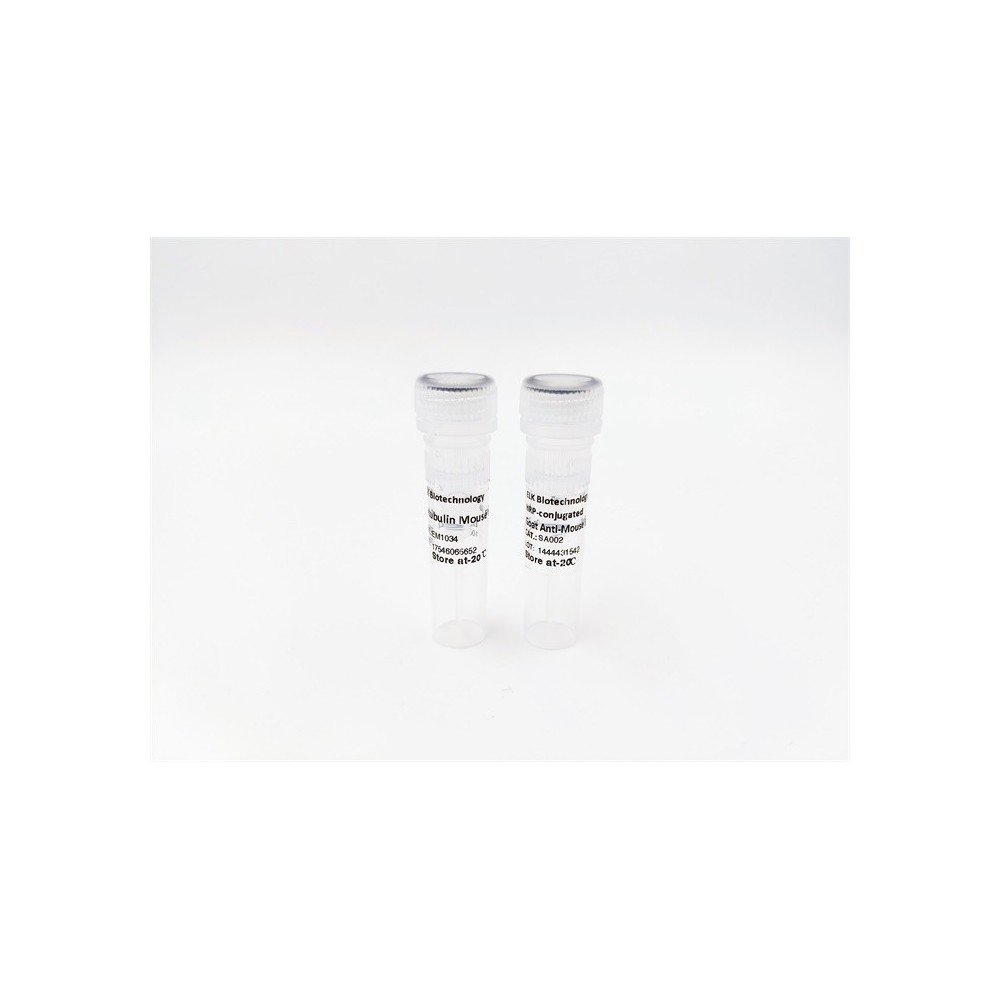

| ELK.No | ES10885 |
| Product name | NR2E3 rabbit pAb |
| Reactivity | Human;Mouse |
| Applications | WB;ELISA |
| Other name | |
| Size | 100μL |
| Unit price ($) | 248 |
| Human gene ID | 10002 |
| Human Swiss-Prot | Q9Y5X4 |
| Source | Rabbit |
| Isotype | IgG |
| Target | NR2E3 |
| Fields | |
| Gene name | NR2E3 PNR RNR |
| Protein name | Photoreceptor-specific nuclear receptor (Nuclear receptor subfamily 2 group E member 3) (Retina-specific nuclear receptor) |
| Human gene link | |
| Human Swiss link | View Human Swiss-Prot |
| Mouse gene ID | |
| Mouse gene link | |
| Mouse Swiss-Prot | Q9QXZ7 |
| Mouse Swiss link | View Mouse Swiss-Prot |
| Rat gene ID | |
| Rat gene link | |
| Rat Swiss-Prot | |
| Rat Swiss link | |
| Immunogen | Synthesized peptide derived from part region of human protein |
| Specificity | NR2E3 Polyclonal Antibody detects endogenous levels of protein. |
| Formulation | Liquid in PBS containing 50% glycerol, and 0.02% sodium azide. |
| Clonality | Polyclonal |
| Dilution | WB 1:500-2000 ELISA 1:5000-20000 |
| Purification | The antibody was affinity-purified from rabbit antiserum by affinity-chromatography using epitope-specific immunogen. |
| Concentration | 1 mg/ml |
| Storage stability | -20°C/1 year |
| Molecular Weight (Da) | |
| Observed band (KD) | 45kD |
| Background | This protein is part of a large family of nuclear receptor transcription factors involved in signaling pathways. Nuclear receptors have been shown to regulate pathways involved in embryonic development, as well as in maintenance of proper cell function in adults. Members of this family are characterized by discrete domains that function in DNA and ligand binding. This gene encodes a retinal nuclear receptor that is a ligand-dependent transcription factor. Defects in this gene are a cause of enhanced S cone syndrome. Alternatively spliced transcript variants encoding different isoforms have been identified. [provided by RefSeq, Jul 2008], |
| Function | disease:Defects in NR2E3 are a cause of enhanced S cone syndrome (ESCS) [MIM:268100]. ESCS is an autosomal recessive retinopathy in which patients have increased sensitivity to blue light; perception of blue light is mediated by what is normally the least populous cone photoreceptor subtype, the S (short wavelength, blue) cones. ESCS is also associated with visual loss, with night blindness occurring from early in life, varying degrees of L (long, red)- and M (middle, green)-cone vision, and retinal degeneration.,disease:Defects in NR2E3 are the cause of retinitis pigmentosa type 37 (RP37) [MIM:611131]. RP leads to degeneration of retinal photoreceptor cells. Patients typically have night vision blindness and loss of midperipheral visual field. As their condition progresses, they lose their far peripheral visual field and eventually central vision as well. RP37 inheritance is autosomal d |
| Subcellular location | Nucleus . |
| Expression | Eye specific; found solely in the outer nuclear layer of the adult neurosensory retina, where the nuclei of cone and rod photoreceptors reside. |


Use collapsible tabs for more detailed information that will help customers make a purchasing decision.
Ex: Shipping and return policies, size guides, and other common questions.