 Français
 English
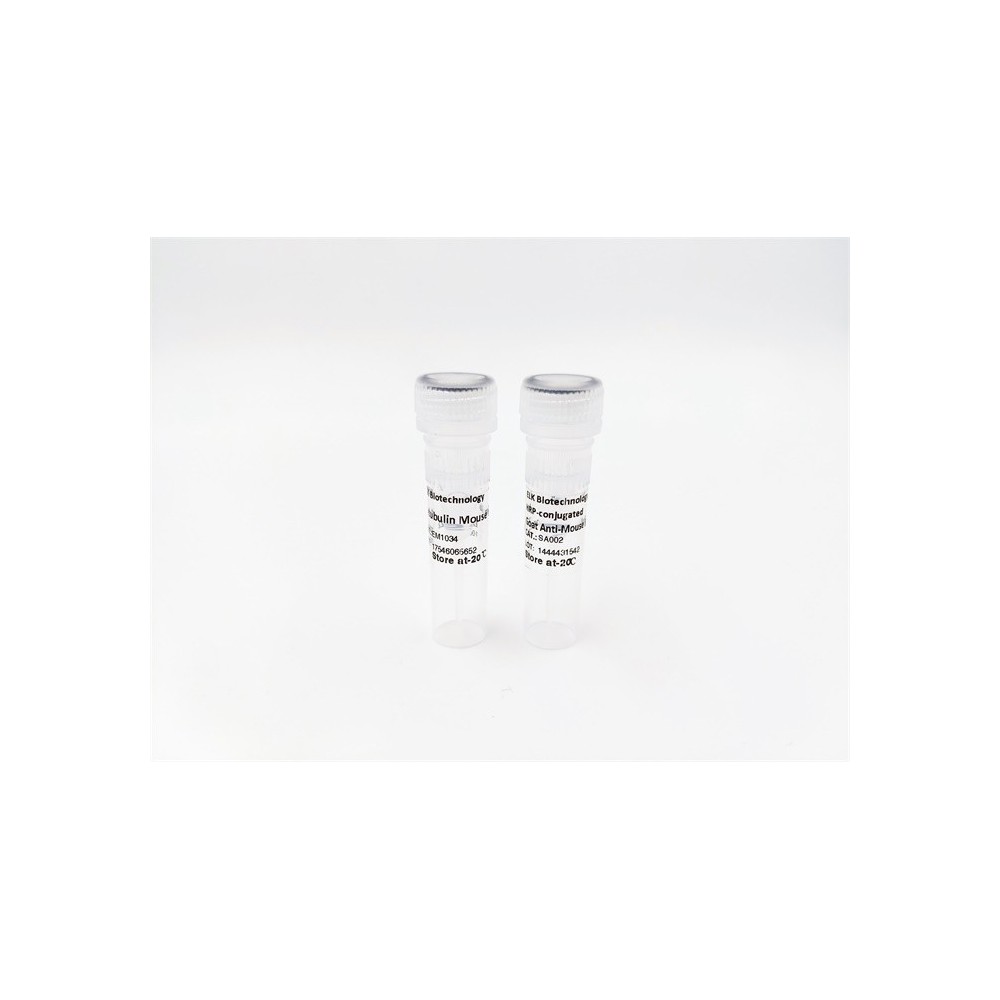

| ELK.No | ES11034 |
| Product name | CLC7A rabbit pAb |
| Reactivity | Human;Mouse |
| Applications | WB;ELISA |
| Other name | |
| Size | 100μL |
| Unit price ($) | 248 |
| Human gene ID | 64581 |
| Human Swiss-Prot | Q9BXN2 |
| Source | Rabbit |
| Isotype | IgG |
| Target | CLC7A |
| Fields | >>Phagosome;>>Neutrophil extracellular trap formation;>>C-type lectin receptor signaling pathway;>>Tuberculosis |
| Gene name | CLEC7A BGR CLECSF12 DECTIN1 UNQ539/PRO1082 |
| Protein name | C-type lectin domain family 7 member A (Beta-glucan receptor) (C-type lectin superfamily member 12) (Dendritic cell-associated C-type lectin 1) (DC-associated C-type lectin 1) (Dectin-1) |
| Human gene link | |
| Human Swiss link | View Human Swiss-Prot |
| Mouse gene ID | |
| Mouse gene link | |
| Mouse Swiss-Prot | Q6QLQ4 |
| Mouse Swiss link | View Mouse Swiss-Prot |
| Rat gene ID | |
| Rat gene link | |
| Rat Swiss-Prot | |
| Rat Swiss link | |
| Immunogen | Synthesized peptide derived from part region of human protein |
| Specificity | CLC7A Polyclonal Antibody detects endogenous levels of protein. |
| Formulation | Liquid in PBS containing 50% glycerol, and 0.02% sodium azide. |
| Clonality | Polyclonal |
| Dilution | WB 1:500-2000 ELISA 1:5000-20000 |
| Purification | The antibody was affinity-purified from rabbit antiserum by affinity-chromatography using epitope-specific immunogen. |
| Concentration | 1 mg/ml |
| Storage stability | -20°C/1 year |
| Molecular Weight (Da) | |
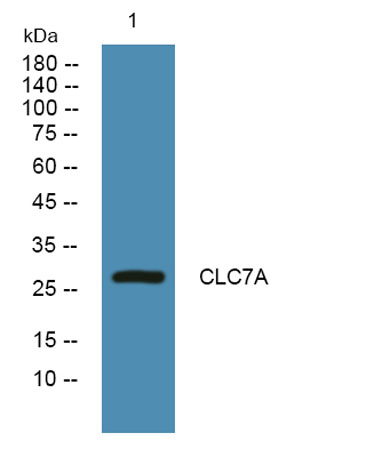
| Observed band (KD) | 27kD |
| Background | This gene encodes a member of the C-type lectin/C-type lectin-like domain (CTL/CTLD) superfamily. The encoded glycoprotein is a small type II membrane receptor with an extracellular C-type lectin-like domain fold and a cytoplasmic domain with an immunoreceptor tyrosine-based activation motif. It functions as a pattern-recognition receptor that recognizes a variety of beta-1,3-linked and beta-1,6-linked glucans from fungi and plants, and in this way plays a role in innate immune response. Alternate transcriptional splice variants, encoding different isoforms, have been characterized. This gene is closely linked to other CTL/CTLD superfamily members on chromosome 12p13 in the natural killer gene complex region. [provided by RefSeq, Jul 2008], |
| Function | function:Lectin that functions as pattern receptor specific for beta-1,3-linked and beta-1,6-linked glucans, such as cell wall constituents from pathogenic bacteria and fungi. Necessary for the TLR2-mediated inflammatory response and for TLR2-mediated activation of NF-kappa-B. Enhances cytokine production in macrophages and dendritic cells. Mediates production of reactive oxygen species in the cell. Mediates phagocytosis of C.albicans conidia. Binds T-cells in a way that does not involve their surface glycans and plays a role in T-cell activation. Stimulates T-cell proliferation.,induction:Up-regulated during differentiation from monocytes into dendritic cells.,PTM:Phosphorylated on tyrosine residues in response to glucan binding.,similarity:Contains 1 C-type lectin domain.,subunit:Isoform 5 interacts with RANBP9.,tissue specificity:Highly expressed in peripheral blood leukocytes and den |
| Subcellular location | Cell membrane ; Single-pass type II membrane protein .; [Isoform 5]: Cytoplasm .; [Isoform 6]: Cytoplasm .; [Isoform 7]: Cytoplasm . |
| Expression | Highly expressed in peripheral blood leukocytes and dendritic cells. Detected in spleen, bone marrow, lung, muscle, stomach and placenta. |

Use collapsible tabs for more detailed information that will help customers make a purchasing decision.
Ex: Shipping and return policies, size guides, and other common questions.