 Français
 English
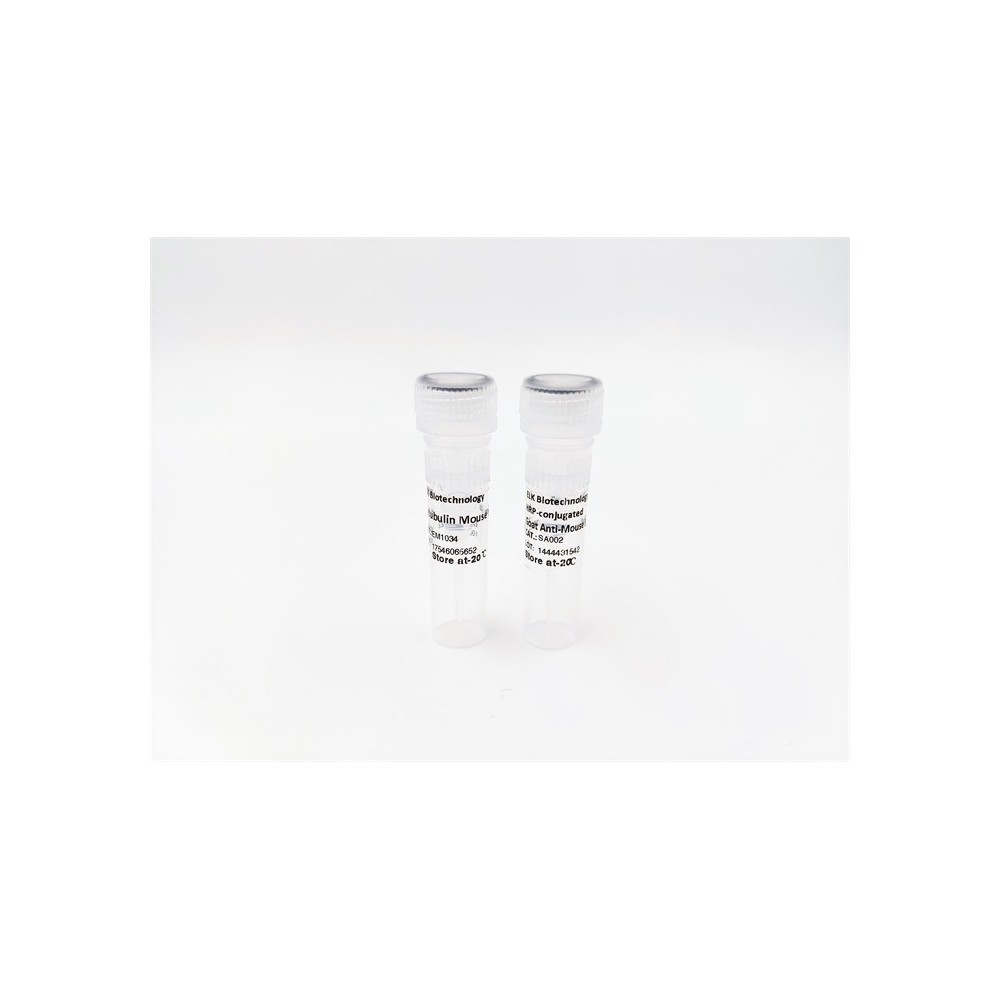

| ELK.No | ES11126 |
| Product name | STC1 rabbit pAb |
| Reactivity | Human;Rat;Mouse |
| Applications | WB;ELISA |
| Other name | |
| Size | 100μL |
| Unit price ($) | 248 |
| Human gene ID | 6781 |
| Human Swiss-Prot | P52823 |
| Source | Rabbit |
| Isotype | IgG |
| Target | STC1 |
| Fields | |
| Gene name | STC1 STC |
| Protein name | Stanniocalcin-1 (STC-1) |
| Human gene link | |
| Human Swiss link | View Human Swiss-Prot |
| Mouse gene ID | |
| Mouse gene link | |
| Mouse Swiss-Prot | O55183 |
| Mouse Swiss link | View Mouse Swiss-Prot |
| Rat gene ID | |
| Rat gene link | |
| Rat Swiss-Prot | P97574 |
| Rat Swiss link | View Rat Swiss-Prot |
| Immunogen | Synthesized peptide derived from part region of human protein |
| Specificity | STC1 Polyclonal Antibody detects endogenous levels of protein. |
| Formulation | Liquid in PBS containing 50% glycerol, and 0.02% sodium azide. |
| Clonality | Polyclonal |
| Dilution | WB 1:500-2000 ELISA 1:5000-20000 |
| Purification | The antibody was affinity-purified from rabbit antiserum by affinity-chromatography using epitope-specific immunogen. |
| Concentration | 1 mg/ml |
| Storage stability | -20°C/1 year |
| Molecular Weight (Da) | |
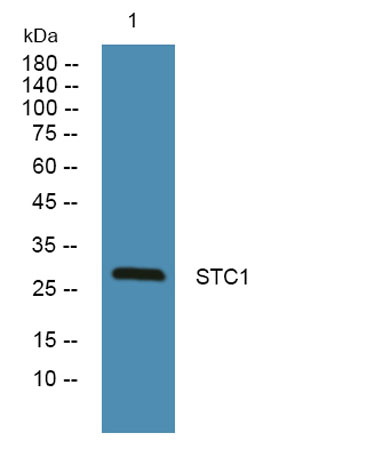
| Observed band (KD) | 27kD |
| Background | This gene encodes a secreted, homodimeric glycoprotein that is expressed in a wide variety of tissues and may have autocrine or paracrine functions. The gene contains a 5' UTR rich in CAG trinucleotide repeats. The encoded protein contains 11 conserved cysteine residues and is phosphorylated by protein kinase C exclusively on its serine residues. The protein may play a role in the regulation of renal and intestinal calcium and phosphate transport, cell metabolism, or cellular calcium/phosphate homeostasis. Overexpression of human stanniocalcin 1 in mice produces high serum phosphate levels, dwarfism, and increased metabolic rate. This gene has altered expression in hepatocellular, ovarian, and breast cancers. [provided by RefSeq, Jul 2008], |
| Function | function:Stimulates renal phosphate reabsorption, and could therefore prevent hypercalcemia.,similarity:Belongs to the stanniocalcin family.,subunit:Homodimer; disulfide-linked.,tissue specificity:Expressed in most tissues, with the highest levels in ovary, prostate, heart, kidney and thyroid. In the kidney, expression is confined to the nephron, specifically in the distal convoluted tubule and in the collecting tubule. Not detected in the brain, liver, spleen, peripheral blood leukocytes and adrenal medulla., |
| Subcellular location | Secreted. |
| Expression | Expressed in most tissues, with the highest levels in ovary, prostate, heart, kidney and thyroid. In the kidney, expression is confined to the nephron, specifically in the distal convoluted tubule and in the collecting tubule. Not detected in the brain, liver, spleen, peripheral blood leukocytes and adrenal medulla. |

Use collapsible tabs for more detailed information that will help customers make a purchasing decision.
Ex: Shipping and return policies, size guides, and other common questions.