 Français
 English
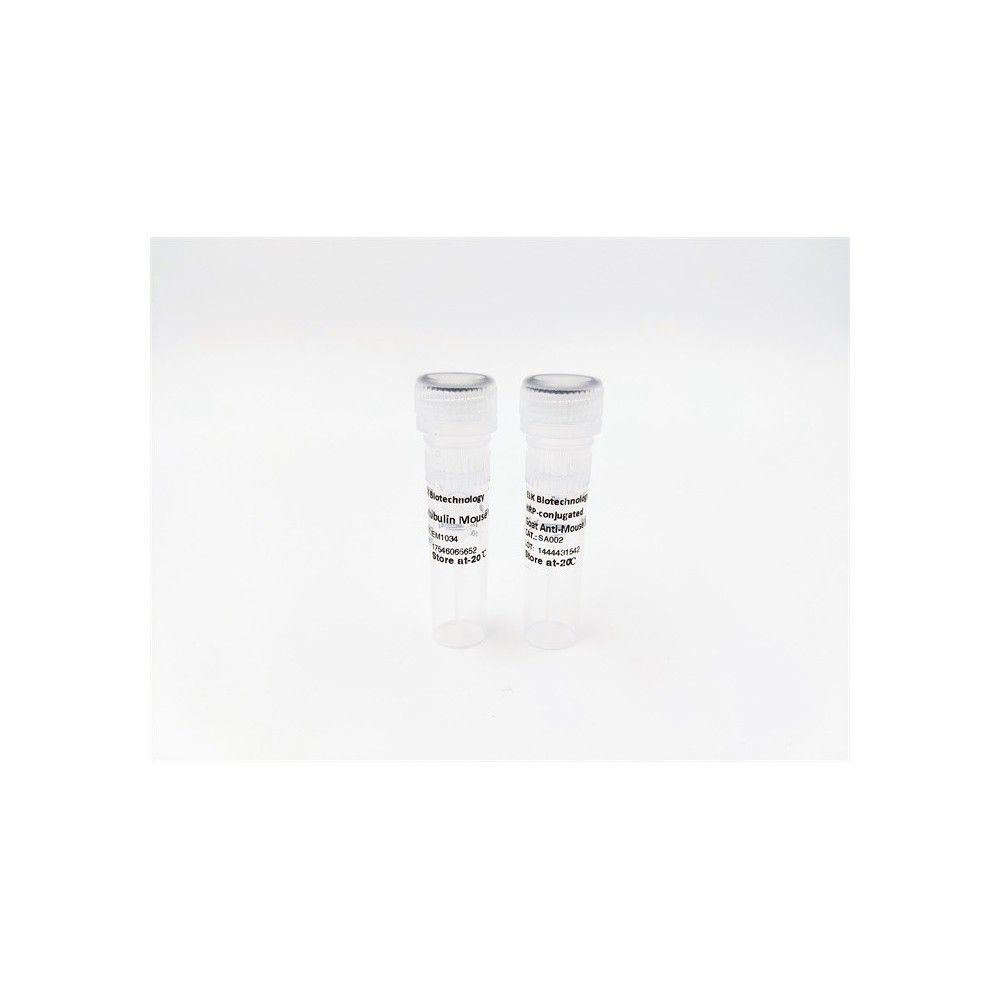

| ELK.No | ES11355 |
| Product name | PKHA1 rabbit pAb |
| Reactivity | Human;Mouse |
| Applications | WB;ELISA |
| Other name | |
| Size | 50μL |
| Unit price ($) | 148 |
| Human gene ID | 59338 |
| Human Swiss-Prot | Q9HB21 |
| Source | Rabbit |
| Isotype | IgG |
| Target | PKHA1 |
| Fields | |
| Gene name | PLEKHA1 TAPP1 |
| Protein name | Pleckstrin homology domain-containing family A member 1 (PH domain-containing family A member 1) (Tandem PH domain-containing protein 1) (TAPP-1) |
| Human gene link | |
| Human Swiss link | View Human Swiss-Prot |
| Mouse gene ID | |
| Mouse gene link | |
| Mouse Swiss-Prot | Q8BUL6 |
| Mouse Swiss link | View Mouse Swiss-Prot |
| Rat gene ID | |
| Rat gene link | |
| Rat Swiss-Prot | |
| Rat Swiss link | |
| Immunogen | Synthesized peptide derived from human protein . at AA range: 170-250 |
| Specificity | PKHA1 Polyclonal Antibody detects endogenous levels of protein. |
| Formulation | Liquid in PBS containing 50% glycerol, and 0.02% sodium azide. |
| Clonality | Polyclonal |
| Dilution | WB 1:500-2000 ELISA 1:5000-20000 |
| Purification | The antibody was affinity-purified from rabbit antiserum by affinity-chromatography using epitope-specific immunogen. |
| Concentration | 1 mg/ml |
| Storage stability | -20°C/1 year |
| Molecular Weight (Da) | |
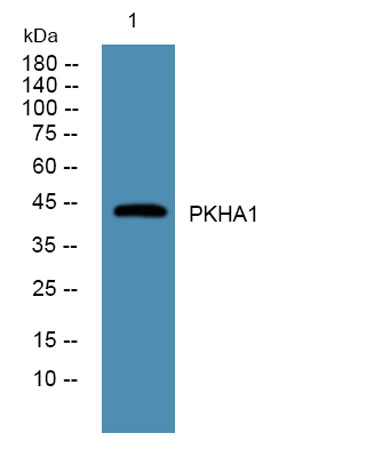
| Observed band (KD) | 44kD |
| Background | This gene encodes a pleckstrin homology domain-containing adapter protein. The encoded protein is localized to the plasma membrane where it specifically binds phosphatidylinositol 3,4-bisphosphate. This protein may be involved in the formation of signaling complexes in the plasma membrane. Polymorphisms in this gene are associated with age-related macular degeneration. Alternate splicing results in multiple transcript variants. A pseudogene of this gene is found on chromosome 5.[provided by RefSeq, Sep 2010], |
| Function | domain:Binds to membranes enriched in PtdIns3,4P2 via the C-terminal PH domain.,function:Binds specifically to phosphatidylinositol-3,4-diphosphate (PtdIns3,4P2), but not to other phosphoinositides. May recruit other proteins to the plasma membrane.,similarity:Contains 1 PH domain.,similarity:Contains 2 PH domains.,subcellular location:Locates to the plasma membrane after treatments that stimulate the production of PtdIns3,4P2.,subunit:Binds MPDZ and PTPN13.,tissue specificity:Highly expressed in skeletal muscle, thymus, pancreas, placenta and lung. Detected at low levels in brain, heart, peripheral blood leukocytes, testis, ovary, spinal cord, thyroid, kidney, liver, small intestine and colon., |
| Subcellular location | Cytoplasm . Cell membrane ; Peripheral membrane protein. Nucleus . Locates to the plasma membrane after treatments that stimulate the production of PtdIns3,4P2. . |
| Expression | Highly expressed in skeletal muscle, thymus, pancreas, placenta and lung. Detected at low levels in brain, heart, peripheral blood leukocytes, testis, ovary, spinal cord, thyroid, kidney, liver, small intestine and colon. |

Use collapsible tabs for more detailed information that will help customers make a purchasing decision.
Ex: Shipping and return policies, size guides, and other common questions.