 Français
 English
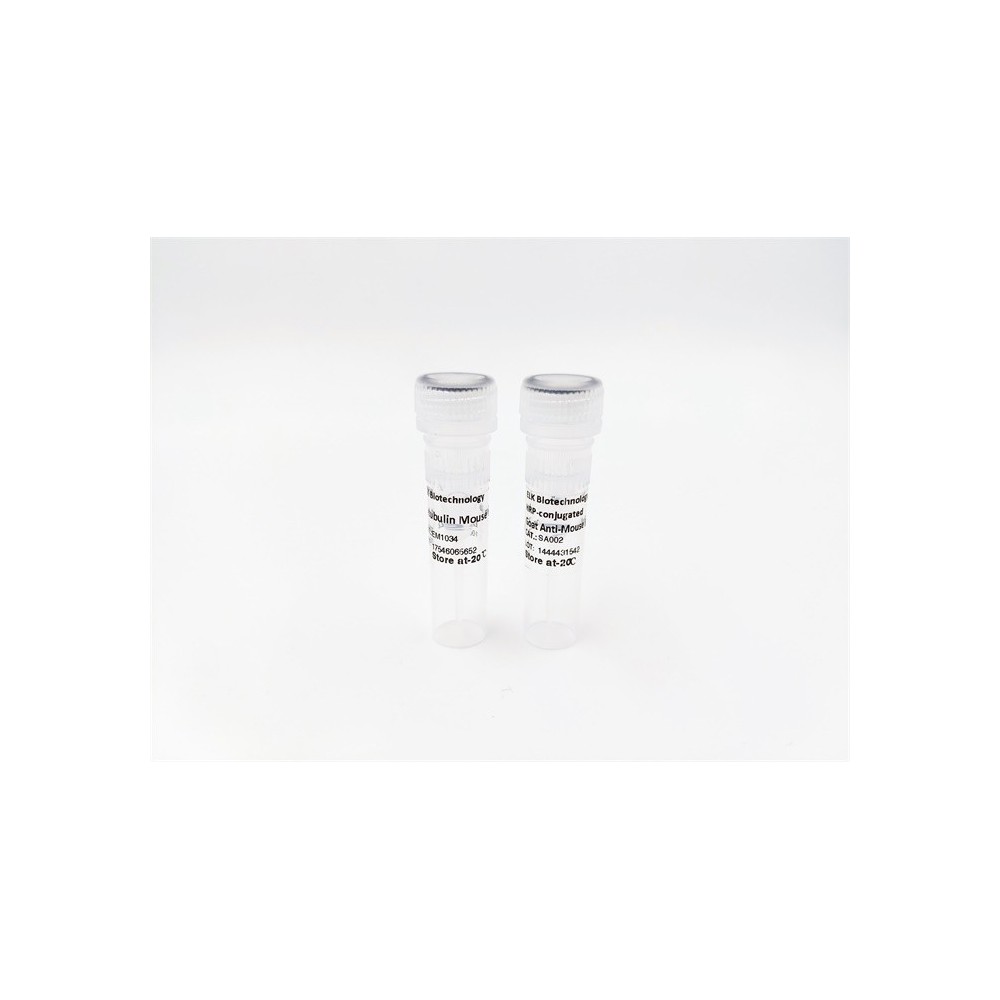

| ELK.No | ES11486 |
| Product name | SSR3 rabbit pAb |
| Reactivity | Human;Rat;Mouse; |
| Applications | WB;ELISA |
| Other name | |
| Size | 50μL |
| Unit price ($) | 148 |
| Human gene ID | 6753 |
| Human Swiss-Prot | P32745 |
| Source | Rabbit |
| Isotype | IgG |
| Target | SSR3 |
| Fields | >>Neuroactive ligand-receptor interaction;>>Growth hormone synthesis, secretion and action |
| Gene name | SSTR3 |
| Protein name | Somatostatin receptor type 3 (SS-3-R) (SS3-R) (SS3R) (SSR-28) |
| Human gene link | |
| Human Swiss link | View Human Swiss-Prot |
| Mouse gene ID | |
| Mouse gene link | |
| Mouse Swiss-Prot | P30935 |
| Mouse Swiss link | View Mouse Swiss-Prot |
| Rat gene ID | |
| Rat gene link | |
| Rat Swiss-Prot | P30936 |
| Rat Swiss link | View Rat Swiss-Prot |
| Immunogen | Synthesized peptide derived from human protein . at AA range: 340-420 |
| Specificity | SSR3 Polyclonal Antibody detects endogenous levels of protein. |
| Formulation | Liquid in PBS containing 50% glycerol, and 0.02% sodium azide. |
| Clonality | Polyclonal |
| Dilution | WB 1:500-2000 ELISA 1:5000-20000 |
| Purification | The antibody was affinity-purified from rabbit antiserum by affinity-chromatography using epitope-specific immunogen. |
| Concentration | 1 mg/ml |
| Storage stability | -20°C/1 year |
| Molecular Weight (Da) | |
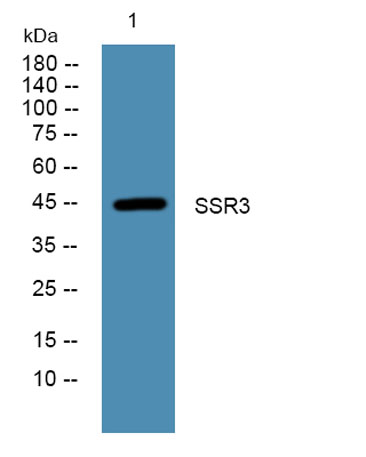
| Observed band (KD) | 45kD |
| Background | This gene encodes a member of the somatostatin receptor protein family. Somatostatins are peptide hormones that regulate diverse cellular functions such as neurotransmission, cell proliferation, and endocrine signaling as well as inhibiting the release of many hormones and other secretory proteins. Somatostatin has two active forms of 14 and 28 amino acids. The biological effects of somatostatins are mediated by a family of G-protein coupled somatostatin receptors that are expressed in a tissue-specific manner. Somatostatin receptors form homodimers and heterodimers with other members of the superfamily as well as with other G-protein coupled receptors and receptor tyrosine kinases. This protein is functionally coupled to adenylyl cyclase. Alternate splicing results in multiple transcript variants. [provided by RefSeq, Jul 2013], |
| Function | function:Receptor for somatostatins-14 and -28. This receptor is coupled via pertussis toxin sensitive G proteins to inhibition of adenylyl cyclase.,PTM:Phosphorylated. Phosphorylation increases upon somatostatin binding.,similarity:Belongs to the G-protein coupled receptor 1 family.,subcellular location:Internalized into endoplasmic vesicles upon somatostatin-stimulation.,tissue specificity:Brain, pituitary and pancreas., |
| Subcellular location | Cell membrane ; Multi-pass membrane protein . Internalized into endoplasmic vesicles upon somatostatin-stimulation. . |
| Expression | Brain, pituitary and pancreas. |

Use collapsible tabs for more detailed information that will help customers make a purchasing decision.
Ex: Shipping and return policies, size guides, and other common questions.