 Français
 English
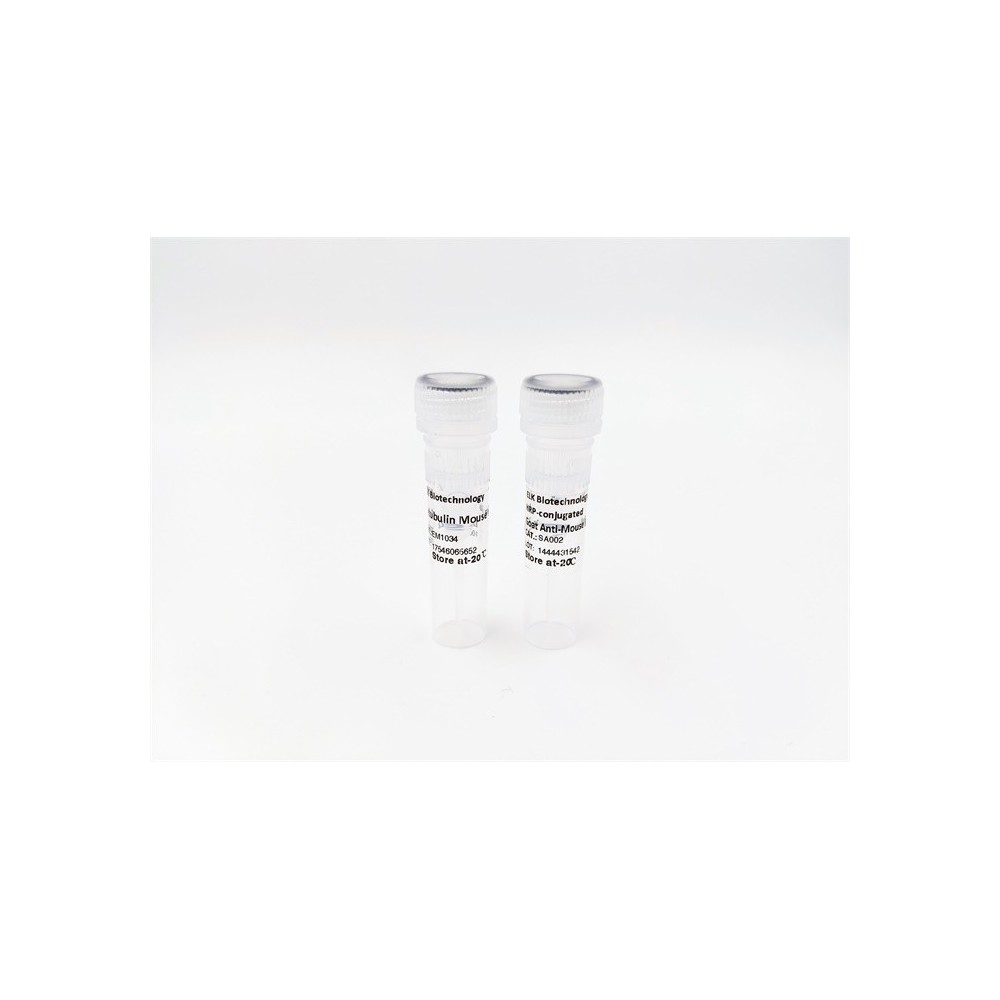

| ELK.No | ES11498 |
| Product name | GPR33 rabbit pAb |
| Reactivity | Human;Rat;Mouse; |
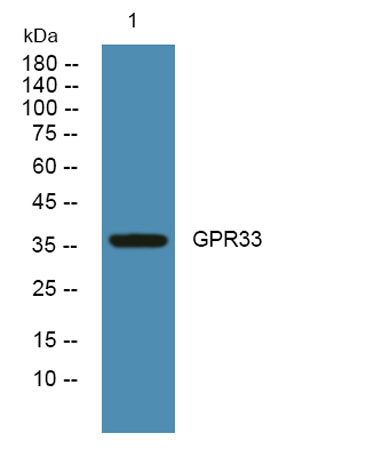
| Applications | WB;ELISA |
| Other name | |
| Size | 50μL |
| Unit price ($) | 148 |
| Human gene ID | 2856 |
| Human Swiss-Prot | Q49SQ1 |
| Source | Rabbit |
| Isotype | IgG |
| Target | GPR33 |
| Fields | |
| Gene name | GPR33 |
| Protein name | Probable G-protein coupled receptor 33 |
| Human gene link | |
| Human Swiss link | View Human Swiss-Prot |
| Mouse gene ID | |
| Mouse gene link | |
| Mouse Swiss-Prot | O88416 |
| Mouse Swiss link | View Mouse Swiss-Prot |
| Rat gene ID | |
| Rat gene link | |
| Rat Swiss-Prot | |
| Rat Swiss link | |
| Immunogen | Synthesized peptide derived from part region of human protein |
| Specificity | GPR33 Polyclonal Antibody detects endogenous levels of protein. |
| Formulation | Liquid in PBS containing 50% glycerol, and 0.02% sodium azide. |
| Clonality | Polyclonal |
| Dilution | WB 1:500-2000 ELISA 1:5000-20000 |
| Purification | The antibody was affinity-purified from rabbit antiserum by affinity-chromatography using epitope-specific immunogen. |
| Concentration | 1 mg/ml |
| Storage stability | -20°C/1 year |
| Molecular Weight (Da) | |
| Observed band (KD) | 36kD |
| Background | This gene has been identified as an orphan chemoattractant G-protein-coupled receptors (GPCR) pseudogene. Studies have shown that the inactivated gene is present as the predominant allele in the human population. A small fraction of the human population has been found to harbor an intact allele.[provided by RefSeq, Oct 2010], |
| Function | function:Orphan receptor; could be a chemoattractant receptor.,polymorphism:In most individuals a nonsense mutation transforms the Arg-140 into a premature stop codon. Out of 1217 individuals, 1166 had a stop codon in both alleles, 50 were heterozygous and only one (in the Philippines) had Arg-140 in both alleles. GPR33 has undergone independent pseudogenization in human, chimpanzee, orangutan, siamang and rat. This selective inactivation may be due to its interaction with a putative pathogen that could use GPR33 as a receptor for cell invasion.,similarity:Belongs to the G-protein coupled receptor 1 family.,tissue specificity:Expressed in spleen, lung, heart, liver, kidney, pancreas, thymus, gonads and leukocytes., |
| Subcellular location | Cell membrane; Multi-pass membrane protein. |
| Expression | Expressed in spleen, lung, heart, liver, kidney, pancreas, thymus, gonads and leukocytes. |

Use collapsible tabs for more detailed information that will help customers make a purchasing decision.
Ex: Shipping and return policies, size guides, and other common questions.