 Français
 English
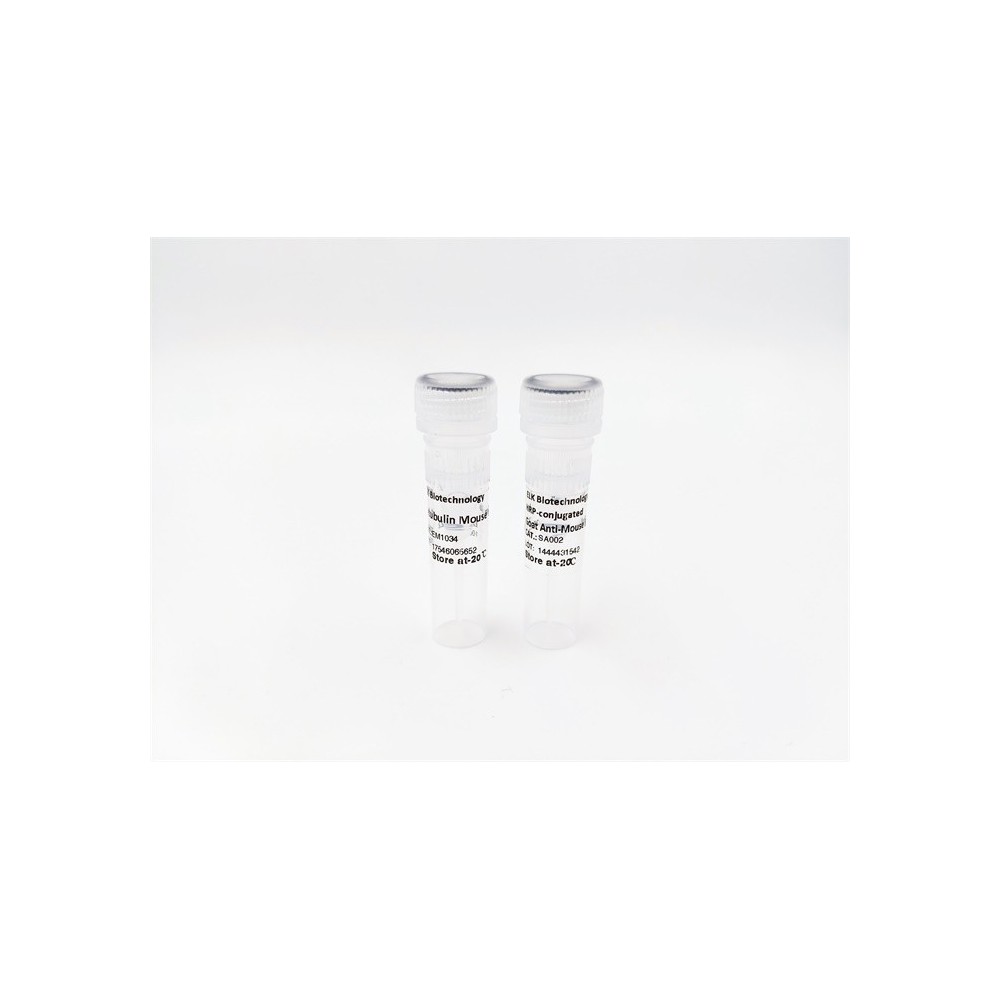

| ELK.No | ES11629 |
| Product name | PKR2 rabbit pAb |
| Reactivity | Human;Rat;Mouse |
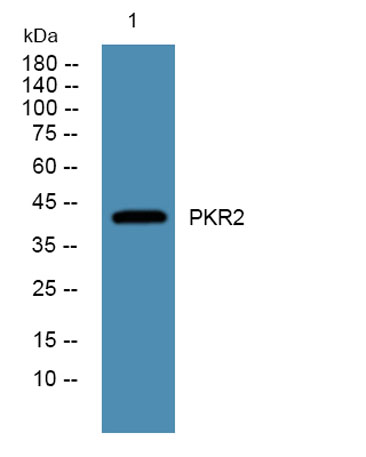
| Applications | WB;ELISA |
| Other name | |
| Size | 50μL |
| Unit price ($) | 148 |
| Human gene ID | 128674 |
| Human Swiss-Prot | Q8NFJ6 |
| Source | Rabbit |
| Isotype | IgG |
| Target | PKR2 |
| Fields | |
| Gene name | PROKR2 GPR73L1 PKR2 |
| Protein name | Prokineticin receptor 2 (PK-R2) (G-protein coupled receptor 73-like 1) (GPR73b) (GPRg2) |
| Human gene link | |
| Human Swiss link | View Human Swiss-Prot |
| Mouse gene ID | |
| Mouse gene link | |
| Mouse Swiss-Prot | Q8K458 |
| Mouse Swiss link | View Mouse Swiss-Prot |
| Rat gene ID | |
| Rat gene link | |
| Rat Swiss-Prot | Q8R415 |
| Rat Swiss link | View Rat Swiss-Prot |
| Immunogen | Synthesized peptide derived from human protein . at AA range: 20-100 |
| Specificity | PKR2 Polyclonal Antibody detects endogenous levels of protein. |
| Formulation | Liquid in PBS containing 50% glycerol, and 0.02% sodium azide. |
| Clonality | Polyclonal |
| Dilution | WB 1:500-2000 ELISA 1:5000-20000 |
| Purification | The antibody was affinity-purified from rabbit antiserum by affinity-chromatography using epitope-specific immunogen. |
| Concentration | 1 mg/ml |
| Storage stability | -20°C/1 year |
| Molecular Weight (Da) | |
| Observed band (KD) | 42kD |
| Background | prokineticin receptor 2(PROKR2) Homo sapiens Prokineticins are secreted proteins that can promote angiogenesis and induce strong gastrointestinal smooth muscle contraction. The protein encoded by this gene is an integral membrane protein and G protein-coupled receptor for prokineticins. The encoded protein is similar in sequence to GPR73, another G protein-coupled receptor for prokineticins. [provided by RefSeq, Jul 2008], |
| Function | disease:Defects in PROKR2 are the cause of Kallmann syndrome type 3 (KAL3) [MIM:244200]; also known as hypogonadotropic hypogonadism and anosmia. Anosmia or hyposmia is related to the absence or hypoplasia of the olfactory bulbs and tracts. Hypogonadism is due to deficiency in gonadotropin-releasing hormone and probably results from a failure of embryonic migration of gonadotropin-releasing hormone-synthesizing neurons. KAL3 patients have variable degrees of olfactory and reproductive dysfunction, but do not show any of the occasional clinical anomalies reported in Kallmann syndrome such as renal agenesis, cleft lip and/or palate, selective tooth agenesis, and bimanual synkinesis.,function:Receptor for prokineticin 2. Exclusively coupled to the G(q) subclass of heteromeric G proteins. Activation leads to mobilization of calcium, stimulation of phosphoinositide turnover and activation of |
| Subcellular location | Cell membrane ; Multi-pass membrane protein. |
| Expression | Expressed in the ileocecum, thyroid gland, pituitary gland, salivary gland, adrenal gland, testis, ovary and brain. |

Use collapsible tabs for more detailed information that will help customers make a purchasing decision.
Ex: Shipping and return policies, size guides, and other common questions.