 Français
 English
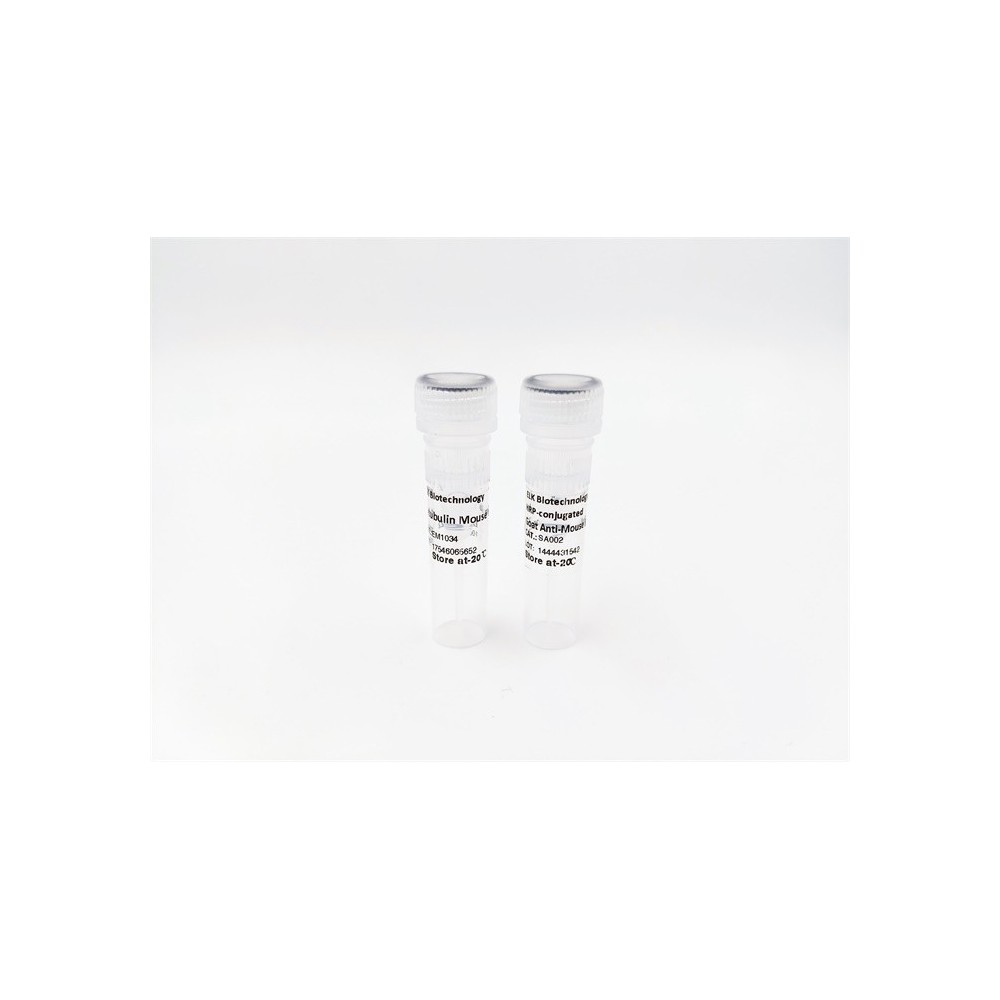

| ELK.No | ES11812 |
| Product name | B2LA1 rabbit pAb |
| Reactivity | Human;Mouse |
| Applications | WB;ELISA |
| Other name | |
| Size | 100μL |
| Unit price ($) | 248 |
| Human gene ID | 597 |
| Human Swiss-Prot | Q16548 |
| Source | Rabbit |
| Isotype | IgG |
| Target | B2LA1 |
| Fields | >>NF-kappa B signaling pathway;>>Apoptosis;>>Transcriptional misregulation in cancer;>>Acute myeloid leukemia |
| Gene name | BCL2A1 BCL2L5 BFL1 GRS HBPA1 |
| Protein name | Bcl-2-related protein A1 (Bcl-2-like protein 5) (Bcl2-L-5) (Hemopoietic-specific early response protein) (Protein BFL-1) (Protein GRS) |
| Human gene link | |
| Human Swiss link | View Human Swiss-Prot |
| Mouse gene ID | |
| Mouse gene link | |
| Mouse Swiss-Prot | Q07440 |
| Mouse Swiss link | View Mouse Swiss-Prot |
| Rat gene ID | |
| Rat gene link | |
| Rat Swiss-Prot | |
| Rat Swiss link | |
| Immunogen | Synthesized peptide derived from part region of human protein |
| Specificity | B2LA1 Polyclonal Antibody detects endogenous levels of protein. |
| Formulation | Liquid in PBS containing 50% glycerol, and 0.02% sodium azide. |
| Clonality | Polyclonal |
| Dilution | WB 1:500-2000 ELISA 1:5000-20000 |
| Purification | The antibody was affinity-purified from rabbit antiserum by affinity-chromatography using epitope-specific immunogen. |
| Concentration | 1 mg/ml |
| Storage stability | -20°C/1 year |
| Molecular Weight (Da) | |
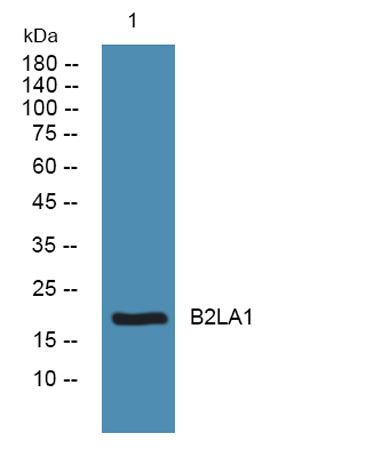
| Observed band (KD) | 19kD |
| Background | BCL2 related protein A1(BCL2A1) Homo sapiens This gene encodes a member of the BCL-2 protein family. The proteins of this family form hetero- or homodimers and act as anti- and pro-apoptotic regulators that are involved in a wide variety of cellular activities such as embryonic development, homeostasis and tumorigenesis. The protein encoded by this gene is able to reduce the release of pro-apoptotic cytochrome c from mitochondria and block caspase activation. This gene is a direct transcription target of NF-kappa B in response to inflammatory mediators, and is up-regulated by different extracellular signals, such as granulocyte-macrophage colony-stimulating factor (GM-CSF), CD40, phorbol ester and inflammatory cytokine TNF and IL-1, which suggests a cytoprotective function that is essential for lymphocyte activation as well as cell survival. Alternatively spliced transcript variants encoding different isoforms have been found for this gene. [p |
| Function | function:Retards apoptosis induced by IL-3 deprivation. May function in the response of hemopoietic cells to external signals and in maintaining endothelial survival during infection.,induction:By phorbol ester and inflammatory cytokines, such as TNF-alpha, or IL-1-beta, but not by growth factors.,similarity:Belongs to the Bcl-2 family.,subunit:Interacts directly with BAK1, BID, BMF and BBC3 (By similarity). Interacts directly with BCL2L11/BIM. Interacts with BAX isoform Sigma.,tissue specificity:Seems to be restricted to the hematopoietic compartment. Expressed in peripheral blood, spleen, and bone marrow, at moderate levels in lung, small intestine and testis, at a minimal levels in other tissues. Also found in vascular smooth muscle cells and hematopoietic malignancies., |
| Subcellular location | Cytoplasm . |
| Expression | Seems to be restricted to the hematopoietic compartment. Expressed in peripheral blood, spleen, and bone marrow, at moderate levels in lung, small intestine and testis, at a minimal levels in other tissues. Also found in vascular smooth muscle cells and hematopoietic malignancies. |

Use collapsible tabs for more detailed information that will help customers make a purchasing decision.
Ex: Shipping and return policies, size guides, and other common questions.