 Français
 English
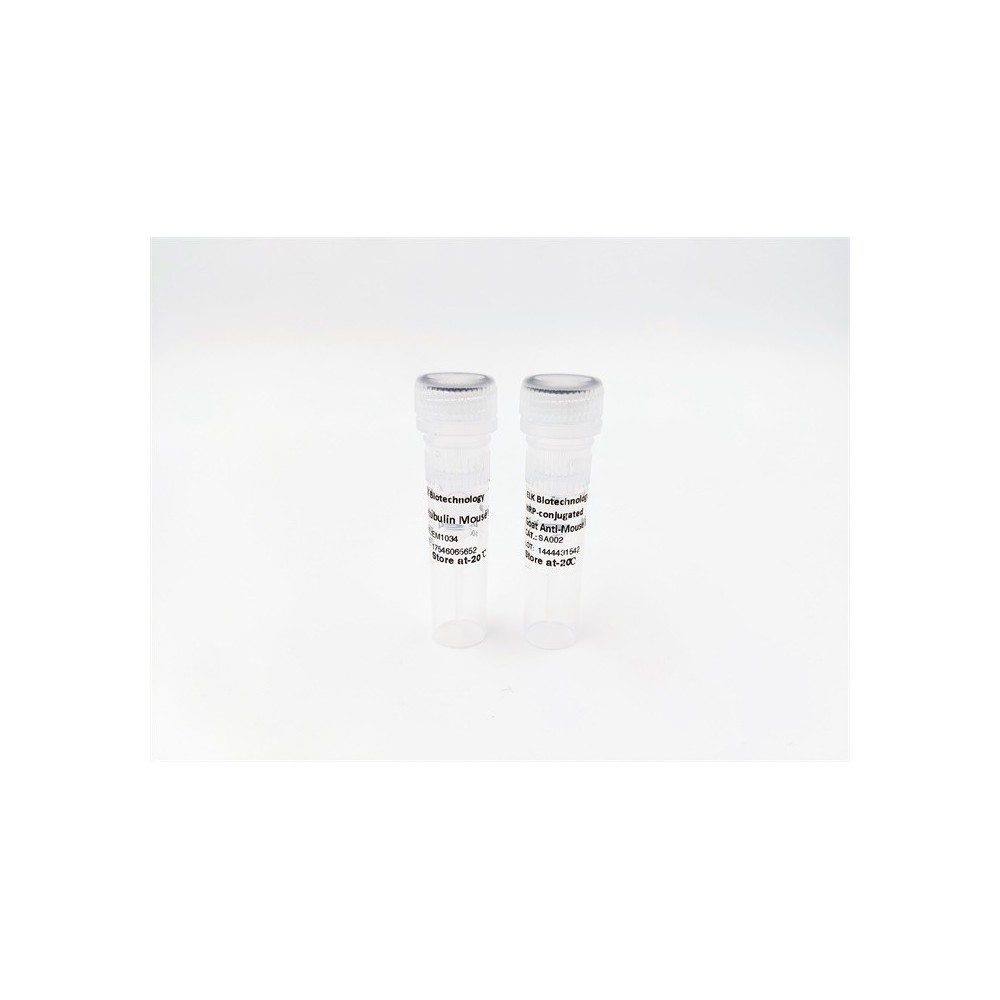

| ELK.No | ES11984 |
| Product name | OGG1 rabbit pAb |
| Reactivity | Human;Rat;Mouse; |
| Applications | WB;ELISA |
| Other name | |
| Size | 100μL |
| Unit price ($) | 248 |
| Human gene ID | 4968 |
| Human Swiss-Prot | O15527 |
| Source | Rabbit |
| Isotype | IgG |
| Target | OGG1 |
| Fields | >>Base excision repair |
| Gene name | OGG1 MMH MUTM OGH1 |
| Protein name | N-glycosylase/DNA lyase [Includes: 8-oxoguanine DNA glycosylase (EC 3.2.2.-); DNA-(apurinic or apyrimidinic site) lyase (AP lyase) (EC 4.2.99.18)] |
| Human gene link | |
| Human Swiss link | View Human Swiss-Prot |
| Mouse gene ID | |
| Mouse gene link | |
| Mouse Swiss-Prot | O08760 |
| Mouse Swiss link | View Mouse Swiss-Prot |
| Rat gene ID | |
| Rat gene link | |
| Rat Swiss-Prot | O70249 |
| Rat Swiss link | View Rat Swiss-Prot |
| Immunogen | Synthesized peptide derived from part region of human protein |
| Specificity | OGG1 Polyclonal Antibody detects endogenous levels of protein. |
| Formulation | Liquid in PBS containing 50% glycerol, and 0.02% sodium azide. |
| Clonality | Polyclonal |
| Dilution | WB 1:500-2000 ELISA 1:5000-20000 |
| Purification | The antibody was affinity-purified from rabbit antiserum by affinity-chromatography using epitope-specific immunogen. |
| Concentration | 1 mg/ml |
| Storage stability | -20°C/1 year |
| Molecular Weight (Da) | |
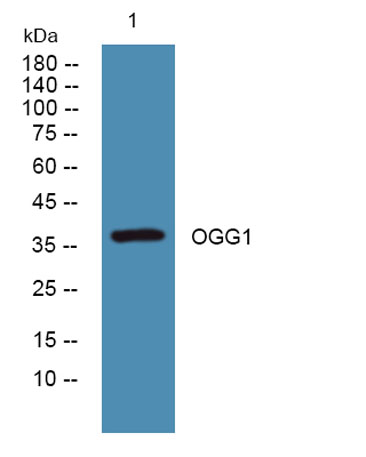
| Observed band (KD) | 37kD |
| Background | This gene encodes the enzyme responsible for the excision of 8-oxoguanine, a mutagenic base byproduct which occurs as a result of exposure to reactive oxygen. The action of this enzyme includes lyase activity for chain cleavage. Alternative splicing of the C-terminal region of this gene classifies splice variants into two major groups, type 1 and type 2, depending on the last exon of the sequence. Type 1 alternative splice variants end with exon 7 and type 2 end with exon 8. All variants share the N-terminal region in common, which contains a mitochondrial targeting signal that is essential for mitochondrial localization. Many alternative splice variants for this gene have been described, but the full-length nature for every variant has not been determined. [provided by RefSeq, Aug 2008], |
| Function | catalytic activity:The C-O-P bond 3' to the apurinic or apyrimidinic site in DNA is broken by a beta-elimination reaction, leaving a 3'-terminal unsaturated sugar and a product with a terminal 5'-phosphate.,disease:Defects in OGG1 are a cause of renal cell carcinoma (RCC1) [MIM:144700].,disease:Defects in OGG1 are associated with tumor formation.,function:DNA repair enzyme that incises DNA at 8-oxoG residues. Excises 7,8-dihydro-8-oxoguanine and 2,6-diamino-4-hydroxy-5-N-methylformamidopyrimidine (FAPY) from damaged DNA. Has a beta-lyase activity that nicks DNA 3' to the lesion.,similarity:Belongs to the type-1 OGG1 family.,tissue specificity:Ubiquitous., |
| Subcellular location | Nucleus, nucleoplasm . Nucleus speckle . Nucleus matrix . Together with APEX1 is recruited to nuclear speckles in UVA-irradiated cells.; [Isoform 1A]: Nucleus.; [Isoform 2A]: Mitochondrion. |
| Expression | Ubiquitous. |

Use collapsible tabs for more detailed information that will help customers make a purchasing decision.
Ex: Shipping and return policies, size guides, and other common questions.