 Français
 English
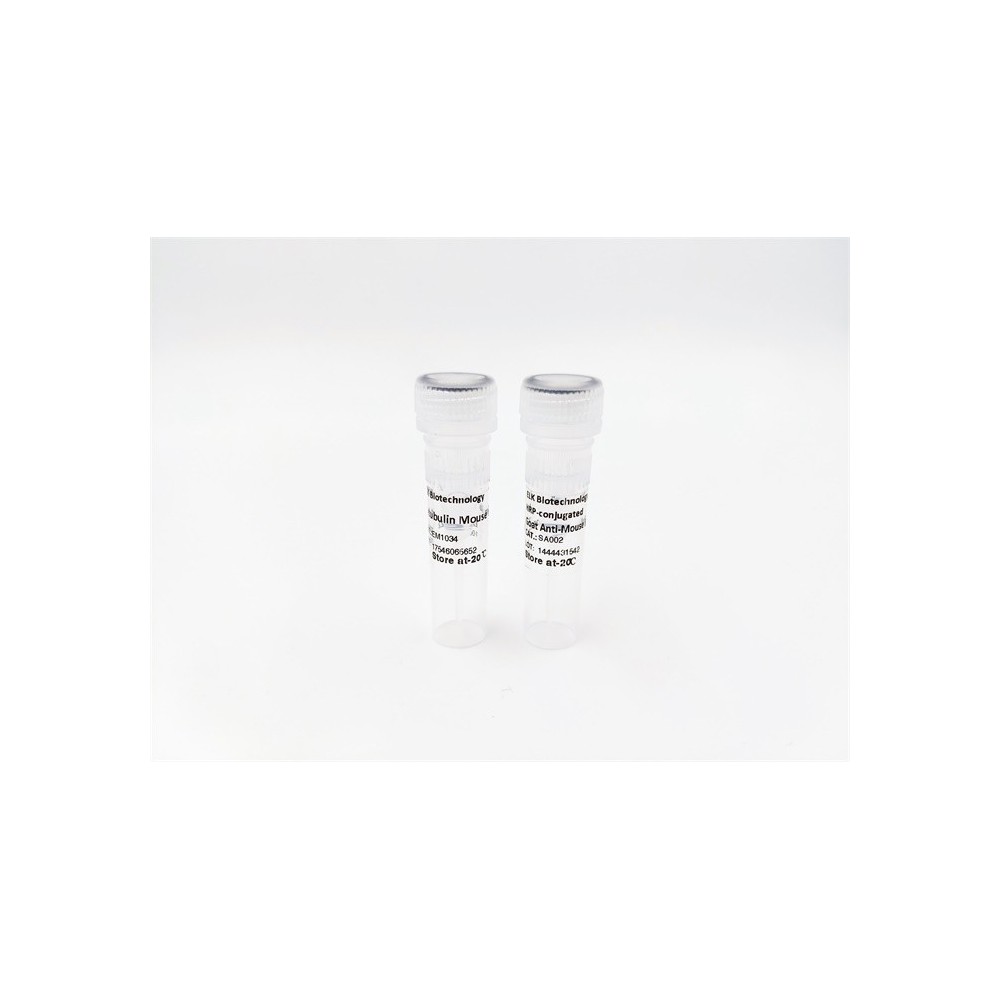

| ELK.No | ES12206 |
| Product name | ZFY27 rabbit pAb |
| Reactivity | Human; Mouse;Rat |
| Applications | WB |
| Other name | |
| Size | 100μL |
| Unit price ($) | 248 |
| Human gene ID | 118813 |
| Human Swiss-Prot | Q5T4F4 |
| Source | Rabbit |
| Isotype | IgG |
| Target | ZFY27 |
| Fields | >>Endocytosis |
| Gene name | ZFYVE27 |
| Protein name | ZFY27 |
| Human gene link | View Human Gene |
| Human Swiss link | View Human Swiss-Prot |
| Mouse gene ID | 319740 |
| Mouse gene link | View Mouse Gene |
| Mouse Swiss-Prot | Q3TXX3 |
| Mouse Swiss link | View Mouse Swiss-Prot |
| Rat gene ID | 309376 |
| Rat gene link | View Rat Gene |
| Rat Swiss-Prot | Q6P7B7 |
| Rat Swiss link | View Rat Swiss-Prot |
| Immunogen | Synthesized peptide derived from human ZFY27 AA range: 351-401 |
| Specificity | This antibody detects endogenous levels of ZFY27 at Human/Mouse/Rat |
| Formulation | Liquid in PBS containing 50% glycerol, 0.5% BSA and 0.02% sodium azide. |
| Clonality | Polyclonal |
| Dilution | WB 1:500-2000 |
| Purification | The antibody was affinity-purified from rabbit serum by affinity-chromatography using specific immunogen. |
| Concentration | 1 mg/ml |
| Storage stability | -20°C/1 year |
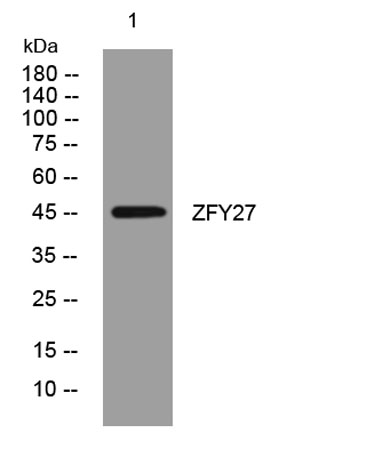
| Molecular Weight (Da) | 45kD |
| Observed band (KD) | |
| Background | This gene encodes a protein with several transmembrane domains, a Rab11-binding domain and a lipid-binding FYVE finger domain. The encoded protein appears to promote neurite formation. A mutation in this gene has been reported to be associated with hereditary spastic paraplegia, however the pathogenicity of the mutation, which may simply represent a polymorphism, is unclear. [provided by RefSeq, Mar 2010], |
| Function | disease:Defects in ZFYVE27 are the cause of spastic paraplegia autosomal dominant type 33 (SPG33) [MIM:610244]. Spastic paraplegia is a neurodegenerative disorder characterized by a slow, gradual, progressive weakness and spasticity of the lower limbs. Rate of progression and the severity of symptoms are quite variable. Initial symptoms may include difficulty with balance, weakness and stiffness in the legs, muscle spasms, and dragging the toes when walking. In some forms of the disorder, bladder symptoms (such as incontinence) may appear, or the weakness and stiffness may spread to other parts of the body.,similarity:Contains 1 FYVE-type zinc finger.,subcellular location:Punctate vesicles.,subunit:Interacts with SPAST/spastin., |
| Subcellular location | Recycling endosome membrane ; Multi-pass membrane protein . Endoplasmic reticulum membrane ; Multi-pass membrane protein . Cell projection, growth cone membrane ; Multi-pass membrane protein . Localizes at both dendrites and axons (By similarity). Localizes to endoplasmic reticulum tubular network. . |
| Expression |

Use collapsible tabs for more detailed information that will help customers make a purchasing decision.
Ex: Shipping and return policies, size guides, and other common questions.