 Français
 English
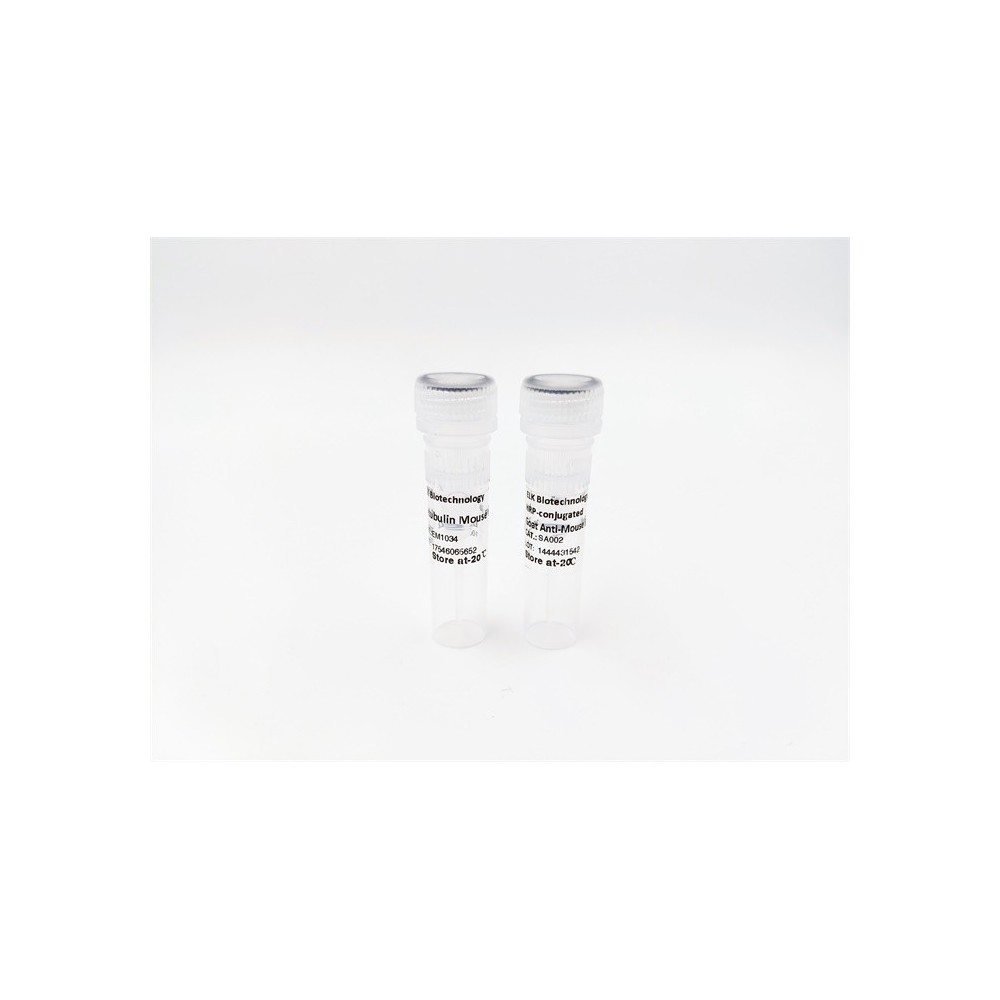

| ELK.No | ES12816 |
| Product name | TAP2 rabbit pAb |
| Reactivity | Human; Mouse;Rat |
| Applications | WB |
| Other name | |
| Size | 50μL |
| Unit price ($) | 148 |
| Human gene ID | 6891 |
| Human Swiss-Prot | Q03519 |
| Source | Rabbit |
| Isotype | IgG |
| Target | TAP2 |
| Fields | >>ABC transporters;>>Phagosome;>>Antigen processing and presentation;>>Human cytomegalovirus infection;>>Herpes simplex virus 1 infection;>>Epstein-Barr virus infection;>>Human immunodeficiency virus 1 infection;>>Primary immunodeficiency |
| Gene name | TAP2 ABCB3 PSF2 RING11 Y1 |
| Protein name | TAP2 |
| Human gene link | View Human Gene |
| Human Swiss link | View Human Swiss-Prot |
| Mouse gene ID | 21355 |
| Mouse gene link | View Mouse Gene |
| Mouse Swiss-Prot | P36371 |
| Mouse Swiss link | View Mouse Swiss-Prot |
| Rat gene ID | 24812 |
| Rat gene link | View Rat Gene |
| Rat Swiss-Prot | P36372 |
| Rat Swiss link | View Rat Swiss-Prot |
| Immunogen | Synthesized peptide derived from human TAP2 AA range: 182-232 |
| Specificity | This antibody detects endogenous levels of TAP2 at Human/Mouse/Rat |
| Formulation | Liquid in PBS containing 50% glycerol, 0.5% BSA and 0.02% sodium azide. |
| Clonality | Polyclonal |
| Dilution | WB 1:500-2000 |
| Purification | The antibody was affinity-purified from rabbit serum by affinity-chromatography using specific immunogen. |
| Concentration | 1 mg/ml |
| Storage stability | -20°C/1 year |
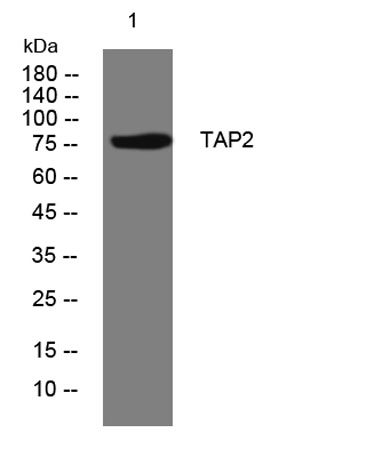
| Molecular Weight (Da) | 75kD |
| Observed band (KD) | |
| Background | The membrane-associated protein encoded by this gene is a member of the superfamily of ATP-binding cassette (ABC) transporters. ABC proteins transport various molecules across extra- and intra-cellular membranes. ABC genes are divided into seven distinct subfamilies (ABC1, MDR/TAP, MRP, ALD, OABP, GCN20, White). This protein is a member of the MDR/TAP subfamily. Members of the MDR/TAP subfamily are involved in multidrug resistance. This gene is located 7 kb telomeric to gene family member ABCB2. The protein encoded by this gene is involved in antigen presentation. This protein forms a heterodimer with ABCB2 in order to transport peptides from the cytoplasm to the endoplasmic reticulum. Mutations in this gene may be associated with ankylosing spondylitis, insulin-dependent diabetes mellitus, and celiac disease. Alternative splicing of this gene produces products which differ in peptide selectivity and level of restoration of surface expression of MHC class I molecules. [provided by RefSeq, Feb 2014], |
| Function | disease:Defects in TAP2 are a cause of bare lymphocyte syndrome type 1 (BLS1) [MIM:604571]; also called HLA class I deficiency. BLS1 is a class I antigen deficiency that is not accompanied by particular pathologic manifestations during the first years of life. Systemic infections have not been described. Chronic bacterial infections, often beginning in the first decade of life, are restricted to the respiratory tract.,domain:The peptide-binding site is shared between the cytoplasmic loops of TAP1 and TAP2.,function:Involved in the transport of antigens from the cytoplasm to the endoplasmic reticulum for association with MHC class I molecules. Also acts as a molecular scaffold for the final stage of MHC class I folding, namely the binding of peptide. Nascent MHC class I molecules associate with TAP via tapasin. Inhibited by the covalent attachment of herpes simplex virus ICP47 protein, wh |
| Subcellular location | Endoplasmic reticulum membrane ; Multi-pass membrane protein . The transmembrane segments seem to form a pore in the membrane. |
| Expression |

Use collapsible tabs for more detailed information that will help customers make a purchasing decision.
Ex: Shipping and return policies, size guides, and other common questions.