 Français
 English
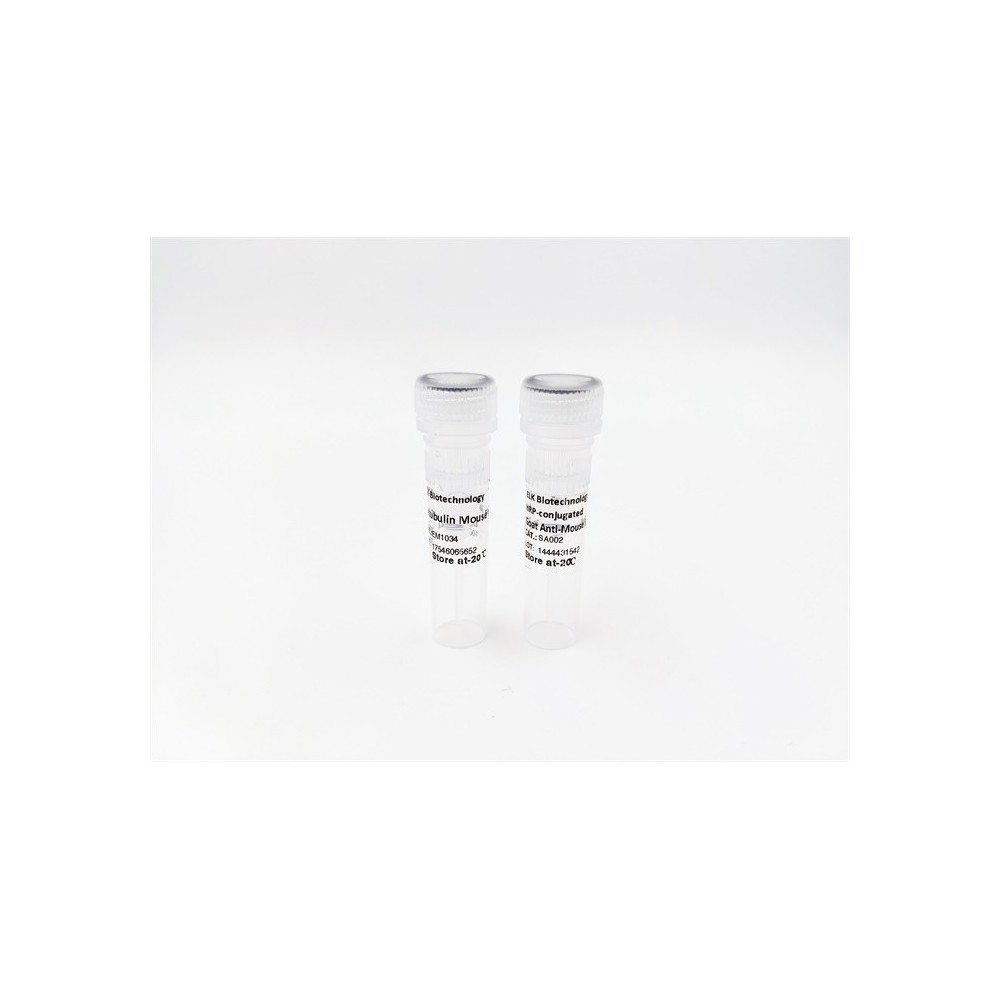

| ELK.No | ES13028 |
| Product name | SO1C1 rabbit pAb |
| Reactivity | Human; Mouse;Rat |
| Applications | WB;ELISA;IHC |
| Other name | |
| Size | 50μL |
| Unit price ($) | 148 |
| Human gene ID | 53919 |
| Human Swiss-Prot | Q9NYB5 |
| Source | Rabbit |
| Isotype | IgG |
| Target | SO1C1 |
| Fields | >>Thyroid hormone signaling pathway |
| Gene name | SLCO1C1 OATP14 OATP1C1 OATPF SLC21A14 |
| Protein name | SO1C1 |
| Human gene link | View Human Gene |
| Human Swiss link | View Human Swiss-Prot |
| Mouse gene ID | 58807 |
| Mouse gene link | View Mouse Gene |
| Mouse Swiss-Prot | Q9ERB5 |
| Mouse Swiss link | View Mouse Swiss-Prot |
| Rat gene ID | 84511 |
| Rat gene link | View Rat Gene |
| Rat Swiss-Prot | Q9EPZ7 |
| Rat Swiss link | View Rat Swiss-Prot |
| Immunogen | Synthesized peptide derived from human SO1C1 AA range: 634-684 |
| Specificity | This antibody detects endogenous levels of SO1C1 at Human/Mouse/Rat |
| Formulation | Liquid in PBS containing 50% glycerol, 0.5% BSA and 0.02% sodium azide. |
| Clonality | Polyclonal |
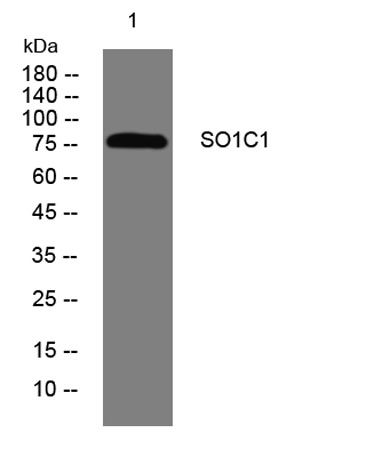
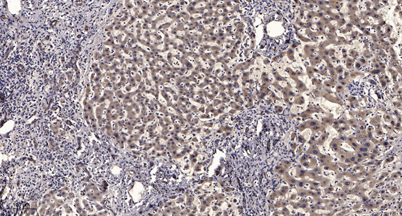
| Dilution | WB 1:500-2000;IHC-p 1:50-300; ELISA 2000-20000 |
| Purification | The antibody was affinity-purified from rabbit serum by affinity-chromatography using specific immunogen. |
| Concentration | 1 mg/ml |
| Storage stability | -20°C/1 year |
| Molecular Weight (Da) | 78kD |
| Observed band (KD) | |
| Background | This gene encodes a member of the organic anion transporter family. The encoded protein is a transmembrane receptor that mediates the sodium-independent uptake of thyroid hormones in brain tissues. This protein has particularly high affinity for the thyroid hormones thyroxine, tri-iodothyronine and reverse tri-iodothyronine. Polymorphisms in the gene encoding this protein may be associated with fatigue and depression in patients suffering from hyperthyroidism. Alternative splicing results in multiple transcript variants. [provided by RefSeq, Mar 2009], |
| Function | function:Mediates the Na(+)-independent high affinity transport of organic anions such as the thyroid hormones thyroxine (T4) and rT3. Other potential substrates, such as triiodothyronine (T3), 17-beta-glucuronosyl estradiol, estrone-3-sulfate and sulfobromophthalein (BSP) are transported with much lower efficiency.,similarity:Belongs to the organo anion transporter (TC 2.A.60) family.,tissue specificity:Highly expressed in brain and in Leydig cells in testis. Detected in many brain regions with the exception of pons and cerebellum., |
| Subcellular location | Cell membrane ; Multi-pass membrane protein . Expressed in both luminal and abluminal membranes of brain capillary endothelial cells. Localized to the apical membrane and basal surfaces of choroid plexus (By similarity). . |
| Expression | Highly expressed in brain and in Leydig cells in testis. Detected in many brain regions with the exception of pons and cerebellum. Not strongly enriched in cerebral microvessels. |

Use collapsible tabs for more detailed information that will help customers make a purchasing decision.
Ex: Shipping and return policies, size guides, and other common questions.