 Français
 English
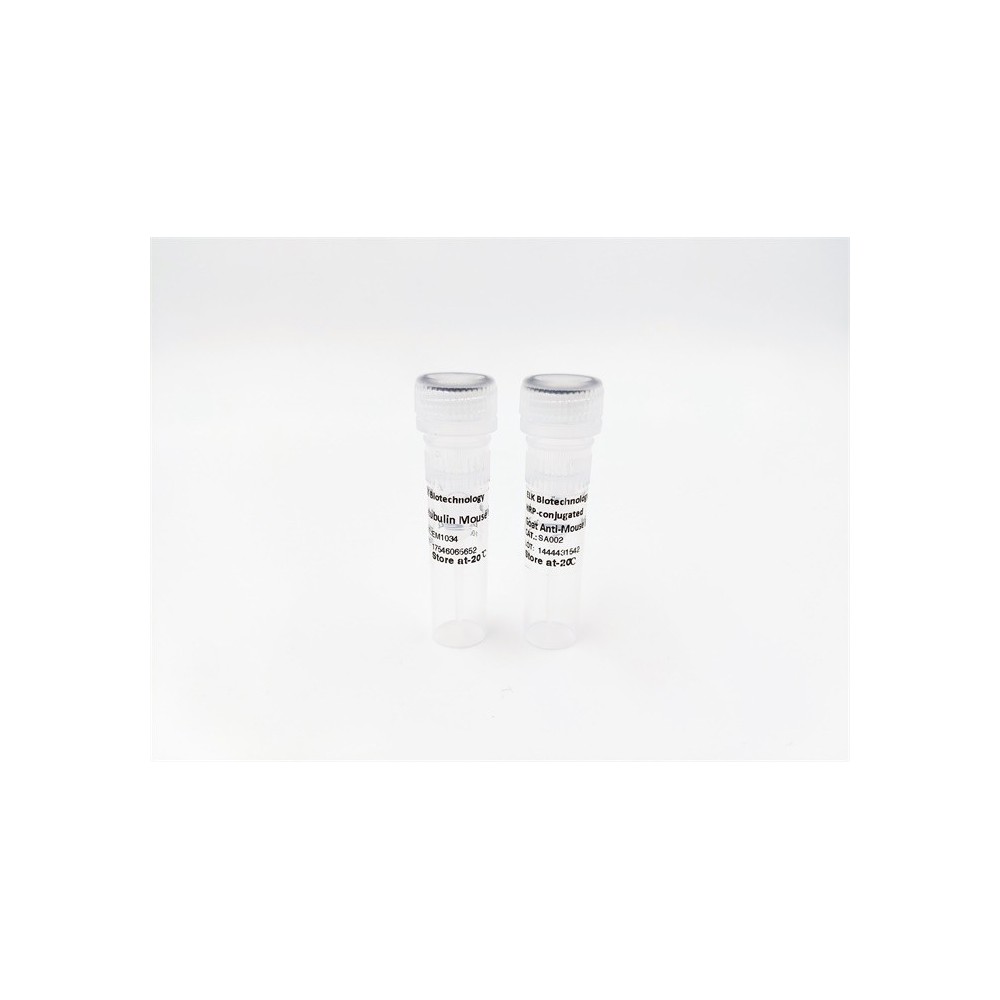

| ELK.No | ES13888 |
| Product name | PSB3 rabbit pAb |
| Reactivity | Human; Mouse;Rat |
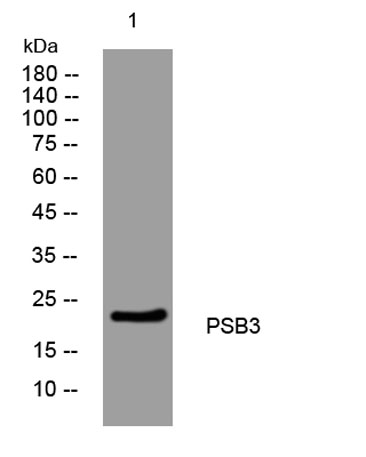
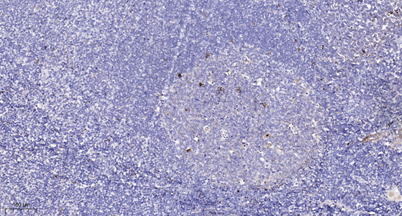
| Applications | WB;IHC |
| Other name | |
| Size | 50μL |
| Unit price ($) | 148 |
| Human gene ID | 5691 |
| Human Swiss-Prot | P49720 |
| Source | Rabbit |
| Isotype | IgG |
| Target | PSB3 |
| Fields | >>Proteasome;>>Alzheimer disease;>>Parkinson disease;>>Amyotrophic lateral sclerosis;>>Huntington disease;>>Spinocerebellar ataxia;>>Prion disease;>>Pathways of neurodegeneration - multiple diseases |
| Gene name | PSMB3 |
| Protein name | PSB3 |
| Human gene link | View Human Gene |
| Human Swiss link | View Human Swiss-Prot |
| Mouse gene ID | 26446 |
| Mouse gene link | View Mouse Gene |
| Mouse Swiss-Prot | Q9R1P1 |
| Mouse Swiss link | View Mouse Swiss-Prot |
| Rat gene ID | 29676 |
| Rat gene link | View Rat Gene |
| Rat Swiss-Prot | P40112 |
| Rat Swiss link | View Rat Swiss-Prot |
| Immunogen | Synthesized peptide derived from human PSB3 AA range: 41-91 |
| Specificity | This antibody detects endogenous levels of PSB3 at Human/Mouse/Rat |
| Formulation | Liquid in PBS containing 50% glycerol, 0.5% BSA and 0.02% sodium azide. |
| Clonality | Polyclonal |
| Dilution | WB 1:500-2000;IHC-p 1:50-300 |
| Purification | The antibody was affinity-purified from rabbit serum by affinity-chromatography using specific immunogen. |
| Concentration | 1 mg/ml |
| Storage stability | -20°C/1 year |
| Molecular Weight (Da) | 23kD |
| Observed band (KD) | |
| Background | The proteasome is a multicatalytic proteinase complex with a highly ordered ring-shaped 20S core structure. The core structure is composed of 4 rings of 28 non-identical subunits; 2 rings are composed of 7 alpha subunits and 2 rings are composed of 7 beta subunits. Proteasomes are distributed throughout eukaryotic cells at a high concentration and cleave peptides in an ATP/ubiquitin-dependent process in a non-lysosomal pathway. An essential function of a modified proteasome, the immunoproteasome, is the processing of class I MHC peptides. This gene encodes a member of the proteasome B-type family, also known as the T1B family, that is a 20S core beta subunit. The 26 S proteasome may be involved in trinucleotide repeat expansion, a phenomenon which is associated with many hereditary neurological diseases. Pseudogenes have been identified on chromosomes 2 and 12. Alternative splicing results in multiple transcript variants [provided by RefSeq, Sep 2013], |
| Function | catalytic activity:Cleavage of peptide bonds with very broad specificity.,function:The proteasome is a multicatalytic proteinase complex which is characterized by its ability to cleave peptides with Arg, Phe, Tyr, Leu, and Glu adjacent to the leaving group at neutral or slightly basic pH. The proteasome has an ATP-dependent proteolytic activity.,similarity:Belongs to the peptidase T1B family.,subunit:The 26S proteasome consists of a 20S proteasome core and two 19S regulatory subunits. The 20S proteasome core is composed of 28 subunits that are arranged in four stacked rings, resulting in a barrel-shaped structure. The two end rings are each formed by seven alpha subunits, and the two central rings are each formed by seven beta subunits. The catalytic chamber with the active sites is on the inside of the barrel., |
| Subcellular location | Cytoplasm . Nucleus . Translocated from the cytoplasm into the nucleus following interaction with AKIRIN2, which bridges the proteasome with the nuclear import receptor IPO9. . |
| Expression |

Use collapsible tabs for more detailed information that will help customers make a purchasing decision.
Ex: Shipping and return policies, size guides, and other common questions.