 Français
 English
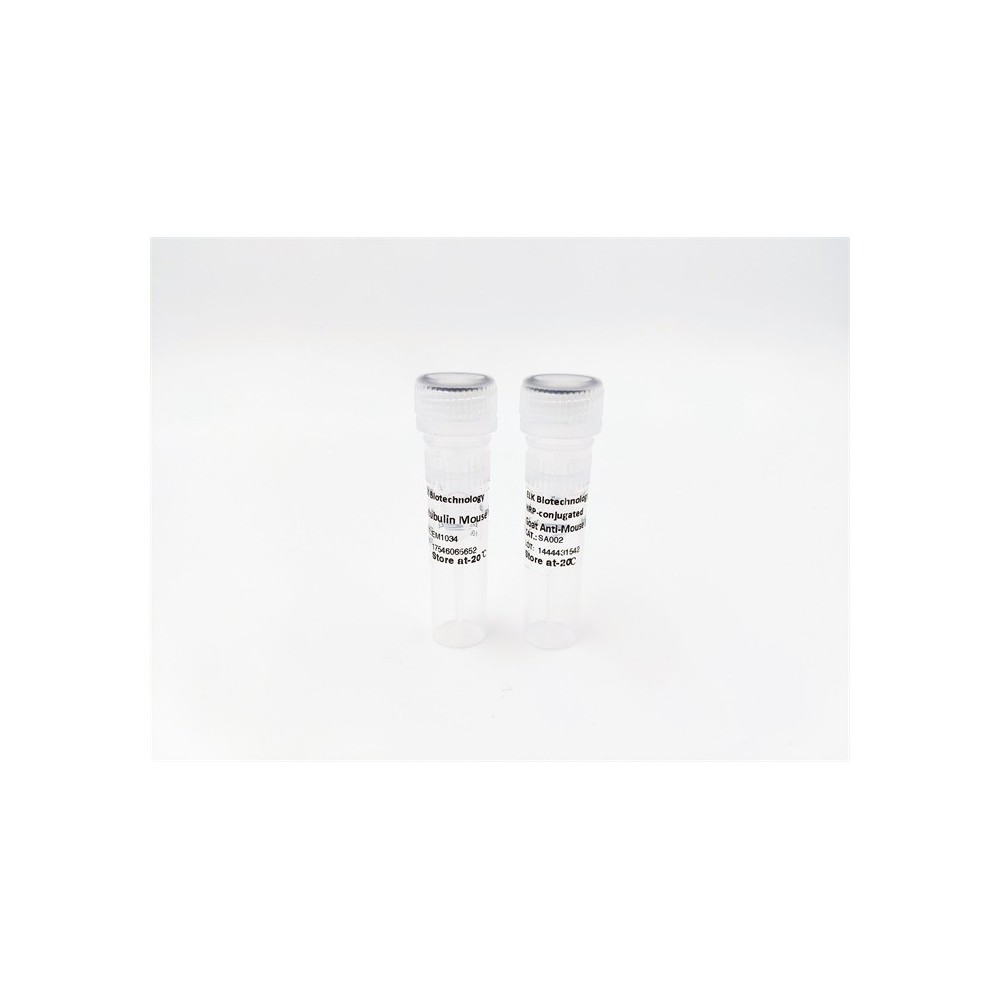
Paxillin (phospho Tyr118) rabbit pAb
AO-06-ES1392-50

| ELK.No | ES1392 |
| Product name | Paxillin (phospho Tyr118) rabbit pAb |
| Reactivity | Human;Mouse;Rat |
| Applications | WB;ELISA |
| Other name | PXN; Paxillin |
| Size | 50μL |
| Unit price ($) | 148 |
| Human gene ID | 5829 |
| Human Swiss-Prot | P49023 |
| Source | Rabbit |
| Isotype | IgG |
| Target | Paxillin |
| Fields | >>Chemokine signaling pathway;>>VEGF signaling pathway;>>Focal adhesion;>>Leukocyte transendothelial migration;>>Regulation of actin cytoskeleton;>>Bacterial invasion of epithelial cells;>>Shigellosis;>>Yersinia infection;>>Human cytomegalovirus infection;>>Human papillomavirus infection;>>Human immunodeficiency virus 1 infection;>>Viral carcinogenesis;>>Proteoglycans in cancer |
| Gene name | PXN |
| Protein name | Paxillin |
| Human gene link | View Human Gene |
| Human Swiss link | View Human Swiss-Prot |
| Mouse gene ID | 19303 |
| Mouse gene link | View Mouse Gene |
| Mouse Swiss-Prot | Q8VI36 |
| Mouse Swiss link | View Mouse Swiss-Prot |
| Rat gene ID | 360820 |
| Rat gene link | View Rat Gene |
| Rat Swiss-Prot | Q66H76 |
| Rat Swiss link | View Rat Swiss-Prot |
| Immunogen | The antiserum was produced against synthesized peptide derived from human Paxillin around the phosphorylation site of Tyr118. AA range:85-134 |
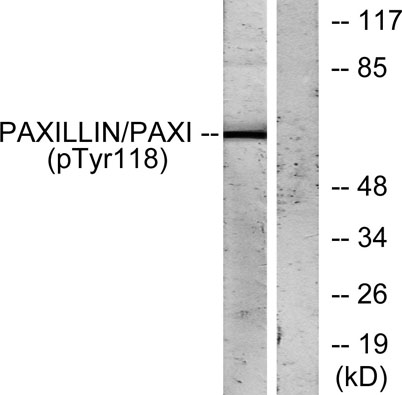
| Specificity | Phospho-Paxillin (Y118) Polyclonal Antibody detects endogenous levels of Paxillin protein only when phosphorylated at Y118. |
| Formulation | Liquid in PBS containing 50% glycerol, 0.5% BSA and 0.02% sodium azide. |
| Clonality | Polyclonal |
| Dilution | Western Blot: 1/500 - 1/2000. ELISA: 1/10000. Not yet tested in other applications. |
| Purification | The antibody was affinity-purified from rabbit antiserum by affinity-chromatography using epitope-specific immunogen. |
| Concentration | 1 mg/ml |
| Storage stability | -20°C/1 year |
| Molecular Weight (Da) | |
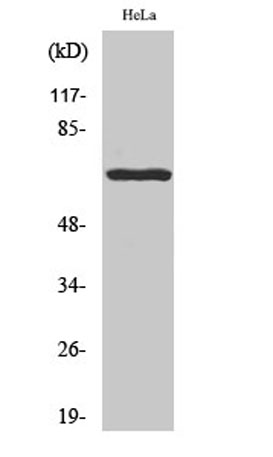
| Observed band (KD) | 64kD |
| Background | This gene encodes a cytoskeletal protein involved in actin-membrane attachment at sites of cell adhesion to the extracellular matrix (focal adhesion). Alternatively spliced transcript variants encoding different isoforms have been described for this gene. These isoforms exhibit different expression pattern, and have different biochemical, as well as physiological properties (PMID:9054445). [provided by RefSeq, Aug 2011], |
| Function | function:Cytoskeletal protein involved in actin-membrane attachment at sites of cell adhesion to the extracellular matrix (focal adhesion).,PTM:Phosphorylated on tyrosine residues during integrin-mediated cell adhesion, embryonic development, fibroblast transformation and following stimulation of cells by mitogens.,similarity:Belongs to the paxillin family.,similarity:Contains 3 LIM zinc-binding domains.,similarity:Contains 4 LIM zinc-binding domains.,subunit:Binds in vitro to vinculin as well as to the SH3 domain of c-SRC and, when tyrosine phosphorylated, to the SH2 domain of V-CRK. Isoform beta binds to focal adhesion kinase but weakly to vinculin. Isoform gamma binds to vinculin but only weakly to focal adhesion kinase. Interacts with GIT1, NUDT16L1/SDOS, PARVA and TGFB1I1. Component of cytoplasmic complexes, which also contain GIT1, ARHGEF6 and PAK1 (By similarity). Binds ASAP2. Int |
| Subcellular location | Cytoplasm, cytoskeleton . Cell junction, focal adhesion . Cytoplasm, cell cortex . Colocalizes with integrins at the cell periphery. Colocalize with PXN to membrane ruffles and the leading edge of migrating cells (PubMed:23128389). . |
| Expression | Brain,Epithelium,Lung,Placenta,T-cell,Uterus, |

Use collapsible tabs for more detailed information that will help customers make a purchasing decision.
Ex: Shipping and return policies, size guides, and other common questions.