 Français
 English
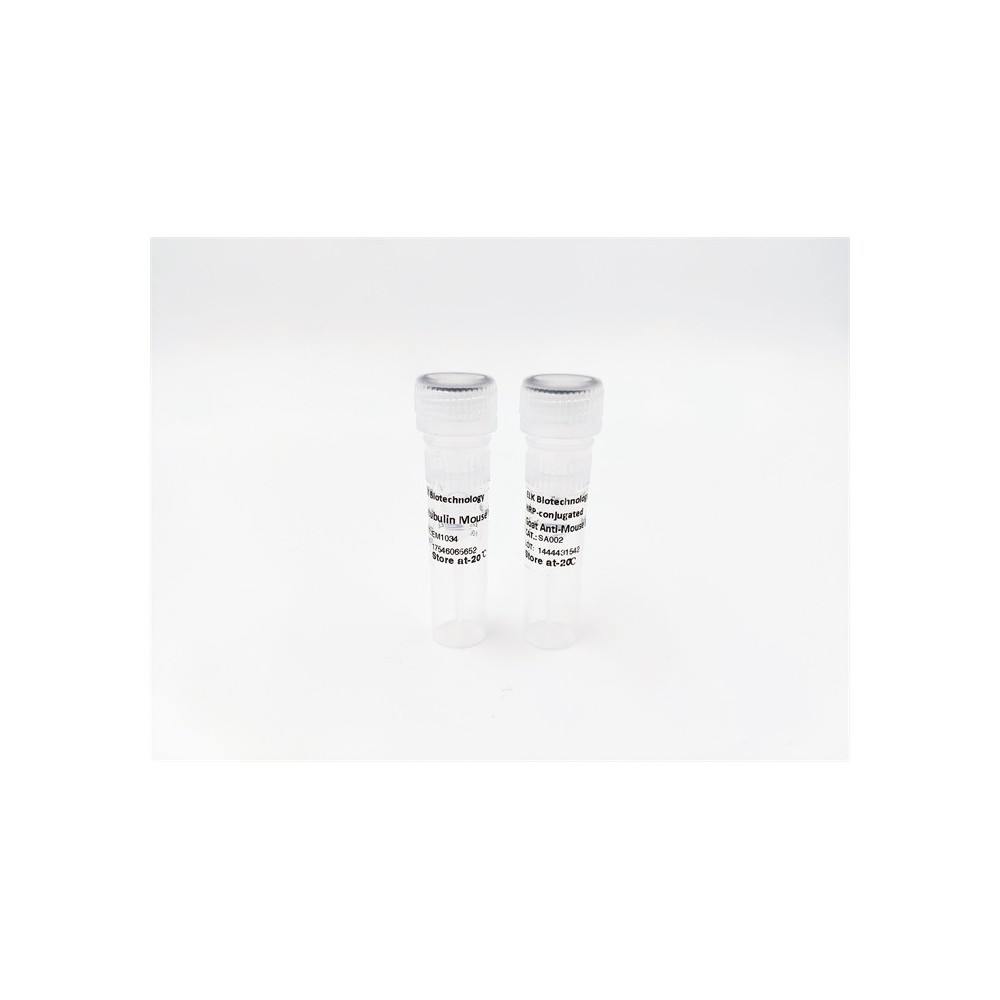

| ELK.No | ES13346 |
| Product name | RP1 rabbit pAb |
| Reactivity | Human; Mouse |
| Applications | WB;ELISA;IHC |
| Other name | |
| Size | 100μL |
| Unit price ($) | 248 |
| Human gene ID | 6101 |
| Human Swiss-Prot | P56715 |
| Source | Rabbit |
| Isotype | IgG |
| Target | RP1 |
| Fields | |
| Gene name | RP1 ORP1 |
| Protein name | RP1 |
| Human gene link | View Human Gene |
| Human Swiss link | View Human Swiss-Prot |
| Mouse gene ID | 19888 |
| Mouse gene link | View Mouse Gene |
| Mouse Swiss-Prot | P56716 |
| Mouse Swiss link | View Mouse Swiss-Prot |
| Rat gene ID | |
| Rat gene link | |
| Rat Swiss-Prot | |
| Rat Swiss link | |
| Immunogen | Synthesized peptide derived from human RP1 AA range: 1330-1380 |
| Specificity | This antibody detects endogenous levels of RP1 at Human/Mouse |
| Formulation | Liquid in PBS containing 50% glycerol, 0.5% BSA and 0.02% sodium azide. |
| Clonality | Polyclonal |
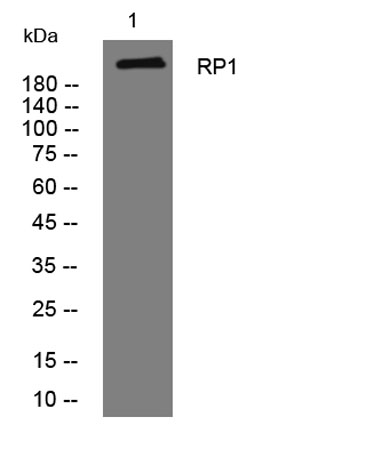
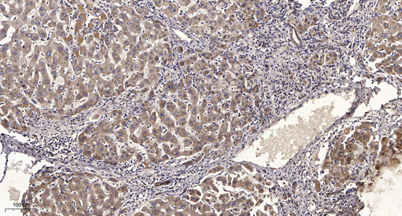
| Dilution | WB 1:500-2000;IHC-p 1:50-300; ELISA 2000-20000 |
| Purification | The antibody was affinity-purified from rabbit serum by affinity-chromatography using specific immunogen. |
| Concentration | 1 mg/ml |
| Storage stability | -20°C/1 year |
| Molecular Weight (Da) | 237kD |
| Observed band (KD) | |
| Background | This gene encodes a member of the doublecortin family. The protein encoded by this gene contains two doublecortin domains, which bind microtubules and regulate microtubule polymerization. The encoded protein is a photoreceptor microtubule-associated protein and is required for correct stacking of outer segment disc. This protein and the RP1L1 protein, another retinal-specific protein, play essential and synergistic roles in affecting photosensitivity and outer segment morphogenesis of rod photoreceptors. Because of its response to in vivo retinal oxygen levels, this protein was initially named ORP1 (oxygen-regulated protein-1). This protein was subsequently designated RP1 (retinitis pigmentosa 1) when it was found that mutations in this gene cause autosomal dominant retinitis pigmentosa. Mutations in this gene also cause autosomal recessive retinitis pigmentosa. Transcript variants resulted from an alternative promoter and alternative splicings have been found, which overlap the current reference sequence and has several exons upstream and downstream of the current reference sequence. However, the biological validity and full-length nature of some variants cannot be determined at this time.[provided by RefSeq, Sep 2010], |
| Function | disease:Defects in RP1 are the cause of retinitis pigmentosa type 1 (RP1) [MIM:180100]. RP leads to degeneration of retinal photoreceptor cells. Patients typically have night vision blindness and loss of midperipheral visual field. As their condition progresses, they lose their far peripheral visual field and eventually central vision as well.,function:Could have a role in the differentiation of photoreceptor cells.,online information:Retina International's Scientific Newsletter,online information:Retinal information network,similarity:Contains 2 doublecortin domains.,tissue specificity:Expressed in retina. Not expressed in heart, brain, placenta, lung, liver, skeletal muscle, kidney, spleen and pancreas., |
| Subcellular location | Cytoplasm, cytoskeleton, cilium axoneme . Cell projection, cilium, photoreceptor outer segment . Specifically localized in the connecting cilia of rod and cone photoreceptors. |
| Expression | Expressed in retina. Not expressed in heart, brain, placenta, lung, liver, skeletal muscle, kidney, spleen and pancreas. |

Use collapsible tabs for more detailed information that will help customers make a purchasing decision.
Ex: Shipping and return policies, size guides, and other common questions.
