 Français
 English

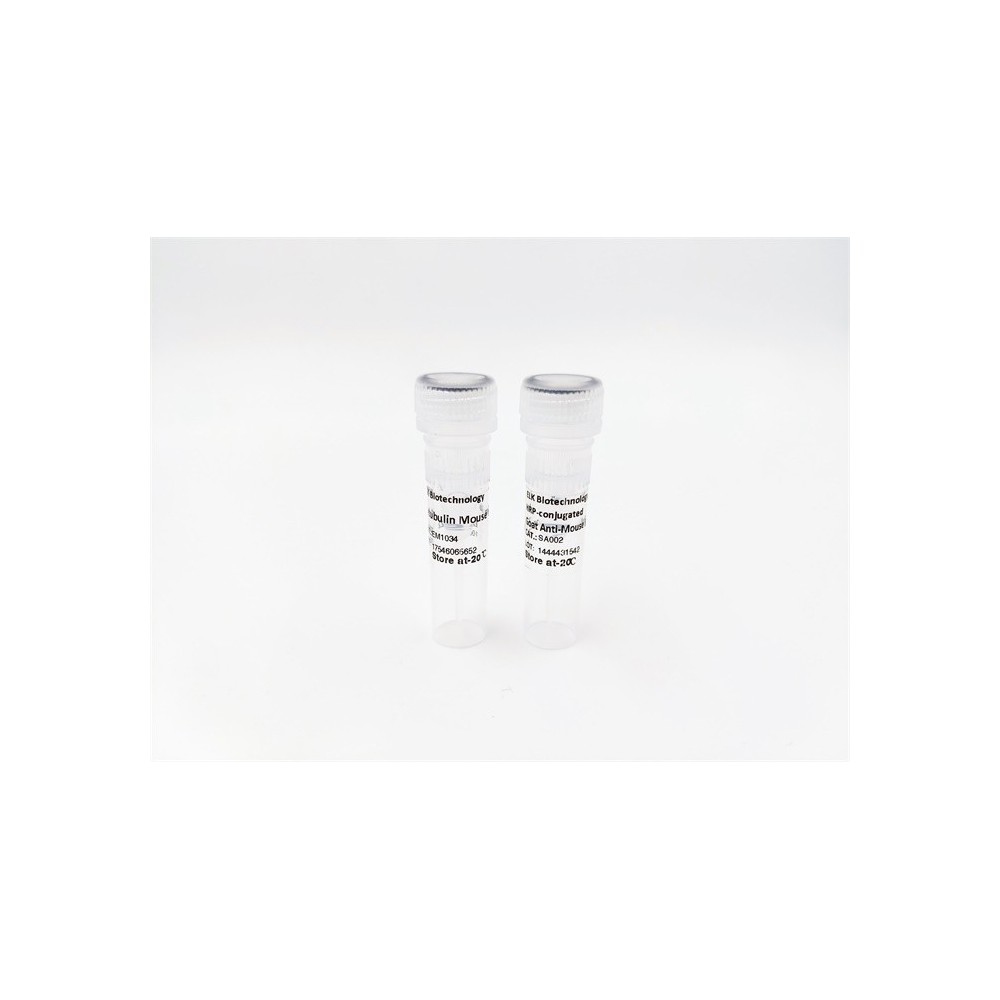

| ELK.No | ES14481 |
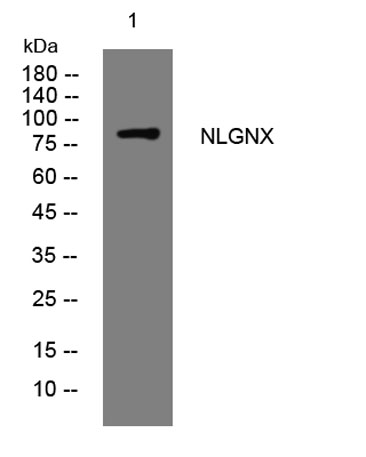
| Product name | NLGNX rabbit pAb |
| Reactivity | Human;Rat;Mouse; |
| Applications | WB |
| Other name | |
| Size | 100μL |
| Unit price ($) | 248 |
| Human gene ID | 57502 |
| Human Swiss-Prot | Q8N0W4 |
| Source | Rabbit |
| Isotype | IgG |
| Target | NLGNX |
| Fields | >>Cell adhesion molecules |
| Gene name | NLGN4X KIAA1260 NLGN4 UNQ365/PRO701 |
| Protein name | NLGNX |
| Human gene link | View Human Gene |
| Human Swiss link | View Human Swiss-Prot |
| Mouse gene ID | |
| Mouse gene link | |
| Mouse Swiss-Prot | |
| Mouse Swiss link | |
| Rat gene ID | |
| Rat gene link | |
| Rat Swiss-Prot | |
| Rat Swiss link | |
| Immunogen | Synthesized peptide derived from human NLGNX AA range: 601-651 |
| Specificity | This antibody detects endogenous levels of NLGNX at Human |
| Formulation | Liquid in PBS containing 50% glycerol, 0.5% BSA and 0.02% sodium azide. |
| Clonality | Polyclonal |
| Dilution | WB 1:500-2000 |
| Purification | The antibody was affinity-purified from rabbit serum by affinity-chromatography using specific immunogen. |
| Concentration | 1 mg/ml |
| Storage stability | -20°C/1 year |
| Molecular Weight (Da) | 90kD |
| Observed band (KD) | |
| Background | This gene encodes a member of the type-B carboxylesterase/lipase protein family. The encoded protein belongs to a family of neuronal cell surface proteins. Members of this family may act as splice site-specific ligands for beta-neurexins and may be involved in the formation and remodeling of central nervous system synapses. The encoded protein interacts with discs large homolog 4 (DLG4). Mutations in this gene have been associated with autism and Asperger syndrome. Alternative splicing results in multiple transcript variants. [provided by RefSeq, Aug 2013], |
| Function | disease:Defects in NLGN4X may be the cause of susceptibility to X-linked Asperger syndrome 2 (ASPGX2) [MIM:300497]. ASPGX2 is considered to be a form of childhood autism.,disease:Defects in NLGN4X may be the cause of susceptibility to X-linked autism 2 (AUTSX2) [MIM:300495]. AUTSX2 is a pervasive developmental disorder (PDD), prototypically characterized by impairments in reciprocal social interaction and communication, restricted and stereotyped patterns of interests and activities, and the presence of developmental abnormalities by 3 years of age.,function:Putative neuronal cell surface protein involved in cell-cell-interactions.,similarity:Belongs to the type-B carboxylesterase/lipase family.,subunit:Interacts through its C-terminus with DLG4/PSD-95 third PDZ domain.,tissue specificity:Expressed at highest levels in heart. Expressed at lower levels in liver, skeletal muscle and pancre |
| Subcellular location | Cell membrane; Single-pass type I membrane protein. Cell junction, synapse, postsynaptic density membrane. |
| Expression | Expressed at highest levels in heart. Expressed at lower levels in liver, skeletal muscle and pancreas and at very low levels in brain. |

Use collapsible tabs for more detailed information that will help customers make a purchasing decision.
Ex: Shipping and return policies, size guides, and other common questions.