 Français
 English
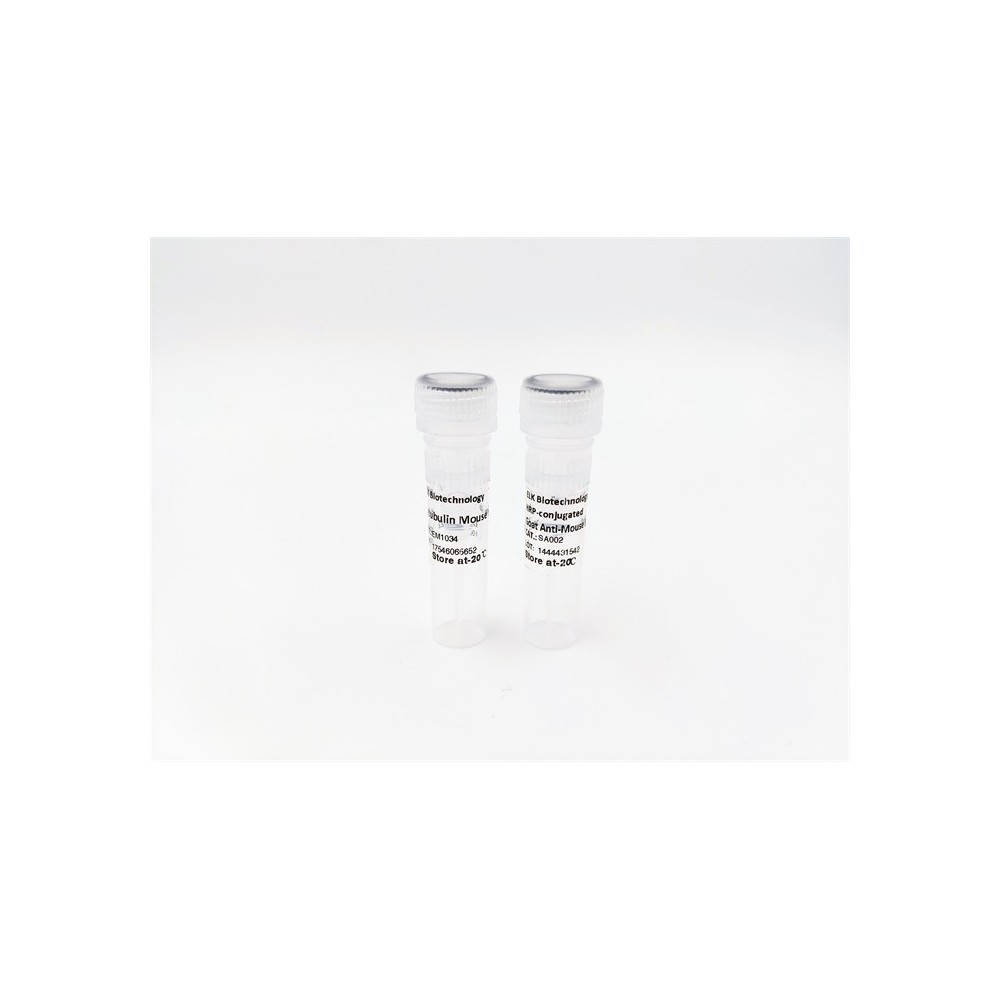
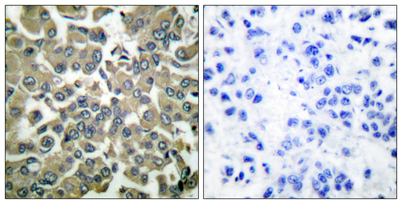
WNK1 (phospho Thr60) rabbit pAb
AO-06-ES1482-50

| ELK.No | ES1482 |
| Product name | WNK1 (phospho Thr60) rabbit pAb |
| Reactivity | Human;Mouse;Rat |
| Applications | WB;IHC;IF;ELISA |
| Other name | WNK1; HSN2; KDP; KIAA0344; PRKWNK1; Serine/threonine-protein kinase WNK1; Erythrocyte 65 kDa protein; p65; Kinase deficient protein; Protein kinase lysine-deficient 1; Protein kinase with no lysine 1; hWNK1 |
| Size | 50μL |
| Unit price ($) | 148 |
| Human gene ID | 65125 |
| Human Swiss-Prot | Q9H4A3 |
| Source | Rabbit |
| Isotype | IgG |
| Target | WNK1 |
| Fields | |
| Gene name | WNK1 |
| Protein name | Serine/threonine-protein kinase WNK1 |
| Human gene link | View Human Gene |
| Human Swiss link | View Human Swiss-Prot |
| Mouse gene ID | 232341 |
| Mouse gene link | View Mouse Gene |
| Mouse Swiss-Prot | P83741 |
| Mouse Swiss link | View Mouse Swiss-Prot |
| Rat gene ID | 116477 |
| Rat gene link | View Rat Gene |
| Rat Swiss-Prot | Q9JIH7 |
| Rat Swiss link | View Rat Swiss-Prot |
| Immunogen | The antiserum was produced against synthesized peptide derived from human WNK1 around the phosphorylation site of Thr58. AA range:24-73 |
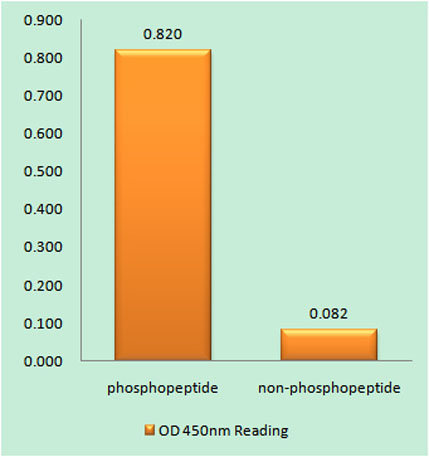
| Specificity | Phospho-WNK1 (T60) Polyclonal Antibody detects endogenous levels of WNK1 protein only when phosphorylated at T60. |
| Formulation | Liquid in PBS containing 50% glycerol, 0.5% BSA and 0.02% sodium azide. |
| Clonality | Polyclonal |
| Dilution | Western Blot: 1/500 - 1/2000. Immunohistochemistry: 1/100 - 1/300. ELISA: 1/5000. Not yet tested in other applications. |
| Purification | The antibody was affinity-purified from rabbit antiserum by affinity-chromatography using epitope-specific immunogen. |
| Concentration | 1 mg/ml |
| Storage stability | -20°C/1 year |
| Molecular Weight (Da) | |
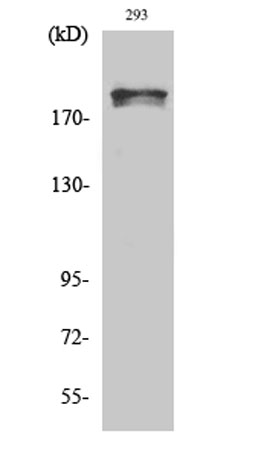
| Observed band (KD) | 230kD |
| Background | This gene encodes a member of the WNK subfamily of serine/threonine protein kinases. The encoded protein may be a key regulator of blood pressure by controlling the transport of sodium and chloride ions. Mutations in this gene have been associated with pseudohypoaldosteronism type II and hereditary sensory neuropathy type II. Alternatively spliced transcript variants encoding different isoforms have been described but the full-length nature of all of them has yet to be determined.[provided by RefSeq, May 2010], |
| Function | catalytic activity:ATP + a protein = ADP + a phosphoprotein.,caution:Cys-250 is present instead of the conserved Lys which is expected to be an active site residue. Lys-233 appears to fulfill the required catalytic function.,caution:PubMed:2507249 describes a peptide sequence containing a GlcNAc glycosylated Ser in position 164 while it is an Arg residue according to others.,cofactor:Magnesium.,disease:Defects in WNK1 are a cause of pseudohypoaldosteronism type II (PHAII) [MIM:145260]. PHAII is an autosomal dominant disease characterized by severe hypertension, hyperkalemia, and sensitivity to thiazide diuretics which may result from a chloride shunt in the renal distal nephron.,enzyme regulation:By hypertonicity. Activation requires autophosphorylation of Ser-382. Phosphorylation of Ser-378 also promotes increased activity.,function:Controls sodium and chloride ion transport by inhibiti |
| Subcellular location | Cytoplasm . |
| Expression | Widely expressed, with highest levels observed in the testis, heart, kidney and skeletal muscle. Isoform 3 is kidney-specific and specifically expressed in the distal convoluted tubule (DCT) and connecting tubule (CNT) of the nephron. |

Use collapsible tabs for more detailed information that will help customers make a purchasing decision.
Ex: Shipping and return policies, size guides, and other common questions.