 Français
 English

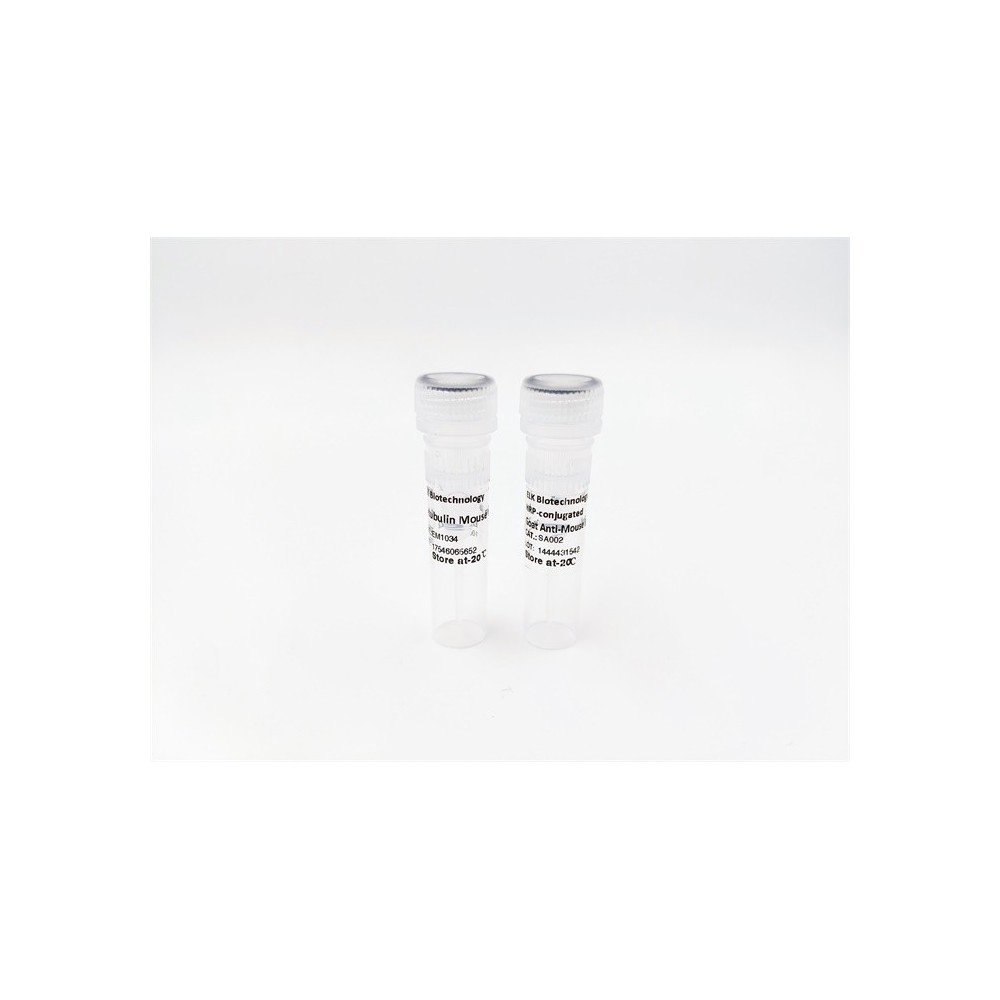

| ELK.No | ES14961 |
| Product name | METH rabbit pAb |
| Reactivity | Human; Mouse;Rat |
| Applications | WB |
| Other name | |
| Size | 50μL |
| Unit price ($) | 148 |
| Human gene ID | 4548 |
| Human Swiss-Prot | Q99707 |
| Source | Rabbit |
| Isotype | IgG |
| Target | METH |
| Fields | >>Cysteine and methionine metabolism;>>Selenocompound metabolism;>>One carbon pool by folate;>>Metabolic pathways;>>Biosynthesis of amino acids |
| Gene name | MTR |
| Protein name | METH |
| Human gene link | View Human Gene |
| Human Swiss link | View Human Swiss-Prot |
| Mouse gene ID | 238505 |
| Mouse gene link | View Mouse Gene |
| Mouse Swiss-Prot | A6H5Y3 |
| Mouse Swiss link | View Mouse Swiss-Prot |
| Rat gene ID | 81522 |
| Rat gene link | View Rat Gene |
| Rat Swiss-Prot | Q9Z2Q4 |
| Rat Swiss link | View Rat Swiss-Prot |
| Immunogen | Synthesized peptide derived from human METH AA range: 1110-1160 |
| Specificity | This antibody detects endogenous levels of METH at Human/Mouse/Rat |
| Formulation | Liquid in PBS containing 50% glycerol, 0.5% BSA and 0.02% sodium azide. |
| Clonality | Polyclonal |
| Dilution | WB 1:500-2000 |
| Purification | The antibody was affinity-purified from rabbit serum by affinity-chromatography using specific immunogen. |
| Concentration | 1 mg/ml |
| Storage stability | -20°C/1 year |
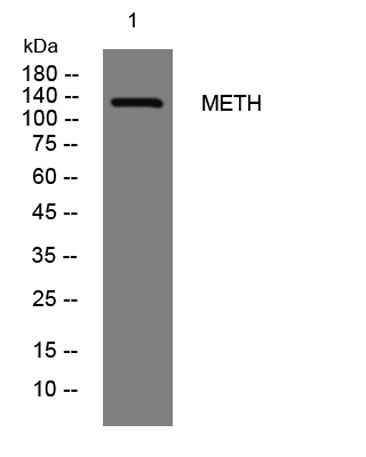
| Molecular Weight (Da) | 139kD |
| Observed band (KD) | |
| Background | This gene encodes the 5-methyltetrahydrofolate-homocysteine methyltransferase. This enzyme, also known as cobalamin-dependent methionine synthase, catalyzes the final step in methionine biosynthesis. Mutations in MTR have been identified as the underlying cause of methylcobalamin deficiency complementation group G. Alternatively spliced transcript variants encoding distinct isoforms have been found for this gene. [provided by RefSeq, May 2014], |
| Function | catalytic activity:5-methyltetrahydrofolate + L-homocysteine = tetrahydrofolate + L-methionine.,cofactor:Binds 1 zinc ion per subunit.,cofactor:Methylcobalamin (MeCBL).,disease:Defects in MTR are the cause of methylcobalamin deficiency type G (cblG) [MIM:250940]; also known as homocystinuria-megaloblastic anemia complementation type G. It is an autosomal recessive inherited disease that causes mental retardation, macrocytic anemia, and homocystinuria. Mild deficiency in MS activity could be associated with mild hyperhomocysteinemia, a risk factor for cardiovascular disease and possibly neural tube defects. MS mutations could also be involved in tumorigenesis.,disease:Defects in MTR may be a cause of susceptibility to folate-sensitive neural tube defects (folate-sensitive NTD) [MIM:601634]. The most common NTDs are open spina bifida (myelomeningocele) and anencephaly. Genetic defects in M |
| Subcellular location | Cytoplasm . |
| Expression | Widely expressed. Expressed at the highest levels in pancreas, heart, brain, skeletal muscle and placenta (PubMed:8968737, PubMed:8968735). Expressed at lower levels in lung, liver and kidney (PubMed:8968737, PubMed:8968735). |

Use collapsible tabs for more detailed information that will help customers make a purchasing decision.
Ex: Shipping and return policies, size guides, and other common questions.