 Français
 English

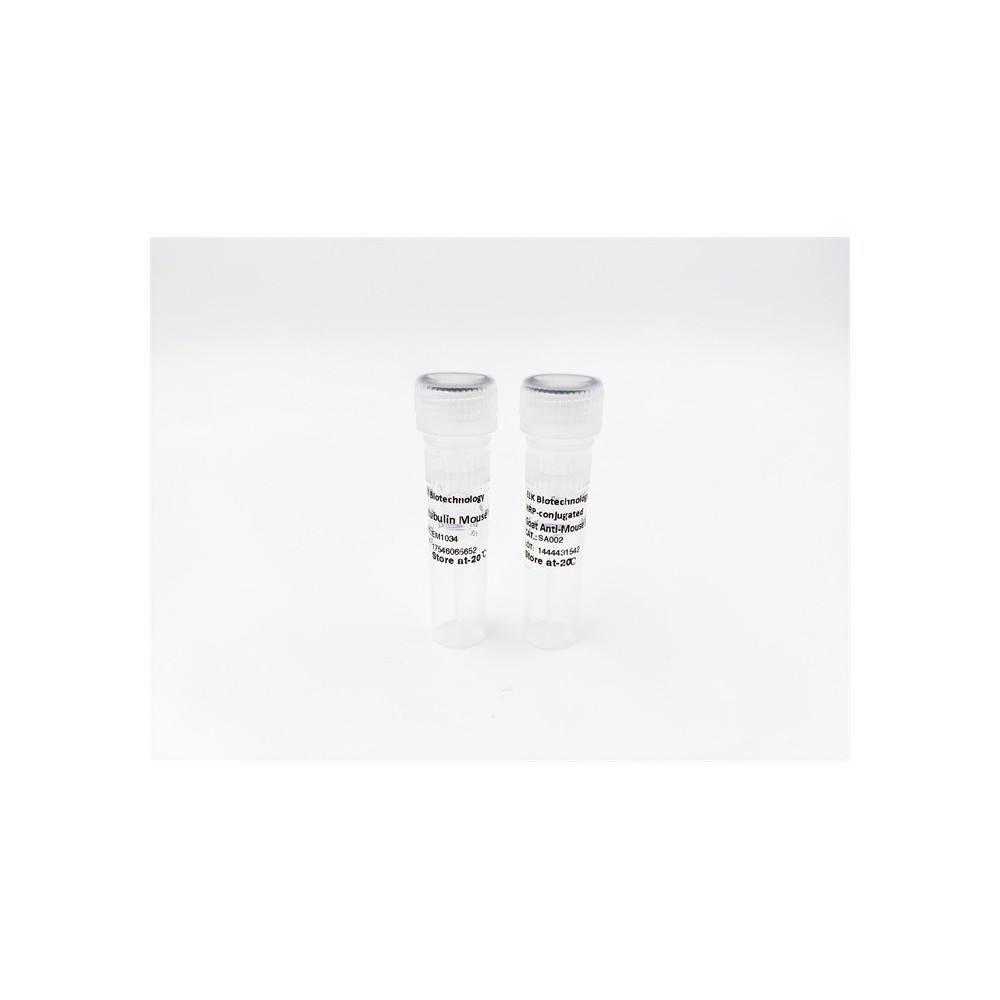

| ELK.No | ES15128 |
| Product name | LPP1 rabbit pAb |
| Reactivity | Human; Mouse;Rat |
| Applications | WB;ELISA;IHC |
| Other name | |
| Size | 50μL |
| Unit price ($) | 148 |
| Human gene ID | 8611 |
| Human Swiss-Prot | O14494 |
| Source | Rabbit |
| Isotype | IgG |
| Target | LPP1 |
| Fields | >>Glycerolipid metabolism;>>Glycerophospholipid metabolism;>>Ether lipid metabolism;>>Sphingolipid metabolism;>>Metabolic pathways;>>Phospholipase D signaling pathway;>>Fc gamma R-mediated phagocytosis;>>Fat digestion and absorption;>>Choline metabolism in cancer |
| Gene name | PPAP2A LPP1 |
| Protein name | LPP1 |
| Human gene link | View Human Gene |
| Human Swiss link | View Human Swiss-Prot |
| Mouse gene ID | 19012 |
| Mouse gene link | View Mouse Gene |
| Mouse Swiss-Prot | Q61469 |
| Mouse Swiss link | View Mouse Swiss-Prot |
| Rat gene ID | |
| Rat gene link | |
| Rat Swiss-Prot | O08564 |
| Rat Swiss link | View Rat Swiss-Prot |
| Immunogen | Synthesized peptide derived from human LPP1 AA range: 219-269 |
| Specificity | This antibody detects endogenous levels of LPP1 at Human/Mouse/Rat |
| Formulation | Liquid in PBS containing 50% glycerol, 0.5% BSA and 0.02% sodium azide. |
| Clonality | Polyclonal |
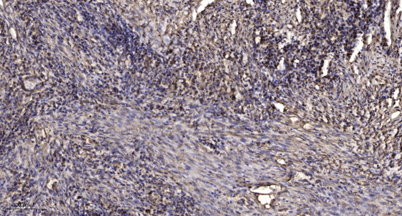
| Dilution | WB 1:500-2000;IHC-p 1:50-300; ELISA 2000-20000 |
| Purification | The antibody was affinity-purified from rabbit serum by affinity-chromatography using specific immunogen. |
| Concentration | 1 mg/ml |
| Storage stability | -20°C/1 year |
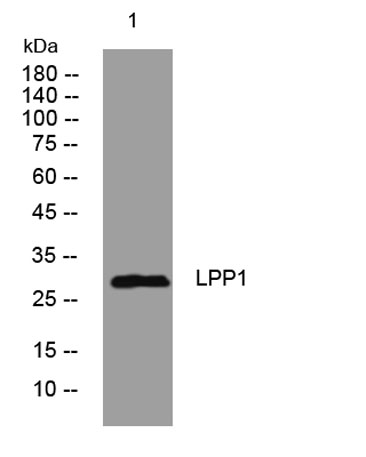
| Molecular Weight (Da) | 31kD |
| Observed band (KD) | |
| Background | The protein encoded by this gene is a member of the phosphatidic acid phosphatase (PAP) family. PAPs convert phosphatidic acid to diacylglycerol, and function in synthesis of glycerolipids and in phospholipase D-mediated signal transduction. This enzyme is an integral membrane glycoprotein that plays a role in the hydrolysis and uptake of lipids from extracellular space. Alternate splicing results in multiple transcript variants of this gene. [provided by RefSeq, May 2013], |
| Function | alternative products:Additional isoforms seem to exist,catalytic activity:A 3-sn-phosphatidate + H(2)O = a 1,2-diacyl-sn-glycerol + phosphate.,caution:PubMed:9305923 states that this phosphatase does not hydrolyze sphingosine 1-phosphate while PubMed:9705349 states that it does.,enzyme regulation:Inhibited by sphingosine, zinc ions and propanolol. Not inhibited by N-ethylmaleimide treatment.,function:Broad-specificity phosphohydrolase that dephosphorylates exogenous bioactive glycerolipids and sphingolipids. Catalyzes the conversion of phosphatidic acid (PA) to diacylglycerol (DG). Pivotal regulator of lysophosphatidic acid (LPA) signaling in the cardiovascular system. Major enzyme responsible of dephosphorylating LPA in platelets, which terminates signaling actions of LPA. May control circulating, and possibly also regulate localized, LPA levels resulting from platelet activation. It ha |
| Subcellular location | Cell membrane ; Multi-pass membrane protein . Apical cell membrane ; Multi-pass membrane protein . Membrane raft ; Multi-pass membrane protein . Membrane, caveola ; Multi-pass membrane protein . |
| Expression | Widely expressed with highest expression found in prostate (PubMed:9305923). Found to be down-regulated in colon adenocarcinomas (PubMed:9570154). ; [Isoform 1]: Predominant in kidney, lung, placenta and liver. ; [Isoform 2]: Predominant in heart and pancreas. |

Use collapsible tabs for more detailed information that will help customers make a purchasing decision.
Ex: Shipping and return policies, size guides, and other common questions.