 Français
 English

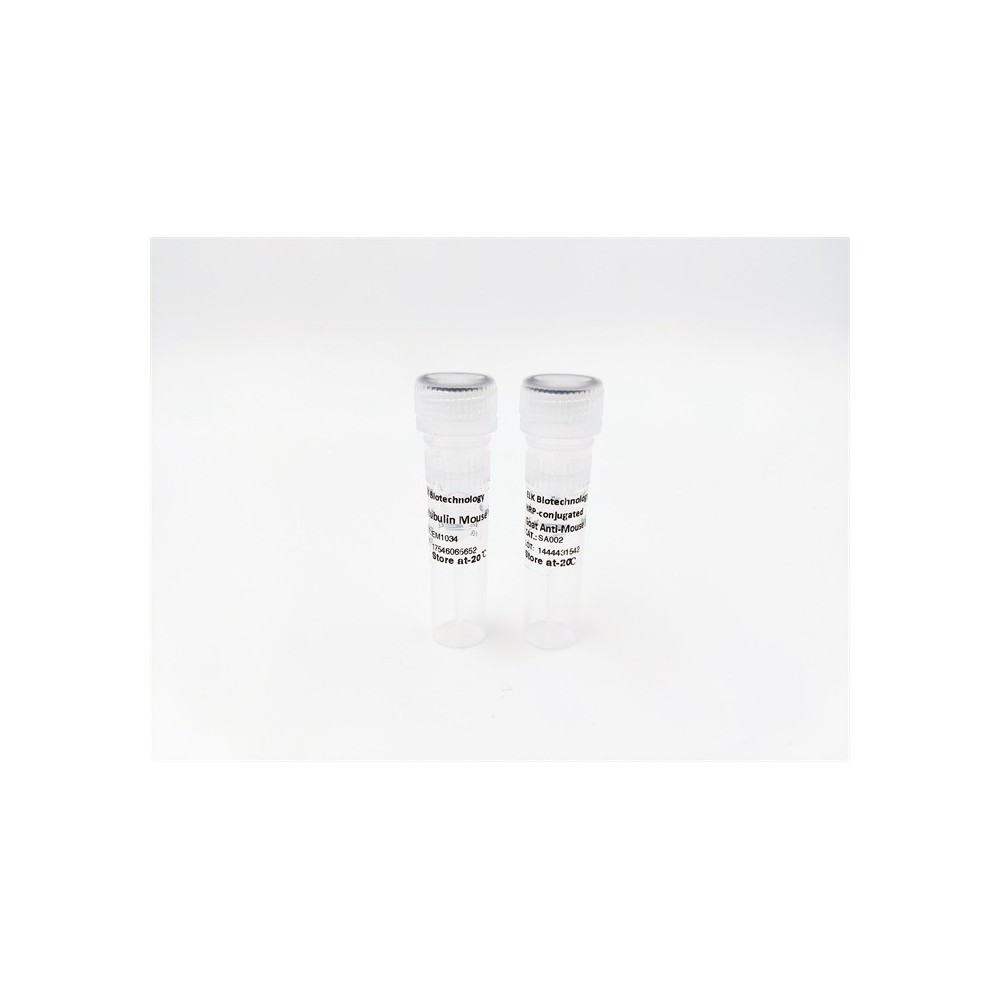
PERK (phospho Thr981) rabbit pAb
AO-06-ES1527-100

| ELK.No | ES1527 |
| Product name | PERK (phospho Thr981) rabbit pAb |
| Reactivity | Human;Mouse;Rat |
| Applications | IF;WB;IHC;ELISA |
| Other name | EIF2AK3; PEK; PERK; Eukaryotic translation initiation factor 2-alpha kinase 3; PRKR-like endoplasmic reticulum kinase; Pancreatic eIF2-alpha kinase; HsPEK |
| Size | 100μL |
| Unit price ($) | 248 |
| Human gene ID | 9451 |
| Human Swiss-Prot | Q9NZJ5 |
| Source | Rabbit |
| Isotype | IgG |
| Target | PERK |
| Fields | >>Mitophagy - animal;>>Autophagy - animal;>>Protein processing in endoplasmic reticulum;>>Apoptosis;>>Non-alcoholic fatty liver disease;>>Alzheimer disease;>>Parkinson disease;>>Amyotrophic lateral sclerosis;>>Prion disease;>>Pathways of neurodegeneration - multiple diseases;>>Hepatitis C;>>Measles;>>Herpes simplex virus 1 infection;>>Lipid and atherosclerosis |
| Gene name | EIF2AK3 |
| Protein name | Eukaryotic translation initiation factor 2-alpha kinase 3 |
| Human gene link | View Human Gene |
| Human Swiss link | View Human Swiss-Prot |
| Mouse gene ID | |
| Mouse gene link | |
| Mouse Swiss-Prot | Q9Z2B5 |
| Mouse Swiss link | View Mouse Swiss-Prot |
| Rat gene ID | 29702 |
| Rat gene link | View Rat Gene |
| Rat Swiss-Prot | Q9Z1Z1 |
| Rat Swiss link | View Rat Swiss-Prot |
| Immunogen | The antiserum was produced against synthesized peptide derived from human PEK/PERK around the phosphorylation site of Thr981. AA range:947-996 |
| Specificity | Phospho-PERK (T981) Polyclonal Antibody detects endogenous levels of PERK protein only when phosphorylated at T981. |
| Formulation | Liquid in PBS containing 50% glycerol, 0.5% BSA and 0.02% sodium azide. |
| Clonality | Polyclonal |
| Dilution | IF: 1:50-200 WB 1:500-2000 ,Immunohistochemistry: 1/100 - 1/300. ELISA: 1/40000. Not yet tested in other applications. |
| Purification | The antibody was affinity-purified from rabbit antiserum by affinity-chromatography using epitope-specific immunogen. |
| Concentration | 1 mg/ml |
| Storage stability | -20°C/1 year |
| Molecular Weight (Da) | |
| Observed band (KD) | 130kD |
| Background | The protein encoded by this gene phosphorylates the alpha subunit of eukaryotic translation-initiation factor 2, leading to its inactivation, and thus to a rapid reduction of translational initiation and repression of global protein synthesis. This protein is thought to modulate mitochondrial function. It is a type I membrane protein located in the endoplasmic reticulum (ER), where it is induced by ER stress caused by malfolded proteins. Mutations in this gene are associated with Wolcott-Rallison syndrome. [provided by RefSeq, Sep 2015], |
| Function | catalytic activity:ATP + a protein = ADP + a phosphoprotein.,disease:Defects in EIF2AK3 are the cause of Wolcott-Rallison syndrome (WRS) [MIM:226980]; also known as multiple epiphyseal dysplasia with early-onset diabetes mellitus. WRS is a rare autosomal recessive disorder, characterized by permanent neonatal or early infancy insulin-dependent diabetes and, at a later age, epiphyseal dysplasia, osteoporosis, growth retardation and other multisystem manifestations, such as hepatic and renal dysfunctions, mental retardation and cardiovascular abnormalities.,domain:The lumenal domain senses perturbations in protein folding in the ER, probably through reversible interaction with HSPA5/BIP.,enzyme regulation:Perturbation in protein folding in the endoplasmic reticulum (ER) promotes reversible dissociation from HSPA5/BIP and oligomerization, resulting in transautophosphorylation and kinase act |
| Subcellular location | Endoplasmic reticulum membrane; Single-pass type I membrane protein. |
| Expression | Ubiquitous. A high level expression is seen in secretory tissues. |

Use collapsible tabs for more detailed information that will help customers make a purchasing decision.
Ex: Shipping and return policies, size guides, and other common questions.