 Français
 English
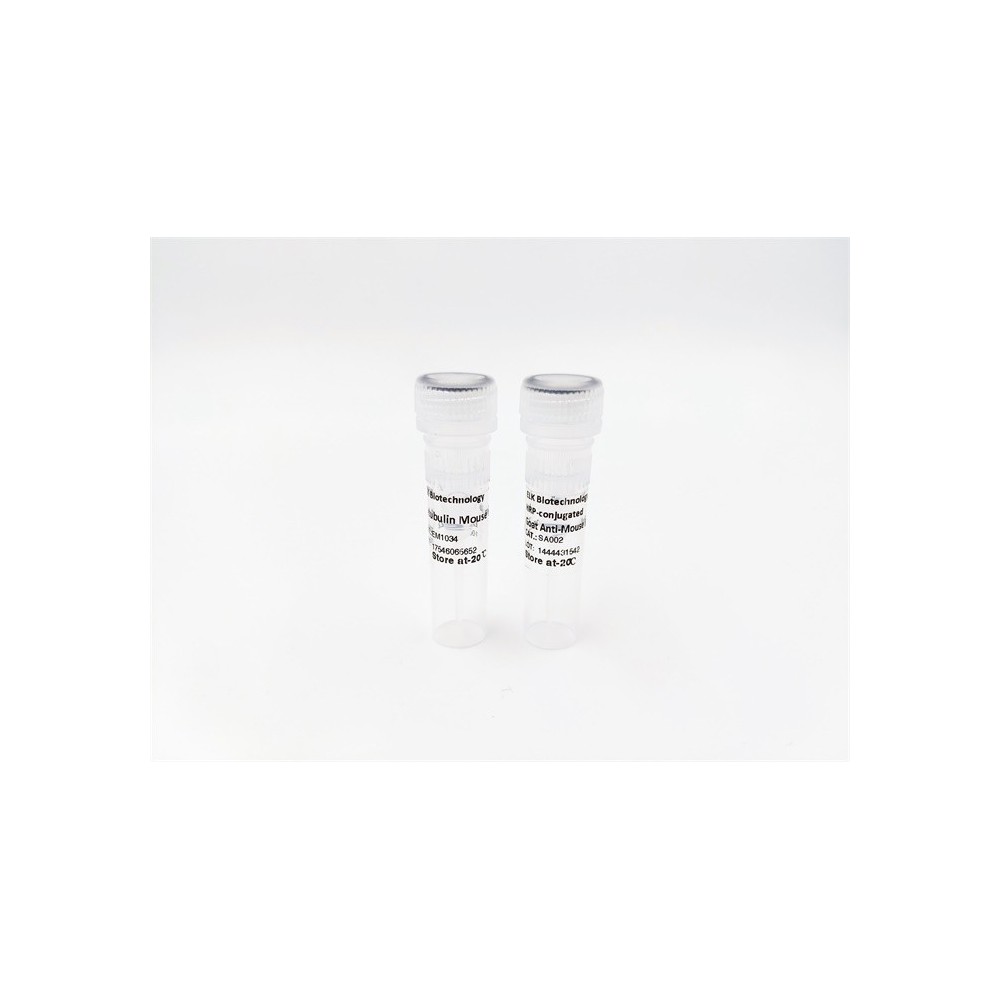

| ELK.No | ES1546 |
| Product name | 17β-HSD11 rabbit pAb |
| Reactivity | Human;Rat;Mouse; |
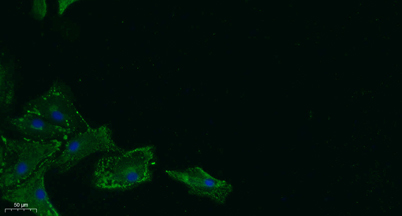
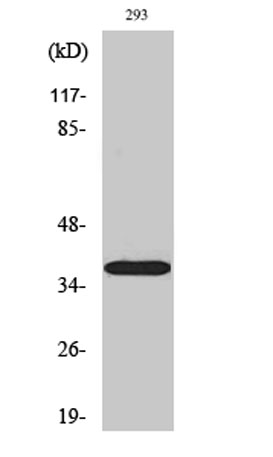
| Applications | WB;IF;ELISA |
| Other name | HSD17B11; DHRS8; PAN1B; PSEC0029; Estradiol 17-beta-dehydrogenase 11; 17-beta-hydroxysteroid dehydrogenase 11; 17-beta-HSD 11; 17bHSD11; 17betaHSD11; 17-beta-hydroxysteroid dehydrogenase XI; 17-beta-HSD XI; 17betaHSDXI; Cutaneous T-cell lym |
| Size | 50μL |
| Unit price ($) | 148 |
| Human gene ID | 51170 |
| Human Swiss-Prot | Q8NBQ5 |
| Source | Rabbit |
| Isotype | IgG |
| Target | 17β-HSD11 |
| Fields | |
| Gene name | HSD17B11 |
| Protein name | Estradiol 17-beta-dehydrogenase 11 |
| Human gene link | View Human Gene |
| Human Swiss link | View Human Swiss-Prot |
| Mouse gene ID | |
| Mouse gene link | |
| Mouse Swiss-Prot | Q9EQ06 |
| Mouse Swiss link | View Mouse Swiss-Prot |
| Rat gene ID | |
| Rat gene link | |
| Rat Swiss-Prot | |
| Rat Swiss link | |
| Immunogen | The antiserum was produced against synthesized peptide derived from human DHRS8. AA range:71-120 |
| Specificity | 17β-HSD11 Polyclonal Antibody detects endogenous levels of 17β-HSD11 protein. |
| Formulation | Liquid in PBS containing 50% glycerol, 0.5% BSA and 0.02% sodium azide. |
| Clonality | Polyclonal |
| Dilution | Western Blot: 1/500 - 1/2000. ELISA: 1/5000. IF 1:100-300 Not yet tested in other applications. |
| Purification | The antibody was affinity-purified from rabbit antiserum by affinity-chromatography using epitope-specific immunogen. |
| Concentration | 1 mg/ml |
| Storage stability | -20°C/1 year |
| Molecular Weight (Da) | |
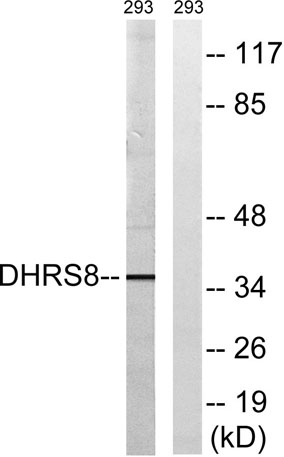
| Observed band (KD) | 36kD |
| Background | Short-chain alcohol dehydrogenases, such as HSD17B11, metabolize secondary alcohols and ketones (Brereton et al., 2001 [PubMed 11165019]).[supplied by OMIM, Jun 2009], |
| Function | catalytic activity:Estradiol-17-beta + NAD(P)(+) = estrone + NAD(P)H.,function:Can convert androstan-3-alpha,17-beta-diol (3-alpha-diol) to androsterone in vitro, suggesting that it may participate in androgen metabolism during steroidogenesis. May act by metabolizing compounds that stimulate steroid synthesis and/or by generating metabolites that inhibit it. Has no activity toward DHEA (dehydroepiandrosterone), or A-dione (4-androste-3,17-dione), and only a slight activity toward testosterone to A-dione. Tumor-associated antigen in cutaneous T-cell lymphoma.,similarity:Belongs to the short-chain dehydrogenases/reductases (SDR) family. 17-beta-HSD 3 subfamily.,tissue specificity:Present at high level in steroidogenic cells such as syncytiotrophoblasts, sebaceous gland, Leydig cells, and granulosa cells of the dominant follicle and corpus luteum. In lung, it is detected in the ciliated ep |
| Subcellular location | Endoplasmic reticulum . Lipid droplet . Redistributed from the endoplasmic reticulum to lipids droplets in the cell upon induction of lipids droplet formation. . |
| Expression | Present at high level in steroidogenic cells such as syncytiotrophoblasts, sebaceous gland, Leydig cells, and granulosa cells of the dominant follicle and corpus luteum. In lung, it is detected in the ciliated epithelium and in acini of adult trachea, in bronchioles, but not in alveoli. In the eye, it is detected in the nonpigmented epithelium of the ciliary body and, at lower level, in the inner nuclear layer of the retina (at protein level). Widely expressed. Highly expressed in retina, pancreas, kidney, liver, lung, adrenal, small intestine, ovary and heart. |

Use collapsible tabs for more detailed information that will help customers make a purchasing decision.
Ex: Shipping and return policies, size guides, and other common questions.