 Français
 English
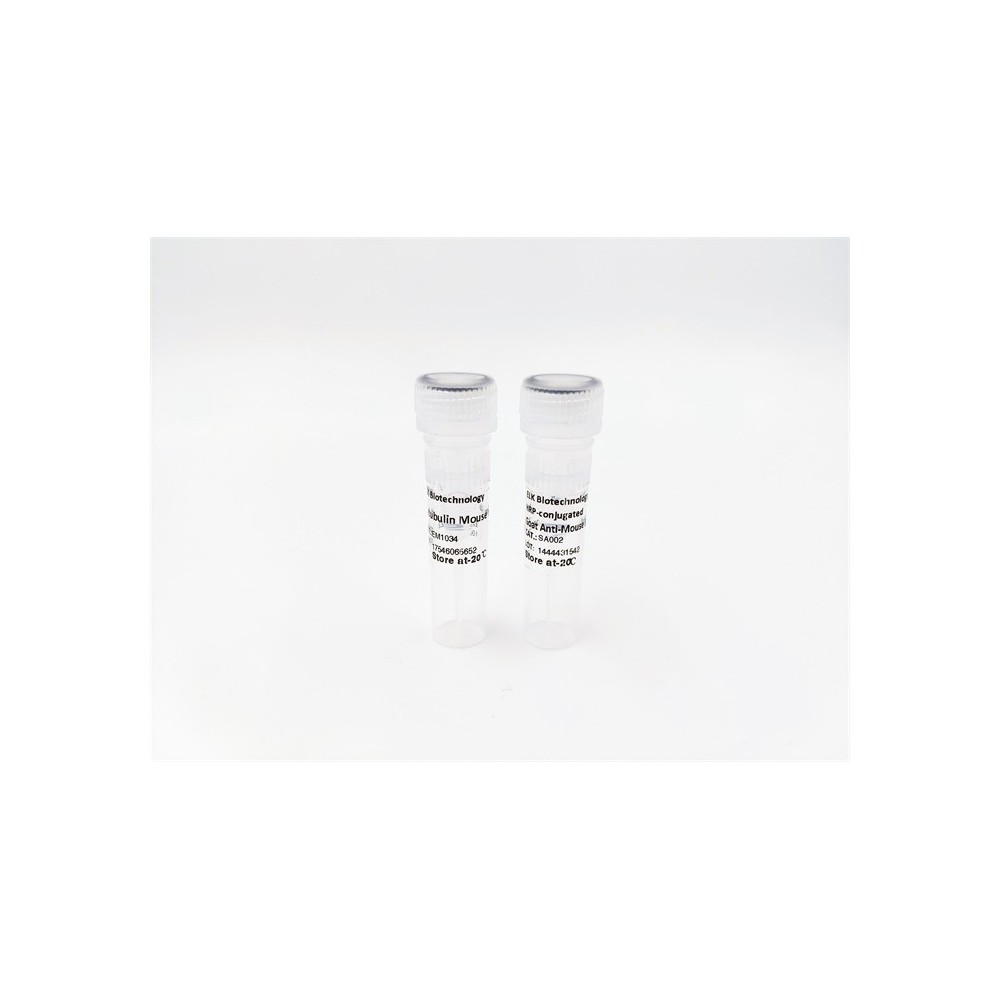

| ELK.No | ES1548 |
| Product name | 3β-HSD7 rabbit pAb |
| Reactivity | Human;Mouse;Rat |
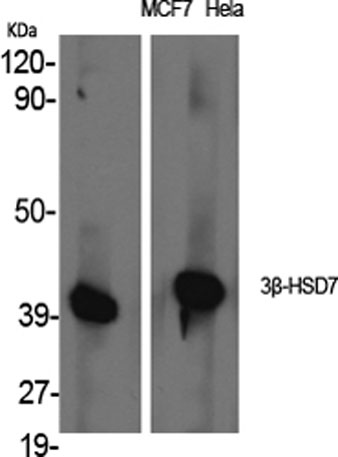
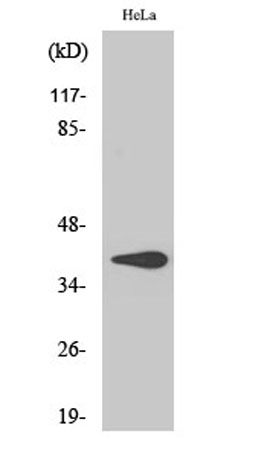
| Applications | WB;ELISA |
| Other name | HSD3B7; 3 beta-hydroxysteroid dehydrogenase type 7; 3 beta-hydroxysteroid dehydrogenase type VII; 3-beta-HSD VII; 3-beta-hydroxy-Delta(5)-C27 steroid oxidoreductase; C(27) 3-beta-HSD; Cholest-5-ene-3-beta; 7-alpha-diol 3-beta-dehydrogenase |
| Size | 50μL |
| Unit price ($) | 148 |
| Human gene ID | 80270 |
| Human Swiss-Prot | Q9H2F3 |
| Source | Rabbit |
| Isotype | IgG |
| Target | 3β-HSD7 |
| Fields | >>Primary bile acid biosynthesis;>>Metabolic pathways |
| Gene name | HSD3B7 |
| Protein name | 3 beta-hydroxysteroid dehydrogenase type 7 |
| Human gene link | View Human Gene |
| Human Swiss link | View Human Swiss-Prot |
| Mouse gene ID | 101502 |
| Mouse gene link | View Mouse Gene |
| Mouse Swiss-Prot | Q9EQC1 |
| Mouse Swiss link | View Mouse Swiss-Prot |
| Rat gene ID | 246211 |
| Rat gene link | View Rat Gene |
| Rat Swiss-Prot | O35048 |
| Rat Swiss link | View Rat Swiss-Prot |
| Immunogen | The antiserum was produced against synthesized peptide derived from human HSD3B7. AA range:121-170 |
| Specificity | 3β-HSD7 Polyclonal Antibody detects endogenous levels of 3β-HSD7 protein. |
| Formulation | Liquid in PBS containing 50% glycerol, 0.5% BSA and 0.02% sodium azide. |
| Clonality | Polyclonal |
| Dilution | Western Blot: 1/500 - 1/2000. ELISA: 1/20000. Not yet tested in other applications. |
| Purification | The antibody was affinity-purified from rabbit antiserum by affinity-chromatography using epitope-specific immunogen. |
| Concentration | 1 mg/ml |
| Storage stability | -20°C/1 year |
| Molecular Weight (Da) | |
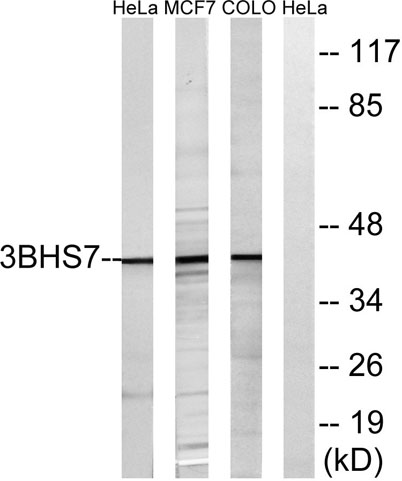
| Observed band (KD) | 41kD |
| Background | This gene encodes an enzyme which is involved in the initial stages of the synthesis of bile acids from cholesterol and a member of the short-chain dehydrogenase/reductase superfamily. The encoded protein is a membrane-associated endoplasmic reticulum protein which is active against 7-alpha hydrosylated sterol substrates. Mutations in this gene are associated with a congenital bile acid synthesis defect which leads to neonatal cholestasis, a form of progressive liver disease. Multiple transcript variants encoding different isoforms have been found for this gene. [provided by RefSeq, Dec 2008], |
| Function | catalytic activity:3-beta-hydroxy-Delta(5)-steroid + NAD(+) = 3-oxo-Delta(5)-steroid + NADH.,catalytic activity:Cholest-5-ene-3-beta,7-alpha-diol + NAD(+) = 7-alpha-hydroxycholest-4-en-3-one + NADH.,disease:Defects in HSD3B7 are the cause of congenital bile acid synthesis defect type 1 (CBAS1) [MIM:607765]; also known as neonatal progressive intrahepatic cholestasis. CBAS1 is due to a primary defect in bile synthesis leading to progressive liver disease. Clinical features include neonatal jaundice, severe intrahepatic cholestasis and cirrhosis.,function:Plays a central role during spermatogenesis by repressing transposable elements and prevent their mobilization, which is essential for the germline integrity. Plays an essential role in meiotic differentiation of spermatocytes, germ cell differentiation and in self-renewal of spermatogonial stem cells. Its presence in oocytes suggests tha |
| Subcellular location | Endoplasmic reticulum membrane; Multi-pass membrane protein. |
| Expression | Stomach,Testis,Uterus, |

Use collapsible tabs for more detailed information that will help customers make a purchasing decision.
Ex: Shipping and return policies, size guides, and other common questions.