 Français
 English
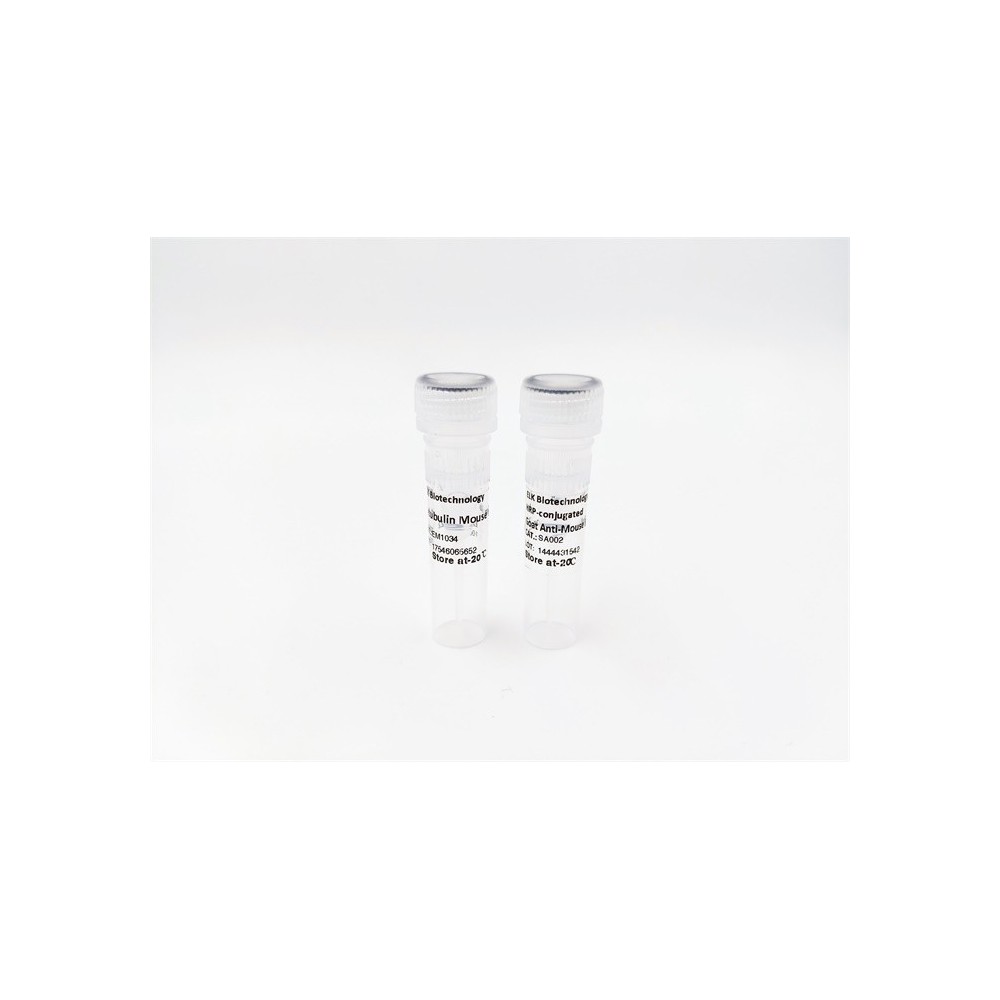

| ELK.No | ES1591 |
| Product name | Actin α3 rabbit pAb |
| Reactivity | Human;Mouse;Rat |
| Applications | WB;IHC;IF;ELISA |
| Other name | ACTG2; ACTA3; ACTL3; ACTSG; Actin; gamma-enteric smooth muscle; Alpha-actin-3; Gamma-2-actin; Smooth muscle gamma-actin |
| Size | 100μL |
| Unit price ($) | 248 |
| Human gene ID | 72 |
| Human Swiss-Prot | P63267 |
| Source | Rabbit |
| Isotype | IgG |
| Target | Actin α3 |
| Fields | >>Vascular smooth muscle contraction |
| Gene name | ACTG2 |
| Protein name | Actin gamma-enteric smooth muscle |
| Human gene link | View Human Gene |
| Human Swiss link | View Human Swiss-Prot |
| Mouse gene ID | 11468 |
| Mouse gene link | View Mouse Gene |
| Mouse Swiss-Prot | P63268 |
| Mouse Swiss link | View Mouse Swiss-Prot |
| Rat gene ID | 25365 |
| Rat gene link | View Rat Gene |
| Rat Swiss-Prot | P63269 |
| Rat Swiss link | View Rat Swiss-Prot |
| Immunogen | The antiserum was produced against synthesized peptide derived from human Actin-gamma2. AA range:1-50 |
| Specificity | Actin α3 Polyclonal Antibody detects endogenous levels of Actin α3 protein. |
| Formulation | Liquid in PBS containing 50% glycerol, 0.5% BSA and 0.02% sodium azide. |
| Clonality | Polyclonal |
| Dilution | Western Blot: 1/500 - 1/2000. Immunohistochemistry: 1/100 - 1/300. Immunofluorescence: 1/200 - 1/1000. ELISA: 1/20000. Not yet tested in other applications. |
| Purification | The antibody was affinity-purified from rabbit antiserum by affinity-chromatography using epitope-specific immunogen. |
| Concentration | 1 mg/ml |
| Storage stability | -20°C/1 year |
| Molecular Weight (Da) | |
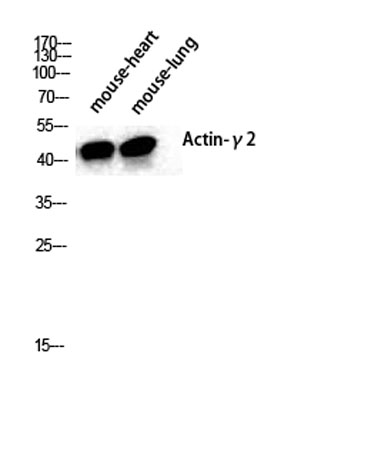
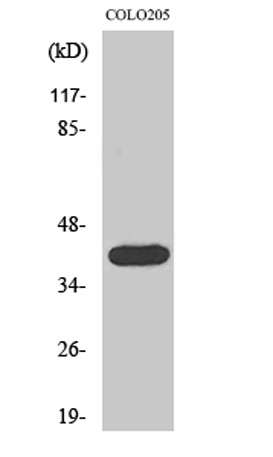
| Observed band (KD) | 45kD |
| Background | Actins are highly conserved proteins that are involved in various types of cell motility and in the maintenance of the cytoskeleton. Three types of actins, alpha, beta and gamma, have been identified in vertebrates. Alpha actins are found in muscle tissues and are a major constituent of the contractile apparatus. The beta and gamma actins co-exist in most cell types as components of the cytoskeleton and as mediators of internal cell motility. This gene encodes actin gamma 2; a smooth muscle actin found in enteric tissues. Alternative splicing results in multiple transcript variants encoding distinct isoforms. Based on similarity to peptide cleavage of related actins, the mature protein of this gene is formed by removal of two N-terminal peptides.[provided by RefSeq, Dec 2010], |
| Function | function:Actins are highly conserved proteins that are involved in various types of cell motility and are ubiquitously expressed in all eukaryotic cells.,miscellaneous:In vertebrates 3 main groups of actin isoforms, alpha, beta and gamma have been identified. The alpha actins are found in muscle tissues and are a major constituent of the contractile apparatus. The beta and gamma actins coexist in most cell types as components of the cytoskeleton and as mediators of internal cell motility.,similarity:Belongs to the actin family.,subunit:Polymerization of globular actin (G-actin) leads to a structural filament (F-actin) in the form of a two-stranded helix. Each actin can bind to 4 others., |
| Subcellular location | Cytoplasm, cytoskeleton. |
| Expression | In the intestine, abundantly expressed in smooth muscle cells of muscularis mucosa and muscularis propria. Also detected in intestinal vascular smooth muscle cells. |

Use collapsible tabs for more detailed information that will help customers make a purchasing decision.
Ex: Shipping and return policies, size guides, and other common questions.