 Français
 English

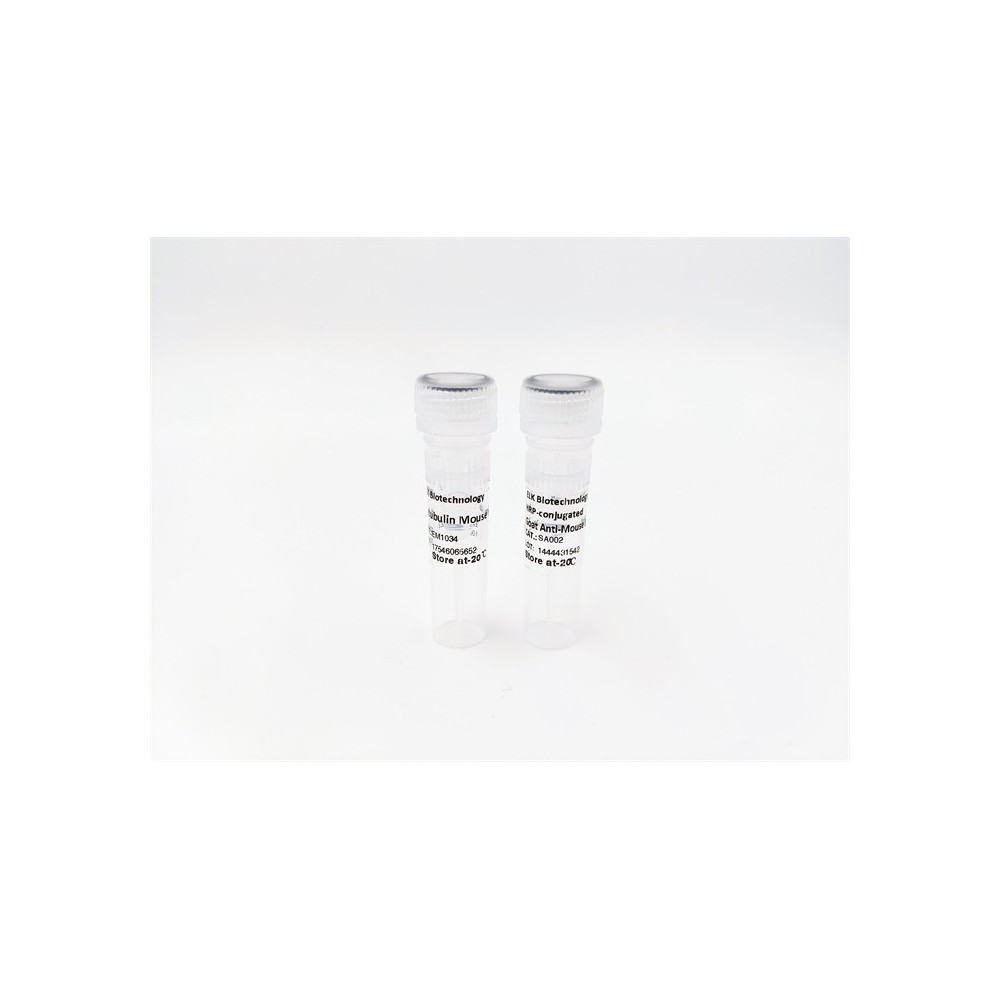

| ELK.No | ES16325 |
| Product name | FPGT rabbit pAb |
| Reactivity | Human;Rat;Mouse; |
| Applications | WB |
| Other name | |
| Size | 100μL |
| Unit price ($) | 248 |
| Human gene ID | 8790 |
| Human Swiss-Prot | O14772 |
| Source | Rabbit |
| Isotype | IgG |
| Target | FPGT |
| Fields | >>Fructose and mannose metabolism;>>Amino sugar and nucleotide sugar metabolism;>>Metabolic pathways;>>Biosynthesis of nucleotide sugars |
| Gene name | FPGT GFPP |
| Protein name | FPGT |
| Human gene link | View Human Gene |
| Human Swiss link | View Human Swiss-Prot |
| Mouse gene ID | |
| Mouse gene link | |
| Mouse Swiss-Prot | |
| Mouse Swiss link | |
| Rat gene ID | |
| Rat gene link | |
| Rat Swiss-Prot | |
| Rat Swiss link | |
| Immunogen | Synthesized peptide derived from human FPGT AA range: 497-547 |
| Specificity | This antibody detects endogenous levels of FPGT at Human |
| Formulation | Liquid in PBS containing 50% glycerol, 0.5% BSA and 0.02% sodium azide. |
| Clonality | Polyclonal |
| Dilution | WB 1:500-2000 |
| Purification | The antibody was affinity-purified from rabbit serum by affinity-chromatography using specific immunogen. |
| Concentration | 1 mg/ml |
| Storage stability | -20°C/1 year |
| Molecular Weight (Da) | 65kD |
| Observed band (KD) | |
| Background | L-fucose is a key sugar in glycoproteins and other complex carbohydrates since it may be involved in many of the functional roles of these macromolecules, such as in cell-cell recognition. The fucosyl donor for these fucosylated oligosaccharides is GDP-beta-L-fucose. There are two alternate pathways for the biosynthesis of GDP-fucose; the major pathway converts GDP-alpha-D-mannose to GDP-beta-L-fucose. The protein encoded by this gene participates in an alternate pathway that is present in certain mammalian tissues, such as liver and kidney, and appears to function as a salvage pathway to reutilize L-fucose arising from the turnover of glycoproteins and glycolipids. This pathway involves the phosphorylation of L-fucose to form beta-L-fucose-1-phosphate, and then condensation of the beta-L-fucose-1-phosphate with GTP by fucose-1-phosphate guanylyltransferase to form GDP-beta-L-fucose. Alternative splicing results in multiple transcript variants. Read-through transcription also exists between this gene and the neighboring downstream TNNI3 interacting kinase (TNNI3K) gene. [provided by RefSeq, Dec 2010], |
| Function | catalytic activity:ATP + a protein = ADP + a phosphoprotein.,catalytic activity:GTP + beta-L-fucose 1-phosphate = diphosphate + GDP-L-fucose.,cofactor:Magnesium.,function:Catalyzes the formation of GDP-L-fucose from GTP and L-fucose-1-phosphate. Functions as a salvage pathway to reutilize L-fucose arising from the turnover of glycoproteins and glycolipids.,function:May play a role in cardiac physiology.,PTM:Autophosphorylated.,similarity:Belongs to the protein kinase superfamily. TKL Ser/Thr protein kinase family. MAP kinase kinase kinase subfamily.,similarity:Contains 1 protein kinase domain.,similarity:Contains 10 ANK repeats.,subcellular location:Expressed at lower levels in the cytoplasm.,subunit:Interacts with TNNI3, ACTC, ACTA1, MYBPC3, AIP, BABP3 and HADHB.,tissue specificity:Expressed in many tissues.,tissue specificity:Highly expressed in both adult and fetal heart., |
| Subcellular location | Cytoplasm. |
| Expression | Expressed in many tissues. |


Use collapsible tabs for more detailed information that will help customers make a purchasing decision.
Ex: Shipping and return policies, size guides, and other common questions.