 Français
 English

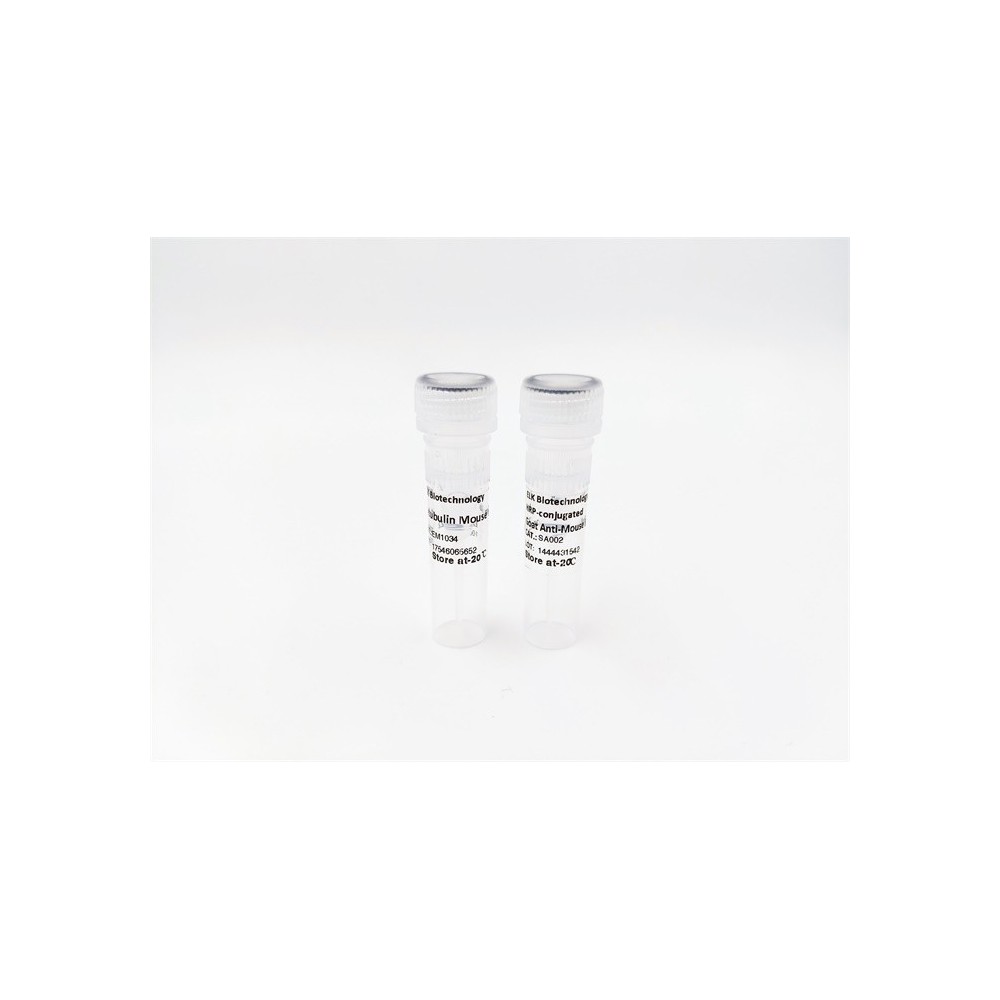

| ELK.No | ES16510 |
| Product name | FBW1A rabbit pAb |
| Reactivity | Human; Mouse |
| Applications | WB |
| Other name | |
| Size | 50μL |
| Unit price ($) | 148 |
| Human gene ID | 8945 |
| Human Swiss-Prot | Q9Y297 |
| Source | Rabbit |
| Isotype | IgG |
| Target | FBW1A |
| Fields | >>Oocyte meiosis;>>Ubiquitin mediated proteolysis;>>Cellular senescence;>>Wnt signaling pathway;>>Hedgehog signaling pathway;>>Hippo signaling pathway;>>Circadian rhythm;>>Shigellosis;>>Human immunodeficiency virus 1 infection |
| Gene name | BTRC BTRCP FBW1A FBXW1A |
| Protein name | FBW1A |
| Human gene link | View Human Gene |
| Human Swiss link | View Human Swiss-Prot |
| Mouse gene ID | 12234 |
| Mouse gene link | View Mouse Gene |
| Mouse Swiss-Prot | Q3ULA2 |
| Mouse Swiss link | View Mouse Swiss-Prot |
| Rat gene ID | |
| Rat gene link | |
| Rat Swiss-Prot | |
| Rat Swiss link | |
| Immunogen | Synthesized peptide derived from human FBW1A AA range: 43-93 |
| Specificity | This antibody detects endogenous levels of FBW1A at Human/Mouse |
| Formulation | Liquid in PBS containing 50% glycerol, 0.5% BSA and 0.02% sodium azide. |
| Clonality | Polyclonal |
| Dilution | WB 1:500-2000 |
| Purification | The antibody was affinity-purified from rabbit serum by affinity-chromatography using specific immunogen. |
| Concentration | 1 mg/ml |
| Storage stability | -20°C/1 year |
| Molecular Weight (Da) | 67kD |
| Observed band (KD) | |
| Background | This gene encodes a member of the F-box protein family which is characterized by an approximately 40 amino acid motif, the F-box. The F-box proteins constitute one of the four subunits of ubiquitin protein ligase complex called SCFs (SKP1-cullin-F-box), which function in phosphorylation-dependent ubiquitination. The F-box proteins are divided into 3 classes: Fbws containing WD-40 domains, Fbls containing leucine-rich repeats, and Fbxs containing either different protein-protein interaction modules or no recognizable motifs. The protein encoded by this gene belongs to the Fbws class; in addition to an F-box, this protein contains multiple WD-40 repeats. The encoded protein mediates degradation of CD4 via its interaction with HIV-1 Vpu. It has also been shown to ubiquitinate phosphorylated NFKBIA (nuclear factor of kappa light polypeptide gene enhancer in B-cells inhibitor, alpha), targeting it for degradation and thus activating nuclear factor kappa-B. Alternatively spliced transcript variants have been described. A related pseudogene exists in chromosome 6. [provided by RefSeq, Mar 2012], |
| Function | function:Substrate recognition component of a SCF (SKP1-CUL1-F-box protein) E3 ubiquitin-protein ligase complex which mediates the ubiquitination and subsequent proteasomal degradation of target proteins. Probably recognizes and binds to phosphorylated target proteins. SCF(BTRC) mediates the ubiquitination of CTNNB1 and participates in Wnt signaling. SCF(BTRC) mediates the ubiquitination of NFKBIA, NFKBIB and NFKBIE; the degradation frees the associated NFKB1 to translocate into the nucleus and to activate transcription. SCF(BTRC) mediates the ubiquitination of phosphorylated NFKB1/nuclear factor NF-kappa-B p105 subunit, ATF4, SMAD3, SMAD4, CDC25A, DLG1, FBXO5 and probably NFKB2. May be involved in ubiquitination and subsequent proteasomal degradation through a DBB1-CUL4 E3 ubiquitin-protein ligase.,pathway:Protein modification; protein ubiquitination.,similarity:Contains 1 F-box domain. |
| Subcellular location | Cytoplasm . Nucleus . |
| Expression | Expressed in epididymis (at protein level). |


Use collapsible tabs for more detailed information that will help customers make a purchasing decision.
Ex: Shipping and return policies, size guides, and other common questions.