 Français
 English

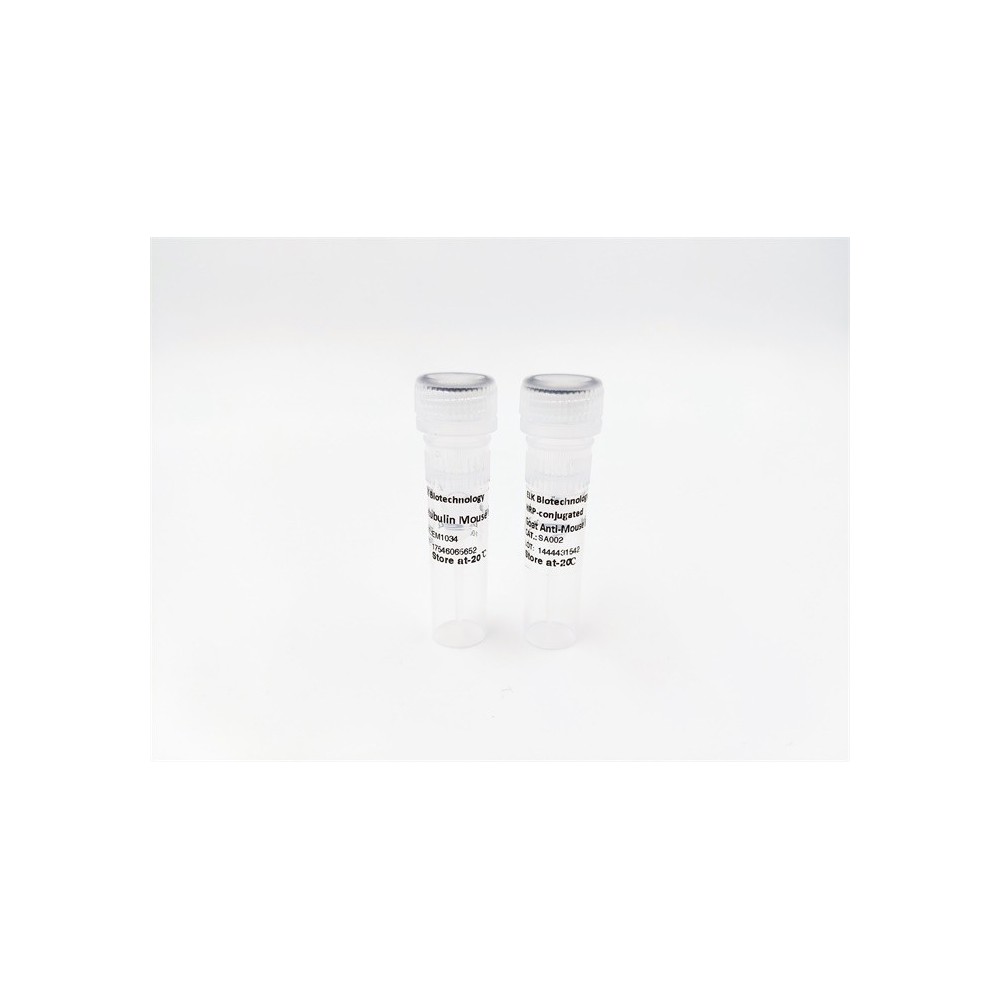

| ELK.No | ES16812 |
| Product name | ECHA rabbit pAb |
| Reactivity | Human; Mouse;Rat |
| Applications | WB |
| Other name | Trifunctional enzyme subunit alpha, mitochondrial (78 kDa gastrin-binding protein) (TP-alpha) [Includes: Long-chain enoyl-CoA hydratase (EC 4.2.1.17); Long chain 3-hydroxyacyl-CoA dehydrogenase (EC 1.1.1.211)] |
| Size | 50μL |
| Unit price ($) | 148 |
| Human gene ID | 3030 |
| Human Swiss-Prot | P40939 |
| Source | Rabbit |
| Isotype | IgG |
| Target | ECHA |
| Fields | >>Fatty acid elongation;>>Fatty acid degradation;>>Valine, leucine and isoleucine degradation;>>Lysine degradation;>>Tryptophan metabolism;>>beta-Alanine metabolism;>>Propanoate metabolism;>>Butanoate metabolism;>>Metabolic pathways;>>Fatty acid metabolism |
| Gene name | HADHA HADH |
| Protein name | ECHA |
| Human gene link | View Human Gene |
| Human Swiss link | View Human Swiss-Prot |
| Mouse gene ID | 97212 |
| Mouse gene link | View Mouse Gene |
| Mouse Swiss-Prot | Q8BMS1 |
| Mouse Swiss link | View Mouse Swiss-Prot |
| Rat gene ID | 170670 |
| Rat gene link | View Rat Gene |
| Rat Swiss-Prot | Q64428 |
| Rat Swiss link | View Rat Swiss-Prot |
| Immunogen | Synthesized peptide derived from human ECHA AA range: 276-326 |
| Specificity | This antibody detects endogenous levels of ECHA at Human/Mouse/Rat |
| Formulation | Liquid in PBS containing 50% glycerol, 0.5% BSA and 0.301% sodium azide. |
| Clonality | Polyclonal |
| Dilution | WB 1:500-2000 |
| Purification | The antibody was affinity-purified from rabbit serum by affinity-chromatography using specific immunogen. |
| Concentration | 1 mg/ml |
| Storage stability | -20°C/1 year |
| Molecular Weight (Da) | |
| Observed band (KD) | 85kD |
| Background | This gene encodes the alpha subunit of the mitochondrial trifunctional protein, which catalyzes the last three steps of mitochondrial beta-oxidation of long chain fatty acids. The mitochondrial membrane-bound heterocomplex is composed of four alpha and four beta subunits, with the alpha subunit catalyzing the 3-hydroxyacyl-CoA dehydrogenase and enoyl-CoA hydratase activities. Mutations in this gene result in trifunctional protein deficiency or LCHAD deficiency. The genes of the alpha and beta subunits of the mitochondrial trifunctional protein are located adjacent to each other in the human genome in a head-to-head orientation. [provided by RefSeq, Jul 2008], |
| Function | catalytic activity:(3S)-3-hydroxyacyl-CoA = trans-2(or 3)-enoyl-CoA + H(2)O.,catalytic activity:(S)-3-hydroxyacyl-CoA + NAD(+) = 3-oxoacyl-CoA + NADH.,disease:Defects in HADHA are a cause of maternal acute fatty liver of pregnancy (AFLP) [MIM:609016]. AFLP is a severe maternal illness occurring during pregnancies with affected fetuses. This disease is associated with LCHAD deficiency and characterized by sudden unexplained infant death or hypoglycemia and abnormal liver enzymes (Reye-like syndrome).,disease:Defects in HADHA are a cause of trifunctional protein deficiency (TFP deficiency) [MIM:609015]. The clinical manifestations are very variable and include hypoglycemia, cardiomyopathy and sudden death. Phenotypes with mainly hepatic and neuromyopathic involvement can also be distinguished. Biochemically, TFP deficiency is defined by the loss of all enzyme activities of the TFP complex. |
| Subcellular location | Mitochondrion . Mitochondrion inner membrane . Protein stability and association with mitochondrion inner membrane do not require HADHB. . |
| Expression | Epithelium,Lymph, |


Use collapsible tabs for more detailed information that will help customers make a purchasing decision.
Ex: Shipping and return policies, size guides, and other common questions.