 Français
 English
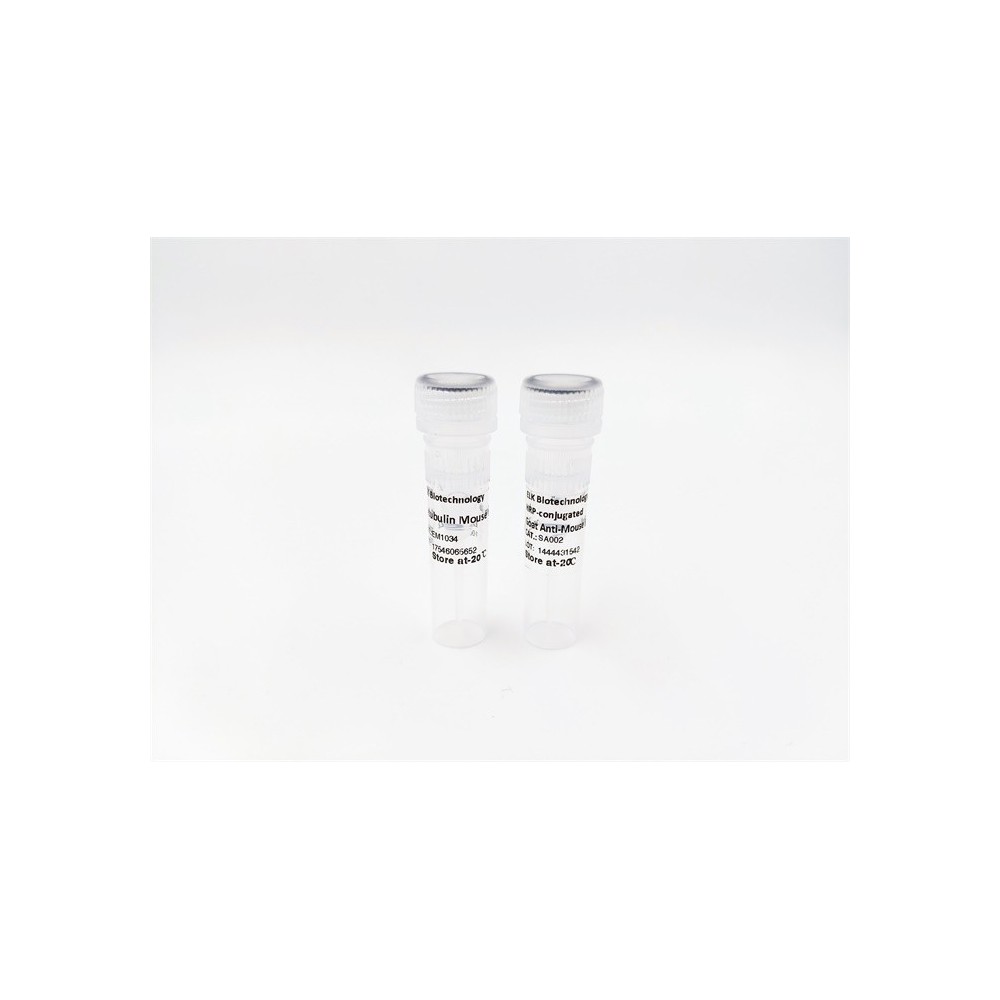

| ELK.No | ES17862 |
| Product name | CAPS1 rabbit pAb |
| Reactivity | Human; Mouse;Rat |
| Applications | WB |
| Other name | |
| Size | 100μL |
| Unit price ($) | 248 |
| Human gene ID | 8618 |
| Human Swiss-Prot | Q9ULU8 |
| Source | Rabbit |
| Isotype | IgG |
| Target | CAPS1 |
| Fields | |
| Gene name | CADPS CAPS CAPS1 KIAA1121 |
| Protein name | CAPS1 |
| Human gene link | View Human Gene |
| Human Swiss link | View Human Swiss-Prot |
| Mouse gene ID | 27062 |
| Mouse gene link | View Mouse Gene |
| Mouse Swiss-Prot | Q80TJ1 |
| Mouse Swiss link | View Mouse Swiss-Prot |
| Rat gene ID | 26989 |
| Rat gene link | View Rat Gene |
| Rat Swiss-Prot | Q62717 |
| Rat Swiss link | View Rat Swiss-Prot |
| Immunogen | Synthesized peptide derived from human CAPS1 AA range: 1275-1325 |
| Specificity | This antibody detects endogenous levels of CAPS1 at Human/Mouse/Rat |
| Formulation | Liquid in PBS containing 50% glycerol, 0.5% BSA and 0.02% sodium azide. |
| Clonality | Polyclonal |
| Dilution | WB 1:500-2000 |
| Purification | The antibody was affinity-purified from rabbit serum by affinity-chromatography using specific immunogen. |
| Concentration | 1 mg/ml |
| Storage stability | -20°C/1 year |
| Molecular Weight (Da) | 149kD |
| Observed band (KD) | |
| Background | This gene encodes a novel neural/endocrine-specific cytosolic and peripheral membrane protein required for the Ca2+-regulated exocytosis of secretory vesicles. The protein acts at a stage in exocytosis that follows ATP-dependent priming, which involves the essential synthesis of phosphatidylinositol 4,5-bisphosphate (PtdIns(4,5)P2). Alternative splicing has been observed at this locus and three variants, encoding distinct isoforms, are described. [provided by RefSeq, Aug 2008], |
| Function | domain:The PH domain is essential for regulated exocytosis and binds phospholipids and plasma membrane. It however does not mediate binding to DCVs.,function:Calcium-binding protein involved in exocytosis of vesicles filled with neurotransmitters and neuropeptides. Probably acts upstream of fusion in the biogenesis or maintenance of mature secretory vesicles. Regulates catecholamine loading of DCVs. May specifically mediate the Ca(2+)-dependent exocytosis of large dense-core vesicles (DCVs) and other dense-core vesicles by acting as a PtdIns(4,5)P2-binding protein that acts at prefusion step following ATP-dependent priming and participates in DCVs-membrane fusion. However, it may also participate in small clear synaptic vesicles (SVs) exocytosis and it is unclear whether its function is related to Ca(2+) triggering.,similarity:Contains 1 C2 domain.,similarity:Contains 1 MHD1 (MUNC13 homo |
| Subcellular location | Cell junction, synapse . Cytoplasmic vesicle, secretory vesicle, neuronal dense core vesicle membrane ; Peripheral membrane protein . Membrane-associated to vesicles. Strongly enriched in synaptic fractions. Preferentially binds to dense core vesicles but not to synaptic vesicles. Binds phosphoinosides, with a strong selectivity for PtdIns(4,5)P2 over PtdIns(3,4,5)P3. Probably localizes to different vesicles compared to CADPS2. . |
| Expression | Specifically expressed in neural and endocrine secretory tissues. Expressed in brain and pancreas and at low level in heart. Also expressed in fetal heart, cerebellum, cerebral cortex, medulla, occipital pole, frontal and temporal lobes, and putamen, as well as weak expression in spinal cord. |


Use collapsible tabs for more detailed information that will help customers make a purchasing decision.
Ex: Shipping and return policies, size guides, and other common questions.